
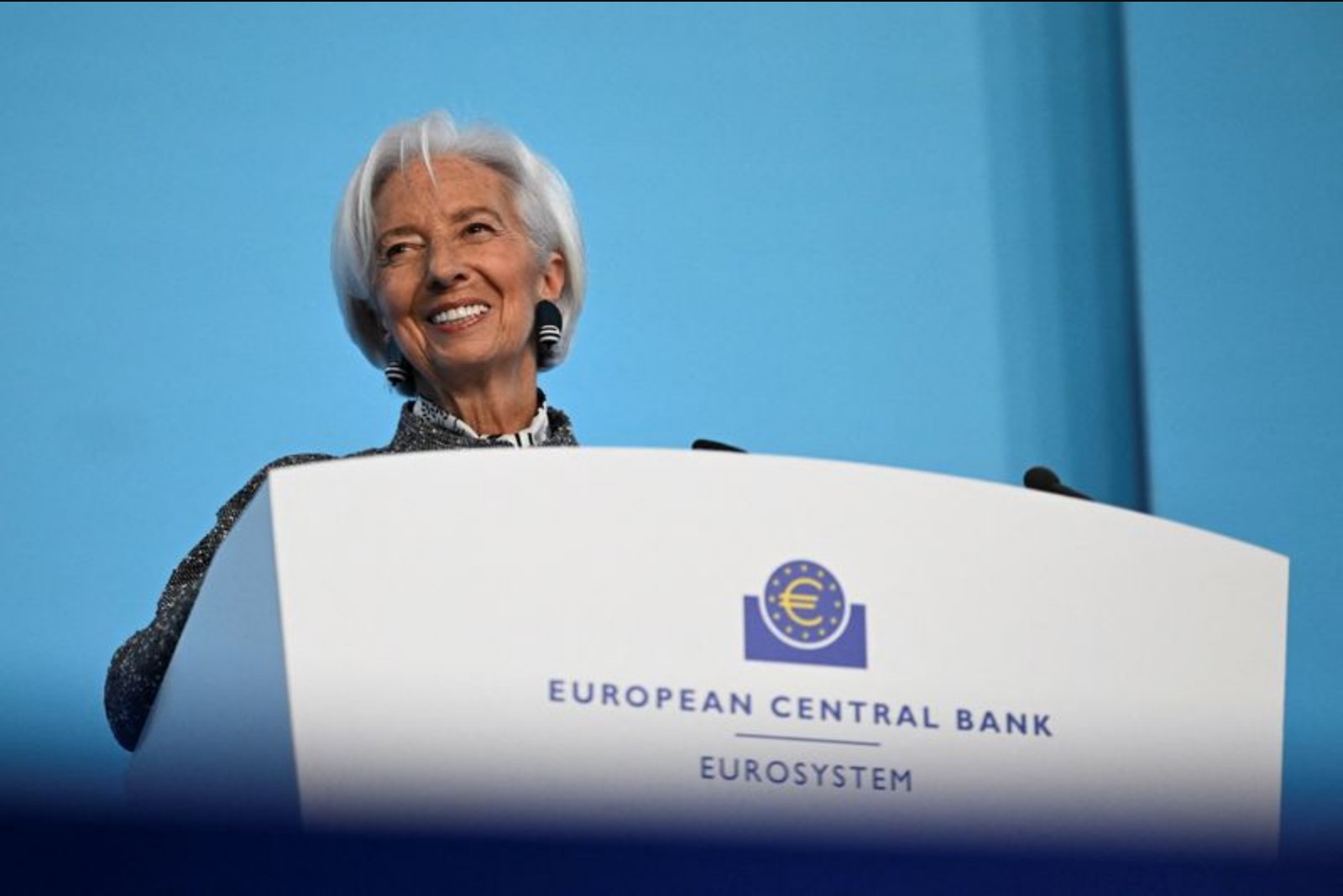
European Central Bank policymakers expressed caution about moving too quickly to tighten policy at their March meeting, according to the accounts published on Thursday. Facing the prospect of an energy-driven jump in euro zone inflation linked to the Iran war, officials opted to keep the main interest rate at 2% at the March 18-19 gathering and indicated an inclination to maintain that stance at their next meeting.
The minutes make clear the governing council judged that available evidence did not yet justify concluding the conflict would produce a durable rise in inflation across the currency bloc. At the time of the meeting, the ECB's baseline projections assumed any hit from the Iran war would be temporary. Those projections were, however, accompanied by alternative adverse and severe scenarios that envisioned sharper energy price increases, greater uncertainty and international spillovers.
"Incoming data could then be monitored to assess which scenario seemed to be crystallising, thereby facilitating swift policy action if necessary," the ECB said in its account of the meeting. "At the same time, it was important not to act prematurely on the basis of adverse or severe scenarios, unless incoming data suggested that they were becoming increasingly likely."
Market observers noted the tone of the minutes. Carsten Brzeski, ING's global head of macro, said the account signalled the ECB had moved in a more hawkish direction - that is, more inclined to raise rates - but that officials were "in no hurry to react".
Policymakers said they expected to have more clarity about the duration and economic reach of the Iran war by their April 29-30 meeting, but they acknowledged the situation might still be too early to draw firm conclusions about its inflationary effects.
The council listed a series of indicators it would monitor closely as it judged whether developments aligned with the baseline outlook or one of the alternative scenarios. Those indicators include inflation expectations, selling prices, corporate profits, labour market data, measures of underlying inflation and signs of supply chain disruption.
"All of this would help to assess whether developments were moving in line with the baseline outlook or one of the scenarios, even though it might still be difficult to judge whether there was a threat to the price stability objective," the ECB said in the minutes.
ECB President Christine Lagarde has subsequently warned that the central bank would act in a forceful or persistent way if inflation looked set to remain well above its 2% target for an extended period. She also said that even a more modest overshoot could call for a "measured" rate move.
Implications
- Officials are balancing the risk of acting too soon against the danger of allowing inflation to become entrenched.
- Energy markets and international spillovers are central to the scenarios that could alter the ECB's policy path.
- Financial markets and corporate margins may be sensitive to shifts in the bank's tone and eventual policy moves.