
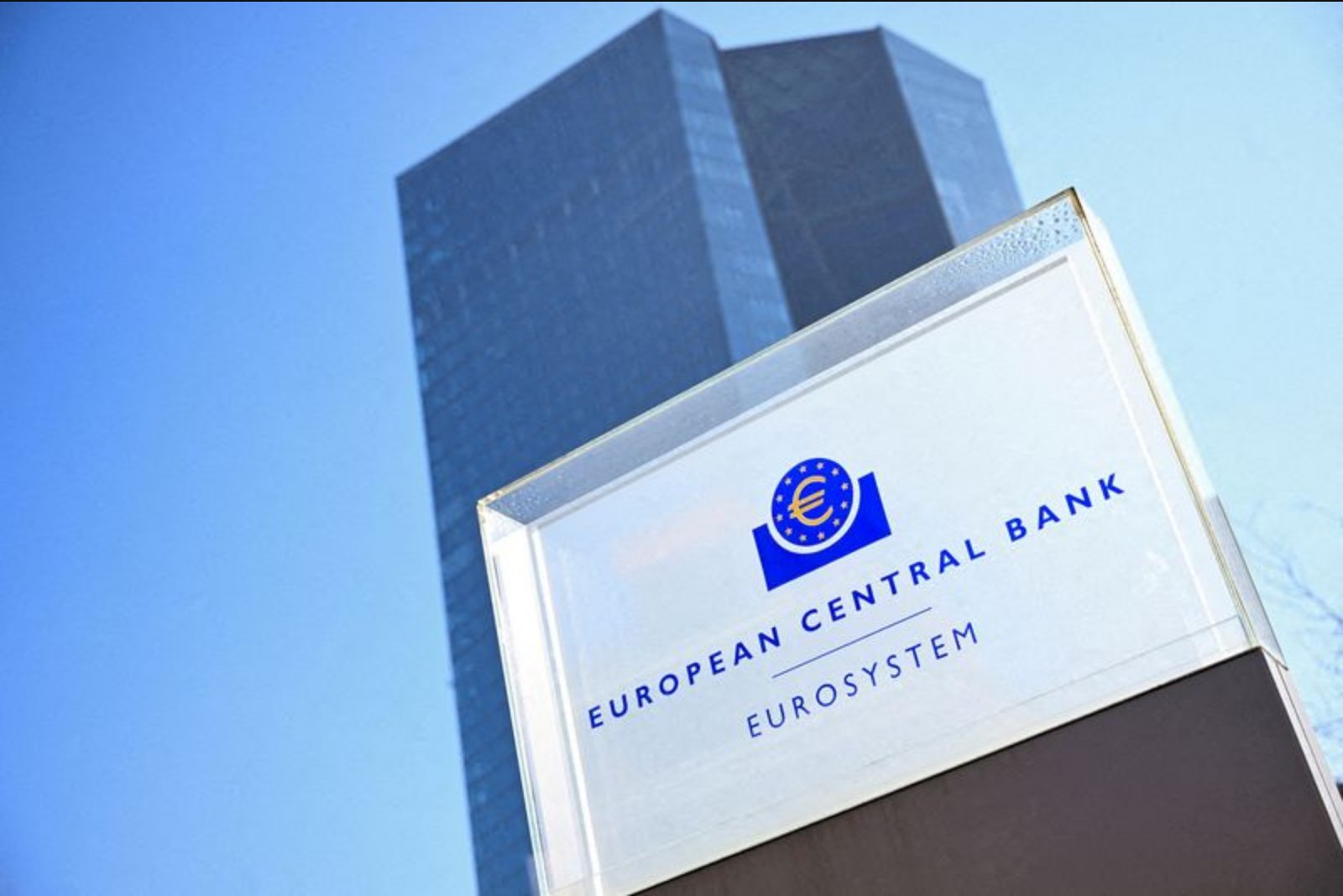
The European Central Bank held interest rates steady on Thursday, in line with market expectations, but the tone of its policy statement underlined rising concerns about accelerating inflation and bolstered expectations for a sequence of rate increases later in the year, with an initial move seen as likely in June.
Markets showed a muted immediate response to the decision. The euro was trading at $1.169 - little changed from levels before the ECB released its statement. Two-year bond yields across the euro area fell on the day, with German two-year yields last down 6 basis points at 2.65%. European equities edged higher, up almost 1% on the day.
Money markets are pricing in at least two ECB rate hikes by the end of the year, and currently view a third move as likely but not certain. That market-implied path reflects the message from the Governing Council that upside risks to inflation have grown, even as risks to growth have become more pronounced.
Commentators reacted to the statement and to the prospect of tighter policy as the year progresses. Carsten Brzeski, Global Head of Macro at ING, said: "As stagflationary pressures in the eurozone increase, the ECB has decided to keep interest rates on hold. In its policy statement, the ECB acknowledged rising inflationary pressures but also more downward risks to growth. The policy statement didn’t give any hint at the next steps. It looks as if the ECB is in no rush to hike."
Andrew Kenningham, Chief Europe Economist at Capital Economics, noted the likely cautious stance at the press conference: "President (Christine) Lagarde is likely to keep her cards close to her chest in the press conference, (at 1245 GMT). But it will be interesting to see whether she pushes back at all against current market pricing which suggests that a June rate hike is a near-certainty and that there will be three hikes in total this year. With the price of Brent crude well above $100 per barrel, a rate hike in June would certainly not be a surprise."
Marchel Alexandrovich, European economist at Saltmarsh Economics in London, said the decision and accompanying language were expected: "As expected, the ECB keeps interest rates unchanged and continues to flag up the upside risks to inflation which could trigger a policy response. Given all the uncertainties, the Governing Council is not pre-committing to a June move. But it appears to be leaning toward some tightening in policy."
Ipek Ozkardeskaya, Senior Analyst at Swissquote, emphasised the data-driven nature of future decisions: "For the ECB, rates are left unchanged as expected, yet the policy path will remain highly data dependent. We got earlier this morning the confirmation of higher inflationary pressures weighing on growth. Depending on the trajectory of energy prices, the ECB could be brought to hike rates in the second half, but the extent of the policy response will depend on whether the early rise in energy prices spirals into salaries and broader inflation."
The combined message from the central bank and market pricing suggests a period of heightened attention to incoming inflation data, energy price movements and growth indicators, with investors and policymakers weighing the trade-off between containing inflation and limiting downside risks to growth.