
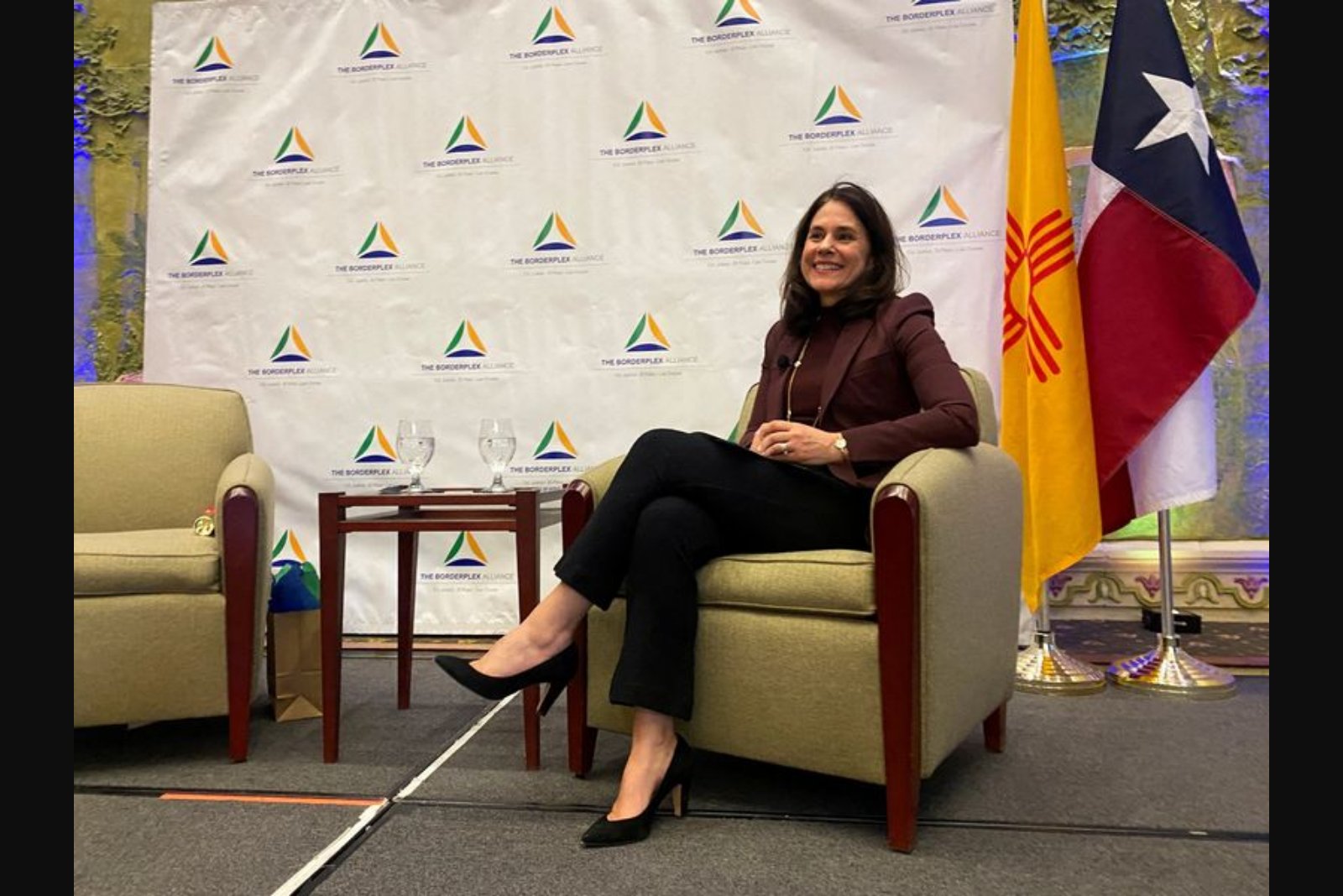
Lorie Logan, president of the Federal Reserve Bank of Dallas, said on Friday that uncertainty around the economic outlook and continuing worries about inflation mean the central bank should not be indicating that its next policy action will be a reduction in interest rates.
Explaining her dissent on the language used in this week’s Federal Open Market Committee statement, Logan said: "When the FOMC gives forward guidance, it is important for that guidance to reflect the policy outlook. In light of the two-sided risks to monetary policy, I believed the FOMC should not give forward guidance implying a bias toward rate cuts at this time."
Logan was one of three regional Federal Reserve bank presidents who voted against wording in the FOMC statement that suggested the Fed’s next move would be a cut. At the same time, she supported the committee’s decision to maintain the target range for the federal funds rate at 3.5% to 3.75%.
Highlighting the fragile nature of the outlook, Logan said: "The economic outlook is highly uncertain" amid "ongoing worries about high inflation returning to 2%." She added that, given the current conditions, "it could plausibly be appropriate for the FOMC’s next rate change to be either an increase or a cut."
Her statements underscore the Federal Reserve’s internal debate over how to communicate future policy moves when prospects for inflation and growth leave room for multiple plausible paths. Logan’s dissent focused narrowly on the phrasing of forward guidance, not on the committee’s immediate decision to hold the policy rate within its existing range.
By voting to sustain the target range of 3.5% to 3.75%, Logan aligned with the majority on the immediate stance of monetary policy while registering her objection to guidance she judged as implying a directional bias. Her remarks make clear that some policymakers view the risk backdrop as balanced between further tightening and possible easing, depending on how inflation and other economic indicators evolve.
Context and implications
Logan’s public explanation for her dissent centers on the accuracy of forward guidance and the need for statements that reflect two-sided risks. Her view preserves the possibility that future rate policy could move in either direction until incoming data provides a clearer signal on inflation and growth.