
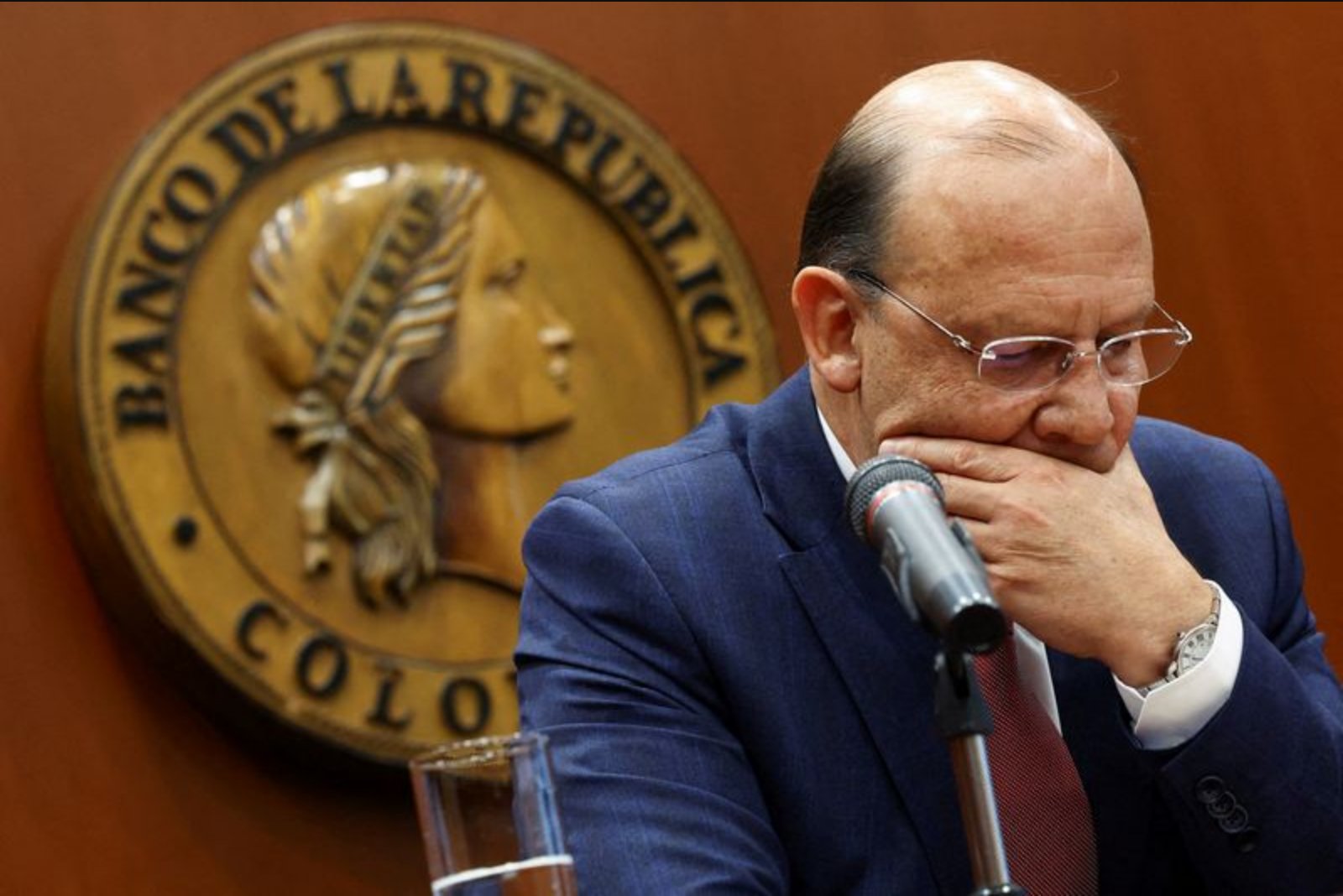
BOGOTA, April 30 - Colombia’s central bank appears set to increase its benchmark interest rate on Thursday to address persistent inflationary pressures, while uncertainty lingers over whether the government’s board representative will be present for the decision.
Finance Minister German Avila exited the board’s March meeting before it concluded and announced the government was withdrawing from participation because of the trajectory of interest rates. Last week Avila suggested he might return to the board, and market participants will be watching to see if he attends the session on Thursday.
Central bank Governor Leonardo Villar has said the board cannot convene without a government representative and warned that Avila’s absence could block the board from making decisions. That comment heightened scrutiny over whether the institution will have the quorum needed to act.
A Reuters poll conducted earlier this week found that 16 of 25 analysts predict a 50-basis-point increase to 11.75%. Seven analysts expected a 75-basis-point rise to 12%, while two projected rates would remain unchanged at 11.25%.
Policymakers are focused on reining in inflationary forces linked to a 23% minimum wage increase implemented this year and to higher public spending that has worsened government finances. Annual inflation registered 5.56% at the end of March, remaining well above the country’s long-term target of 3% and marking a fifth consecutive year that the target has been missed.
“Expectations remain unanchored and, given the acceleration of inflation in the first quarter, the central bank has room to continue raising the policy rate to prevent further deterioration,” said Alejandro Lobo, head of economic research at banking association Asobancaria.
Any additional tightening would build on earlier moves this year. Policymakers have already delivered 200 basis points of increases between January and March, a sequence of hikes that reportedly angered President Gustavo Petro. In response to the rate moves, the government has threatened further action on wages - a politically sensitive lever.
Labor Minister Antonio Sanguino told local radio on Wednesday that the government could again increase the minimum wage to shield workers from losing purchasing power as a result of central bank actions, saying: “We could resort to that ... to prevent workers from losing purchasing power as a result of a decision by the central bank.”
Context and near-term dynamics
The decision on Thursday will be watched closely for both its size and for whether the board can formally reach a decision if the government representative is absent. Market expectations are concentrated around either a 50-basis-point move or a larger 75-basis-point increase, though a minority still expect no change.