
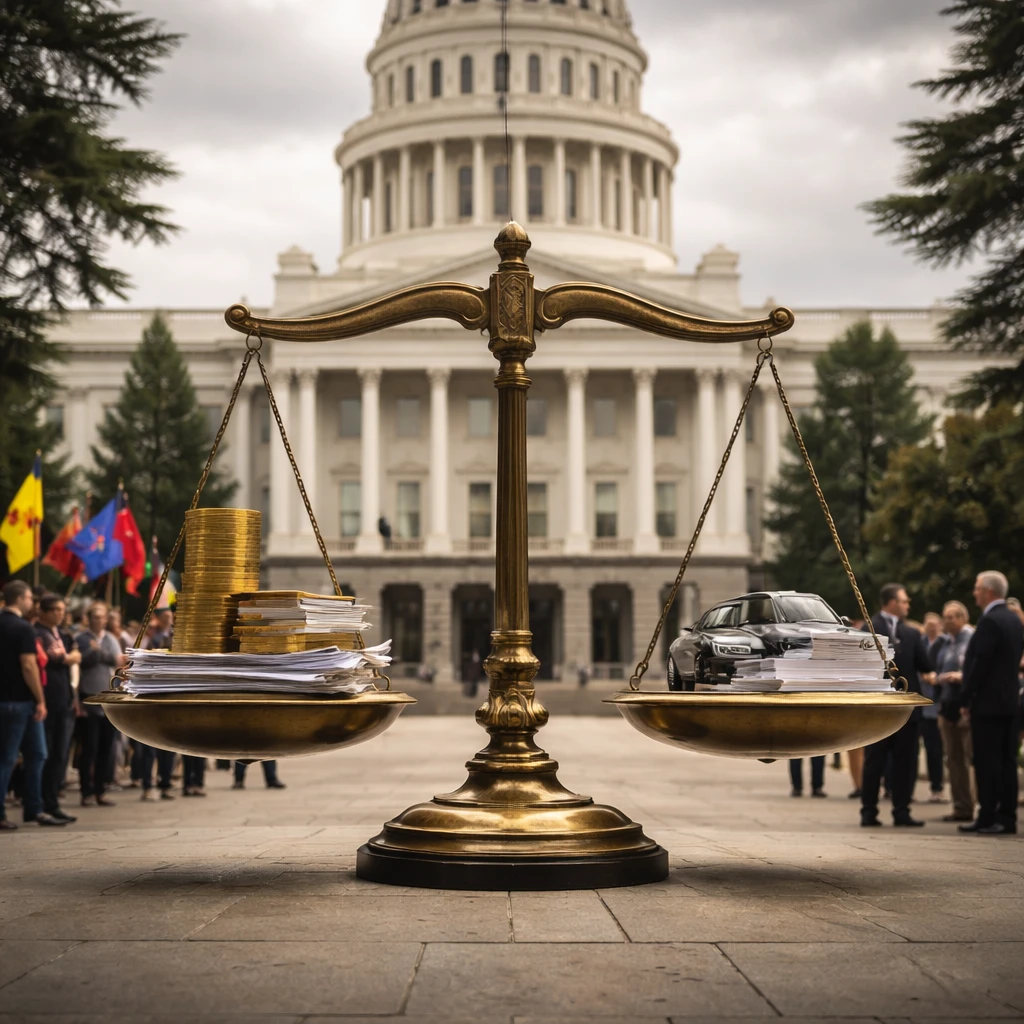
California voters are scheduled to weigh in this November on a high-stakes tax initiative that would impose a one-time 5% levy on the net worth of residents holding more than $1 billion in assets. The measure, presented as the "2026 Billionaire Tax Act," has cleared the signature threshold required to appear on the statewide ballot.
The proposed tax is assessed on total wealth rather than income. It would reach across holdings including publicly traded shares, private business stakes and intellectual property. Directly owned real estate is carved out and would not be taxed under the proposal. Proponents, led by the Service Employees International Union-United Healthcare Workers West, project the measure could generate about $100 billion over five years, with revenues earmarked for healthcare programs and to help counter reductions in federal Medicaid funding.
The ballot fight has drawn heavy financial engagement from both sides. Multiple billionaires, among them Google co-founder Sergey Brin, have supported high-profile efforts to block the tax. Those opposing the levy have backed competing ballot initiatives intended to prohibit new personal property taxes and to impose stricter audit requirements on how revenue is spent. Under California law, if several conflicting measures pass at the same election, the one receiving the most affirmative votes takes effect.
Opponents organized under the banner of "Building a Better California" have directed in excess of $100 million toward defeating the wealth tax. The union coalition advancing the tax has contributed roughly $25.7 million to its campaign.
The potential fiscal impact has prompted divergent assessments. Supporters emphasize the scale of potential new funding for state healthcare priorities. By contrast, the nonpartisan Legislative Analyst's Office has cautioned that revenues could be lower than anticipated if wealthy residents relocate or shift assets out of state.
Indeed, several prominent individuals, including Mark Zuckerberg and Larry Page, have already moved various interests outside California, a pattern cited by those warning of a shrinking tax base. Governor Gavin Newsom has publicly opposed the proposal, suggesting the levy could suppress investment in the state.
Public sentiment, according to polling cited in March from UC Berkeley, has shown early majority support: 52% of voters indicated they favor the tax. The state is home to an estimated 255 billionaires, which frames the potential scope of the measure's effect and explains the intensity of the campaign on both sides.
The November outcome will determine whether the proposed one-time wealth tax becomes law, and it will also resolve competing ballot proposals that aim to restrict new taxes on personal property and to tighten oversight of public spending. With substantial sums already deployed by both proponents and opponents, the contest is poised to be among the most expensive and consequential state ballot fights in the near term.
Key sectors and market considerations: The initiative directly implicates state fiscal policy and healthcare funding plans; it has implications for the technology and high-net-worth households that comprise a significant portion of California's private wealth. Both campaign spending and possible reactions by wealthy taxpayers could influence investment flows and the state's tax base.