
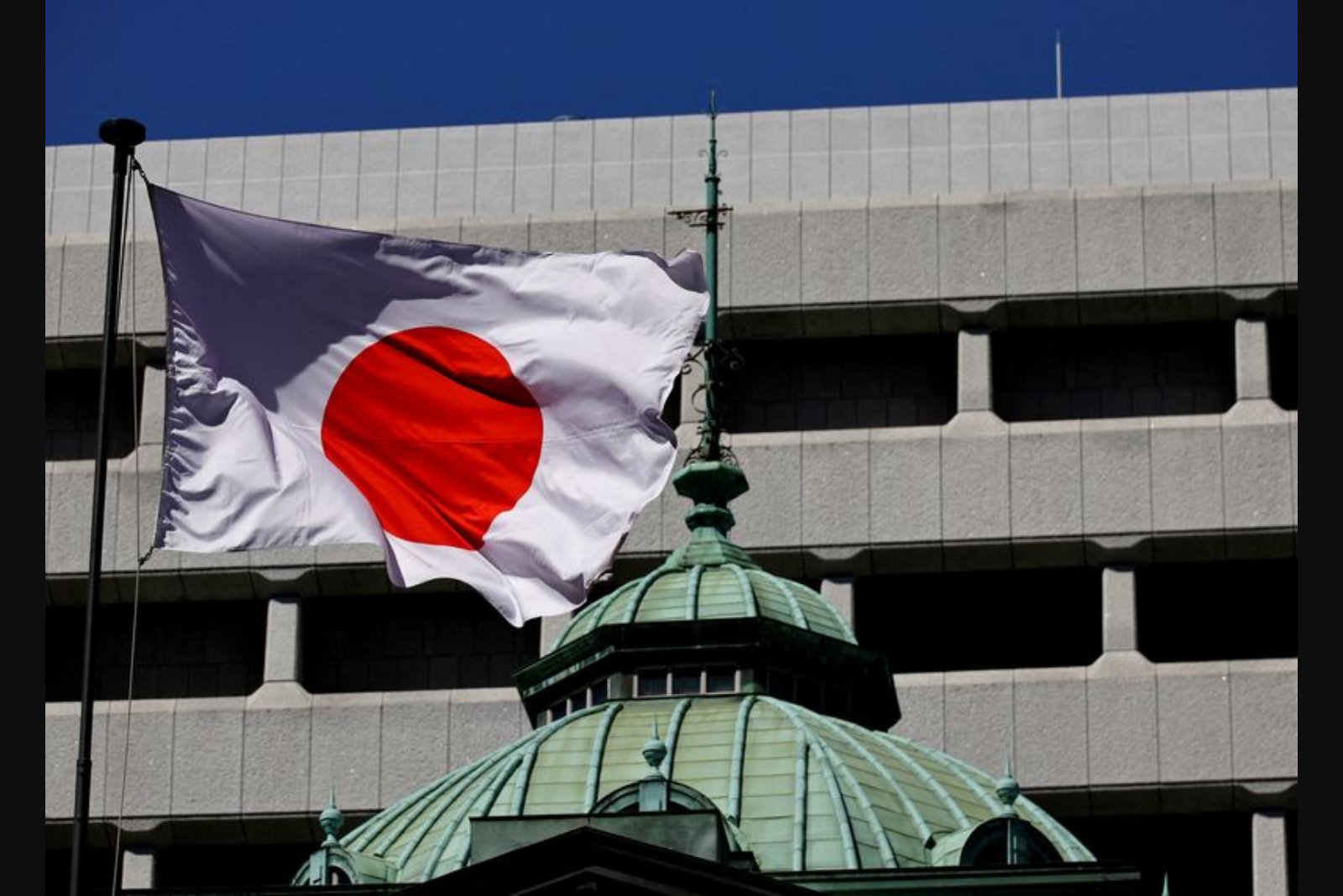
The Bank of Japan effectively set the stage this week for a rate rise in June by sharpening its language around the risk that inflation could overshoot its target - a posture that depends on the assumption that the conflict in the Middle East will not materially worsen Japan's economic outlook.
Policy was left unchanged at 0.75% at the April meeting, yet the central bank abandoned some of its traditionally cautious phrasing and signalled a near-term move more explicitly than is customary. The nine-member policy board registered three dissenting votes proposing an immediate lift to 1.0%, and BOJ officials revised forward guidance to make clear they could raise rates to counter inflationary risks, provided the economy avoids a severe downturn.
The more hawkish tenor accompanied a notable upward revision to the BOJ's inflation projections, with a key gauge now seen at 2.6% in fiscal 2026 and again in fiscal 2027 - a pace comfortably above the bank's 2% objective. Governor Kazuo Ueda described the decision to hold this month as contingent on waiting for "a bit more data," and said the bank would decide policy at its June meeting "to ensure it was not behind the curve" on inflationary risks.
Analysts and former central bank officials interpreted the messaging as deliberate positioning for June. "The message from the BOJ was that it was really focused on upside risks to inflation," said Tetsuya Inoue, executive economist at Sony Financial Group. "The BOJ made clear that it could raise rates to combat inflationary risks, even if growth undershoots its baseline scenario," Inoue added, and predicted a June hike.
Former BOJ official Nobuyasu Atago said it was "immediately clear" the bank was preparing a narrative to justify raising rates in June, and that for the first time the BOJ appeared to be seriously worried about the prospect of falling behind the curve.
Internal dynamics on the board also point to pressure for an early move. Junko Nakagawa, one of the three dissenters, faces the end of her five-year term in June, making the upcoming meeting her last opportunity to vote for a policy tightening. Her likely successor, Ayano Sato, was hand-picked by the dovish premier Sanae Takaichi and is widely viewed as less hawkish, a factor that market observers say could affect the depth of the shift in BOJ stance.
"The dissent from Nakagawa ... suggests the hawkish shift could run deeper than the headline split implies," said Kieran Williams, head of Asia FX at Intouch Capital Markets.
Policy pivot rests on fragile assumptions
Despite the clear change in rhetoric, there is no certainty the BOJ can or will push through a hike in June. The bank's forecasts assume the Middle East conflict eases, that crude prices fall back and that large-scale supply chain disruptions do not occur. Those assumptions are already under strain: oil jumped about 3% on Tuesday, emphasising Governor Ueda's lingering concern over supply constraints related to the closed Strait of Hormuz.
Supply problems are not confined to energy. Stalled efforts to end the conflict could amplify disruptions that are already hitting domestic auto parts suppliers. Japanese refineries are operating at roughly two-thirds of capacity, and chemical plants have cut output because of lower crude imports. Some analysts say those developments risk dragging down broader factory activity and could push Japan's economy into contraction in the current quarter.
"With the Strait of Hormuz remaining closed and concerns over oil supply persisting, downside risks cannot be ignored, making a June hike difficult in practice," said Takeshi Minami, chief economist at Norinchukin Research Institute in Tokyo.
Political considerations also complicate the BOJ's calculus. Economy Minister Minoru Kiuchi has repeatedly urged the central bank to align its decisions with the government's emphasis on accelerating growth. Kiuchi, known as an advocate for looser monetary policy, attended the BOJ's policy meeting in a sign of government attention to any sign of an early rate increase. The administration led by Prime Minister Sanae Takaichi plans to unveil a flagship growth strategy in June focused on boosting investment, and growing signs of economic strain could increase calls for a supplementary budget financed by new debt - a move that would heighten pressure on the government to resist early tightening.
Takeshi Yamaguchi, chief Japan economist at Morgan Stanley MUFG Securities, warned that if supply disruptions spread, the risk of economic deterioration would increase and likely intensify the administration's opposition to an early rate rise.
Rates, bonds and communication risks
June will not only be a decision point on short-term interest rates. The BOJ is also set to review its bond taper plan and chart a new program for the fiscal year beginning in April 2027. Bank officials have said that these balance sheet discussions will not affect interest-rate deliberations, but analysts caution that combining a rate increase with balance-sheet reduction - if poorly communicated - could unsettle markets.
"Ueda sounded very hawkish this time, suggesting he sees a June rate hike as a given," said Mari Iwashita, executive rates strategist at Nomura Securities. "But whether it could actually do so is a completely different question." The interplay between a possible tightening of policy and plans to reduce bond holdings presents a communication challenge that, if mishandled, could amplify market volatility.
What to watch next
Key indicators and events that will influence whether the BOJ follows through in June include further movements in crude oil prices, developments in the Middle East conflict and incoming domestic data that could confirm or undermine the upgraded inflation trajectory. The BOJ has made clear it is prioritising the risk of an inflation overshoot, but it is also openly relying on a set of favourable external developments that are not guaranteed to materialise.
For markets and for sectors sensitive to energy and supply-chain strains - including refineries, chemicals and auto parts manufacturing - the near-term trajectory of oil flows and the disruption landscape will be decisive in determining whether the BOJ can realistically deliver on the hawkish signal it issued this week.