
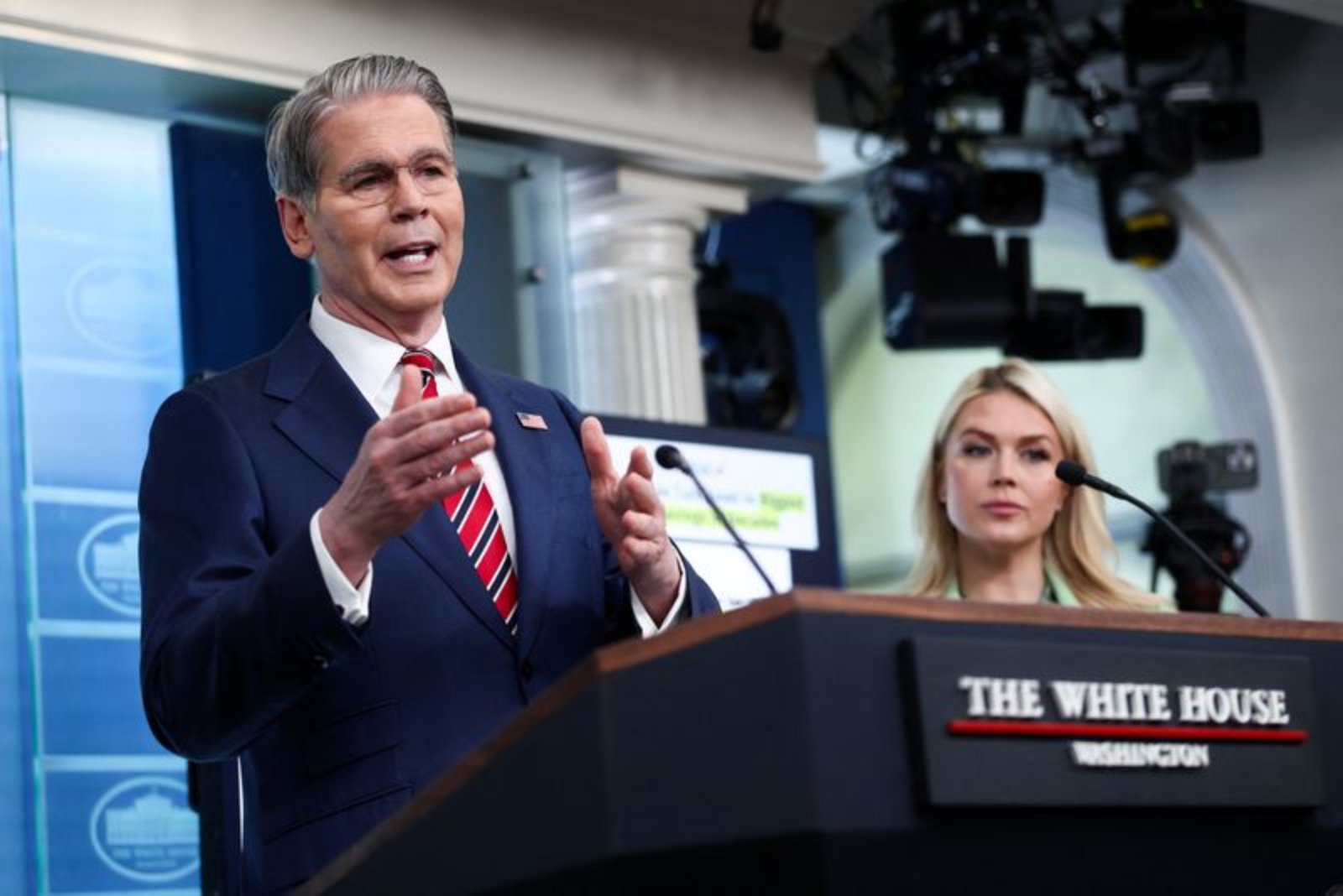
U.S. Treasury Secretary Scott Bessent on April 15 reaffirmed support for a delayed overhaul of the International Monetary Fund's quota resources and urged the World Bank to quickly back projects to expand critical minerals mining and processing outside China.
Speaking in a statement to the IMF's steering committee, Bessent said he welcomes the July 2026 expiration of the World Bank's Climate Change Action Plan, which outlines the development lender's approach to increasing financing for green energy transition projects. With that plan set to expire, Bessent said he expects the bank "to immediately shift its myopic focus on climate and financing volumes to one that emphasizes high-quality, durable projects" that can more effectively lift people out of poverty.
Managing the dominant U.S. shareholding at both the World Bank and the IMF, Bessent said the Trump administration expects the World Bank to intensify efforts on critical minerals mining and processing. He described these minerals as "central to economic growth, technological leadership, and countries' economic security."
In his statement to the International Monetary and Financial Committee, Bessent called on the World Bank to mobilize across its operations to support the policies, projects, and associated infrastructure that will "unlock more deals that will help diversify critical minerals supply chains and increase domestic value capture across the supply chain."
Bessent highlighted the current concentration of supply, noting that China supplies over 90% of rare earths and some other critical minerals, a dominance that has given Beijing leverage with the United States, Japan and some other countries on trade issues.
On the IMF, Bessent reaffirmed U.S. support for "a strong, quota-based, and adequately resourced IMF that plays a critical role in the Global Financial Safety Net," language consistent with prior U.S. Treasury statements. He said the United States is committed to securing approval by the U.S. Congress for the IMF's 16th review of quotas, a package agreed in 2023 but not yet implemented.
Legislative progress on the quota increase has been uneven. A U.S. fiscal 2026 appropriations bill covering Treasury programs that passed in early March did not include the quota increase. However, the quota approval request resurfaced within an appendix of President Donald Trump's budget request for fiscal 2027, which begins on October 1 and is otherwise dominated by a proposed large defense spending increase.
Bessent noted that implementing the quota change would largely avoid a direct congressional budgetary outlay. The shift would primarily move U.S. funds from a separate crisis facility known as the New Arrangements to Borrow into IMF quota resources, thereby making the IMF's roughly $1 trillion in potential lending capacity more readily available in a crisis.
He also pointed to a condition included in the 2023 quota agreement - a pledge to devise a new quota formula for future adjustments in shareholdings. That formula is intended to underpin any realignment that would shift voting power toward large emerging markets.
"The case for future quota reviews must be firmly established on the basis of resource adequacy needs," Bessent said. "IMF shareholding should reflect members' relative position in the world economy, and any future quota realignment must be underpinned by a new quota formula."
The Treasury statement did not include details about what elements the new quota formula should contain.
Context and implications
Bessent's remarks link two policy priorities: implementing IMF quota reforms to strengthen the global safety net, and directing multilateral development finance to expand non-Chinese sources of critical minerals. He frames the World Bank's upcoming procedural change - the July 2026 end of its Climate Change Action Plan - as an inflection point to reorient financing toward projects that the administration judges will deliver tangible economic and development benefits.
While the Treasury favors reallocating existing U.S. crisis-lending resources rather than requesting new appropriations, the practical path to congressional approval for the quota implementation remains uncertain, given competing budget priorities and the omission of the increase from the recently passed fiscal 2026 appropriations bill.