
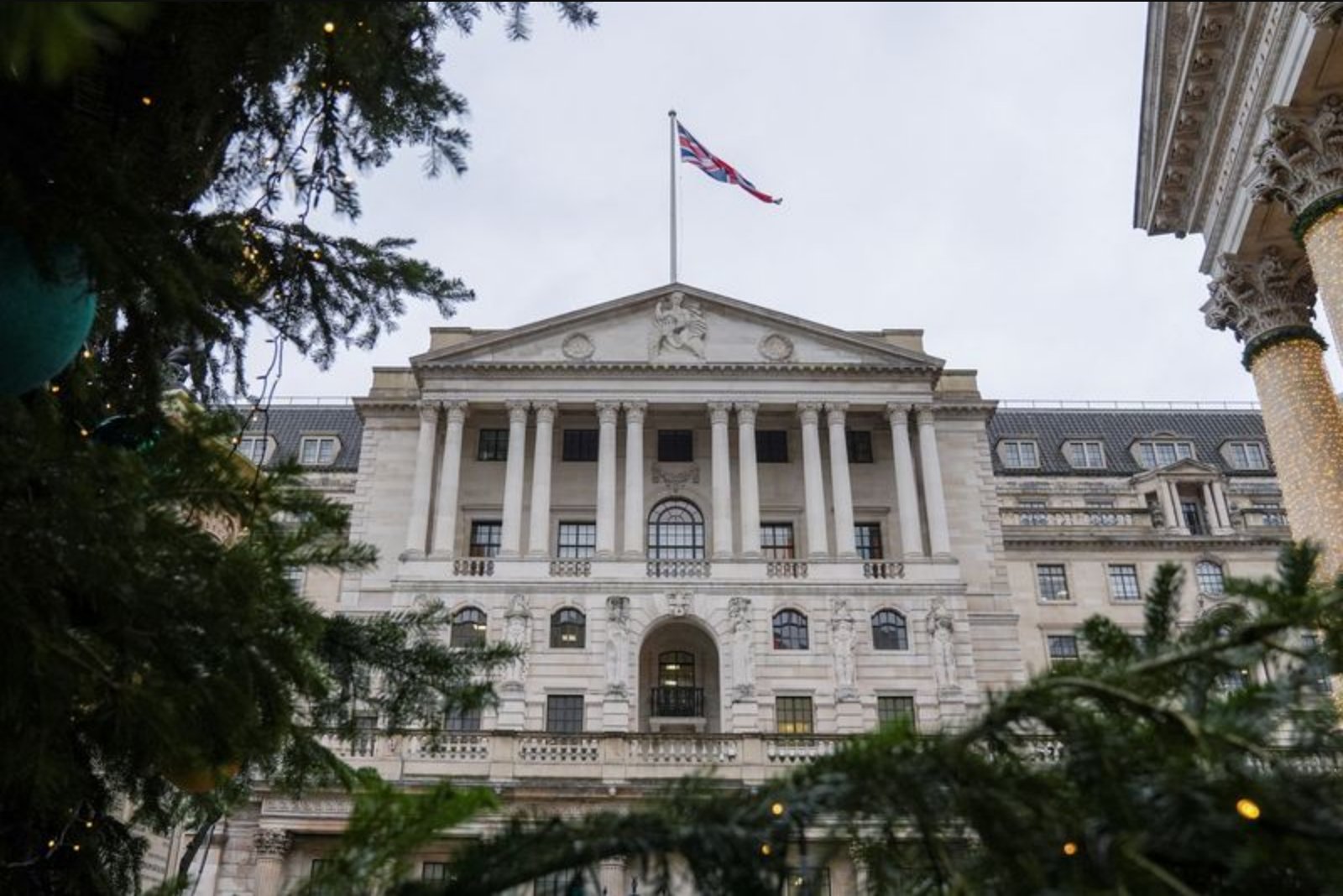
LONDON, April 30 - The Bank of England opted to leave its policy rate unchanged for a third straight meeting, with the Monetary Policy Committee (MPC) voting 8-1 to keep Bank Rate at 3.75%. Committee members set out a conditional approach to policy as they assess the inflationary consequences of a large energy price shock linked to the conflict in the Middle East.
The MPC presented three scenarios that map different paths for oil and gas prices and the likely transmission to the UK economy. Each scenario assumes a different combination of price trajectories, household responses and the potential for second-round effects that could re-embed inflation through wages and price-setting.
Three scenarios for energy-price shocks
Scenario A assumes energy prices evolve in line with futures curves, and households respond by reducing spending and increasing saving. Under this view, the energy shock is relatively short-lived and demand weakness prevents substantial second-round effects.
Scenario B envisages energy prices peaking at levels similar to Scenario A but remaining elevated for longer. Second-round effects are envisaged as modest in this case.
Scenario C describes a larger energy shock that generates significantly stronger second-round effects than in Scenario B.
How MPC members justified their votes
The following are key excerpts from individual MPC members explaining their votes and the balance of risks that informed them.
Voted to maintain Bank Rate at 3.75%
Governor Andrew Bailey
"This shock will induce a trade-off between higher inflation and softer output, and the appropriate policy response is state contingent. "If the shock appears to be short-lived or the economy weaker, policy should place relatively more weight on avoiding unnecessary contraction in activity."If second-round effects are likely to be greater policy should focus on returning inflation back to target more quickly. "At the moment, I place most weight on Scenario B, albeit with slightly reduced second-round effects. I place some weight on Scenario C, which would require a stronger monetary policy response."
Deputy Governor Sarah Breeden
"Absent the conflict, underlying disinflation remained on track. This counterfactual matters because financial conditions have tightened significantly since. This provides sufficient restrictiveness to guard against the current risk of second-round effects and gives us some time to learn more about the conflict and how it propagates. My vote balances the uncertainty around second-round effects. "I place most weight on Scenario B. I do not judge Scenario C as likely, but if it were to materialise, I would stand ready to react, forcefully if necessary, to return inflation to target sustainability."
Deputy Governor Clare Lombardelli
"A tightening in monetary policy and financial conditions relative to before the war is warranted. Holding rates provides an appropriate degree of restrictiveness while we learn more about the scale of the shock and its propagation."
Deputy Governor Dave Ramsden
"I see upside risks to energy prices relative to futures curves and so place equal weight on Scenarios A and B, though do not completely rule out Scenario C. Under Scenario B, I would consider raising Bank Rate and accepting a larger output gap as a result. If, however, some of the downsides risks in scenario A materialise, I would favour a less restrictive path."
External MPC member Megan Greene
"I am more worried about the price-setting than wage-setting channel of second-round effects. In my view, second-round effects in Scenario B represent a lower bound for what is likely. We may end up with inflation somewhere between Scenarios B and C, necessitating a tighter stance. "For now, the yield curve has tightened enough to give us time to hold and learn, if not much about second-round effects soon then at least about the nature of the shock. An increase in Bank Rate may be necessary in upcoming meetings."
External MPC member Swati Dhingra
"I am not strongly attached to any one of the energy price scenarios and A, B, and C all remain in play. In the event of a swift resolution and materially lower energy prices, further reduction in Bank Rate would be warranted, and possibly quickly. Alternatively, we could be faced with a sharper policy trade-off under a larger and longer energy shock. "Labour market slack, weak demand and restrictiveness from the previous tightening cycle should already be weighing against sustained momentum in second-round effects under scenarios closer to B. If the situation were to worsen, this may warrant some tightening, but there is a limit to how much output loss should be acceptable."
External MPC member Catherine Mann
"Against the backdrop of the Middle East conflict, and given the underlying model structure, the scenarios overestimate both the projected opening up of slack and the moderation of inflation. Inflation continuing to rise through 2026 could be embedded in 2027 via wage bargaining and state-dependent pricing."On balance, I expect greater additional second-round effects than in the scenarios. An ’active hold’ now - emphasising concerns over inflation persistence, while acknowledging implications for employment and activity - allows for more readings on salience, attentiveness, and threshold effects. "Should I see continued rising inflation outturns and expectations, I would expect to increase Bank Rate so as to lean against inflation rising into 2027."
External MPC member Alan Taylor
"I currently place more weight in the zone between Scenario A and the path with standard treatment, where conflict subsides and energy prices moderate to year-end, with legacy damage to the UK and other economies. This would entail a hold for some time, then a move to a neutral or accommodative stance. We will know more by June and July about the likely conflict scenario."
Dissenting vote - favoured hike to 4%
Chief Economist Huw Pill
"Second-round effects in price and wage-setting stemming from this shock have potential to raise UK inflation beyond the near term in a persistent manner. Our scenarios illustrate how a stronger impulse to inflation may strengthen second-round effects. But I see the risk of second-round effects in each of these scenarios skewed to the upside. "As someone already concerned about a stalling of the underlying disinflation process even before the latest energy price shock, a prompt but modest hike in Bank Rate will help mitigate upside risks to price stability stemming from a re-emergence of intrinsic inflation persistence."
Implications and next steps
The committee's discussion highlights the conditionality of the Bank's response - with most members prepared to hold policy to gather more information, but with several emphasising readiness to tighten further if second-round effects strengthen. The split vote underscores uncertainty about the persistence and transmission of the energy shock to inflation and wages, and the trade-offs between restraining activity and anchoring inflation expectations.
Policymakers identified the tightening in financial conditions since the conflict as an element adding restrictiveness to the current stance. Several members signalled that the path for Bank Rate will depend on how energy prices evolve, how households adjust spending and saving, and whether second-round effects in price or wage-setting become more pronounced.
Looking ahead, members noted that more clarity on the scale and propagation of the shock should become available in the coming months, which will inform decisions at future meetings.