
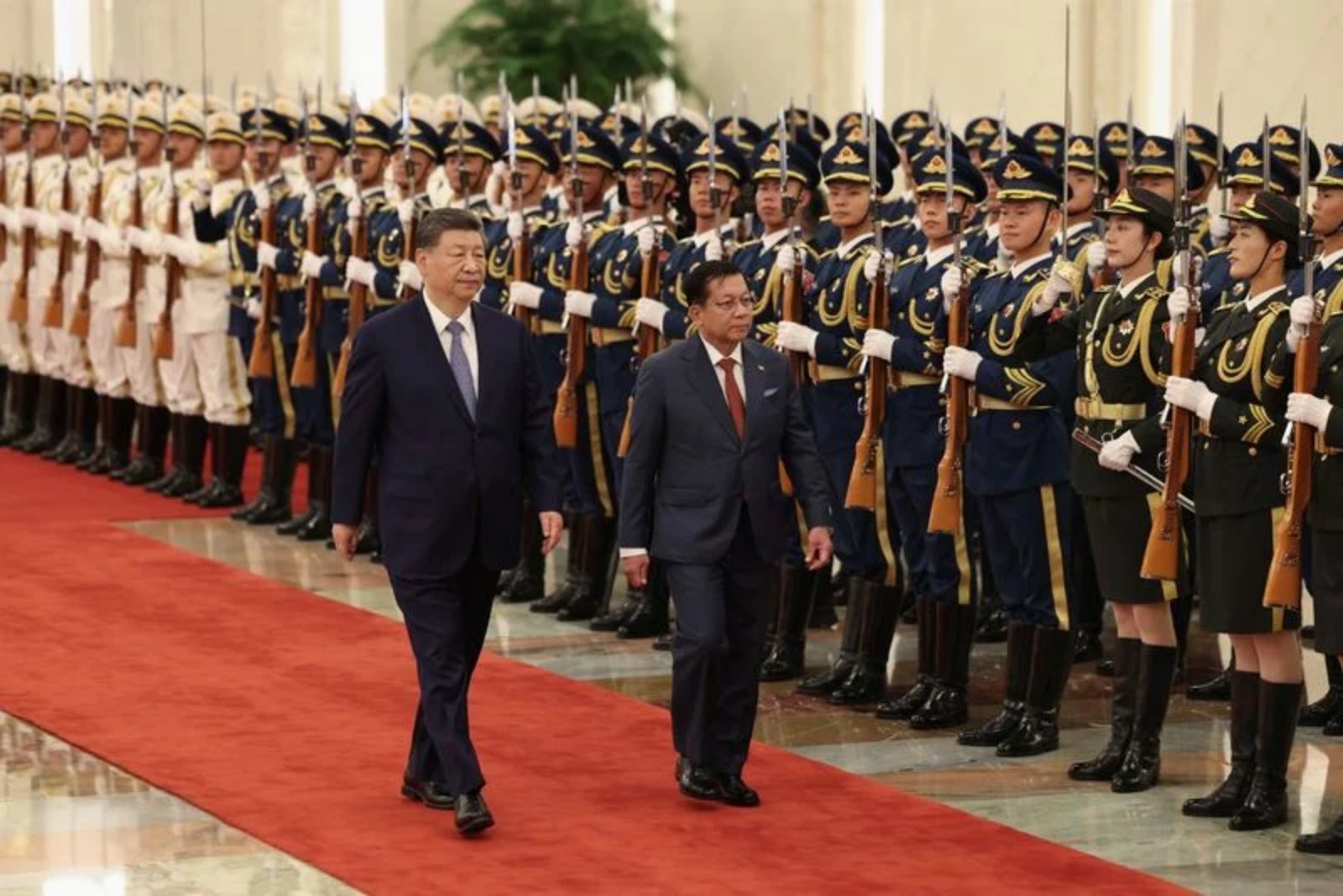
Chinese President Xi Jinping began formal talks in Beijing with Myanmar President Min Aung Hlaing on Tuesday, state news agency Xinhua reported, as the two neighbours work to broaden their bilateral relationship.
Min Aung Hlaing is undertaking a five-day visit to China that runs through Friday. The trip is his first to the country since he consolidated control following controversial elections held in December and January. Beijing staged a state welcome ceremony at the Great Hall of the People on Tuesday morning before the leaders entered discussions.
According to Xinhua, the two leaders observed the signing of cooperation documents, although the agency did not provide further details on the content of those agreements. China is identified in the reporting as one of the most important international partners of Myanmar’s military government, which seized control from Aung San Suu Kyi’s elected administration in February 2021, an action that prompted an armed uprising in the country.
China’s foreign ministry has stated its support for efforts to unify domestic political forces in Myanmar and to restore stability. The ministry’s position, as reported, indicates Beijing’s preference for a political resolution. The diplomatic engagement coincides with China’s investments in Myanmar under its Belt and Road Initiative, including an oil and gas pipeline that crosses Myanmar and planned projects such as a deep-sea port.
This encounter in Beijing represents Min Aung Hlaing’s second meeting with Xi in under a year; the two met after the Myanmar leader attended the Shanghai Cooperation Organisation summit in Tianjin last August. Min Aung Hlaing chose India for his first foreign trip after becoming president, but some analysts interpreted his subsequent visits to China as signaling a closer alignment with Beijing and a possible enhancement of his international standing.
Sectors affected: energy and infrastructure given China's investments in pipelines and port development; diplomatic and political relations between Myanmar and key regional powers.