
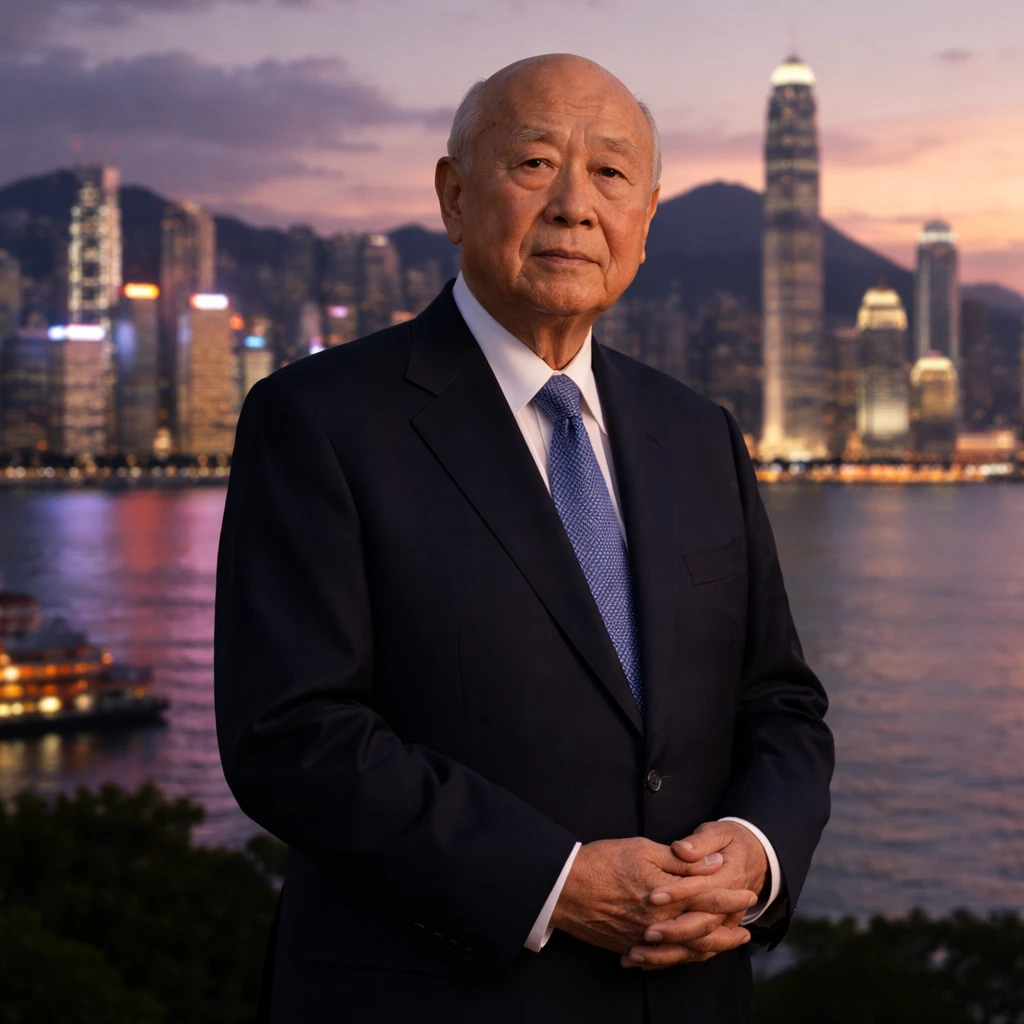
Tung Chee-hwa took office on July 1, 1997 with a public pledge that the people of Hong Kong would be "master of our own destiny." In his inaugural address marking the transfer of sovereignty from Britain to China, he stressed the new government's commitment "to preserving the Hong Kong way of life, maintaining Hong Kong’s free and open economic system, upholding the rule of law, and building a more democratic society."
His early years as chief executive came to symbolize both the promise and the limits of the "one country, two systems" arrangement under which Hong Kong rejoined China while retaining a high degree of autonomy. A former shipping tycoon, Tung led the territory as it navigated the transition from more than 150 years of British colonial rule to Chinese sovereignty.
The Article 23 confrontation and a sharp decline in public support
Six years into his tenure, Tung moved to advance a controversial national security proposal known as Article 23. The law, as proposed, would have criminalized offences such as treason and sedition and would have expanded police powers. Opponents feared it represented an encroachment by mainland authorities on Hong Kong citizens’ freedoms.
The proposal ignited widespread public anger. A protest estimated at half a million people filled the streets, with many demonstrators adopting black as a symbol of mourning. Faced with the breadth of opposition, Tung withdrew the bill, a retreat that precipitated a steep drop in his approval ratings. The setback in 2003 was widely seen as a turning point, hardening tensions between Beijing and opposition democrats and setting the stage for later, larger pro-democracy movements in 2014 and 2019.
Two years after the Article 23 confrontation, Tung resigned from office midway through his second term, citing ill health.
A background in shipping and international ties
Tung was born in Shanghai in July 1937, the son of shipping magnate Tung Chao-yung and Koo Lee-ching, who was reportedly the daughter of a prominent shipowner. The family relocated to Hong Kong during his childhood. As an adult he spent time in the West, attending the University of Liverpool in England and later working in the United States for General Electric before joining the family business, Orient Overseas Container Line.
He was known as a long-time supporter of Liverpool Football Club, a personal detail noted from his time at university. In December 1996, a 400-person selection committee, described as filled with Beijing loyalists, chose Tung to be Hong Kong’s first leader under Chinese rule. During the 1990s he built close ties with senior Chinese leaders including then-President Jiang Zemin.
Political role after the chief executiveship and behind-the-scenes influence
After leaving the chief executive post, Tung remained politically active. He was appointed a vice chairman of the Chinese People’s Political Consultative Conference, the country’s top political advisory body, and was considered an influential figure behind the scenes.
He and his father had longstanding friendships with former U.S. president George Bush, and Tung also developed a rapport with President George W. Bush. In 2012 he accompanied Xi Jinping on a visit to the United States just prior to Xi’s assumption of China’s top leadership position. He also joined Xi on an unofficial capacity during the 2015 visit to Washington.
In later years, his role as a bridge between China and the United States diminished as bilateral relations deteriorated. Tung’s China-U.S. Exchange Foundation, a Hong Kong-based non-profit that provided grants to U.S. universities and engaged with influential figures in Washington, drew scrutiny for links to the Chinese government. A 2018 report by the U.S.-China Economic and Security Review Commission said the foundation had "involvement in influence operations."
Responses to the 2019 protests and support for Beijing-led changes
When large-scale pro-democracy demonstrations erupted in Hong Kong in 2019, Tung spoke out strongly against the protest movement. He characterized the demonstrators as "anti-China disruptors" who had "gravely" endangered national security. That movement, notable for the umbrellas protesters used to shield themselves from tear gas and rubber bullets, coincided with a period of heightened polarization in the city.
Following Beijing’s imposition of a sweeping national security law on Hong Kong in 2020 - which some foreign governments described as a draconian instrument of repression - Tung defended the measure. He also publicly supported a 2021 overhaul of Hong Kong’s electoral system that effectively excluded opposition democrats from future contests. In one of his later interviews, with the Chinese Communist Party-aligned People’s Daily, he argued that "The ultimate test for any method of election is whether it brings happiness and wellbeing for the people." He added that while restoring social stability was necessary, "only restoring social stability is not enough. We now need to strive for prosperity."
In recent years he mostly withdrew from public view, appearing far less frequently in the territory’s political life than he had during earlier decades.
Death and immediate reporting
Tung died on Tuesday aged 89, the South China Morning Post reported, citing a statement issued by his office. No cause of death was provided in that statement. The announcement marked the passing of a figure whose time in office and subsequent activity in political and civic organizations had left a complex legacy in Hong Kong.
Across both his tenure as chief executive and his later role as an adviser and organizer, Tung’s record combined advocacy for maintaining Hong Kong’s economic openness with support for measures aimed at reinforcing Beijing’s authority, particularly as unrest and political opposition grew in the city.
Legacy
Tung Chee-hwa’s public life will be recalled for the initial promise of the transition era and for the profound controversies that framed his administration. The 2003 Article 23 episode, his subsequent drop in popularity, his resignation two years later, and his later alignment with Beijing-backed initiatives trace a trajectory that mirrors the wider tensions between demands for democratic reforms in Hong Kong and efforts by mainland authorities and allied local actors to tighten control.
As the territory continues to reconcile those tensions, Tung’s career remains a reference point for debates about the practical limits of "one country, two systems" and for the evolving relationship between Hong Kong, Beijing and the wider international community.