
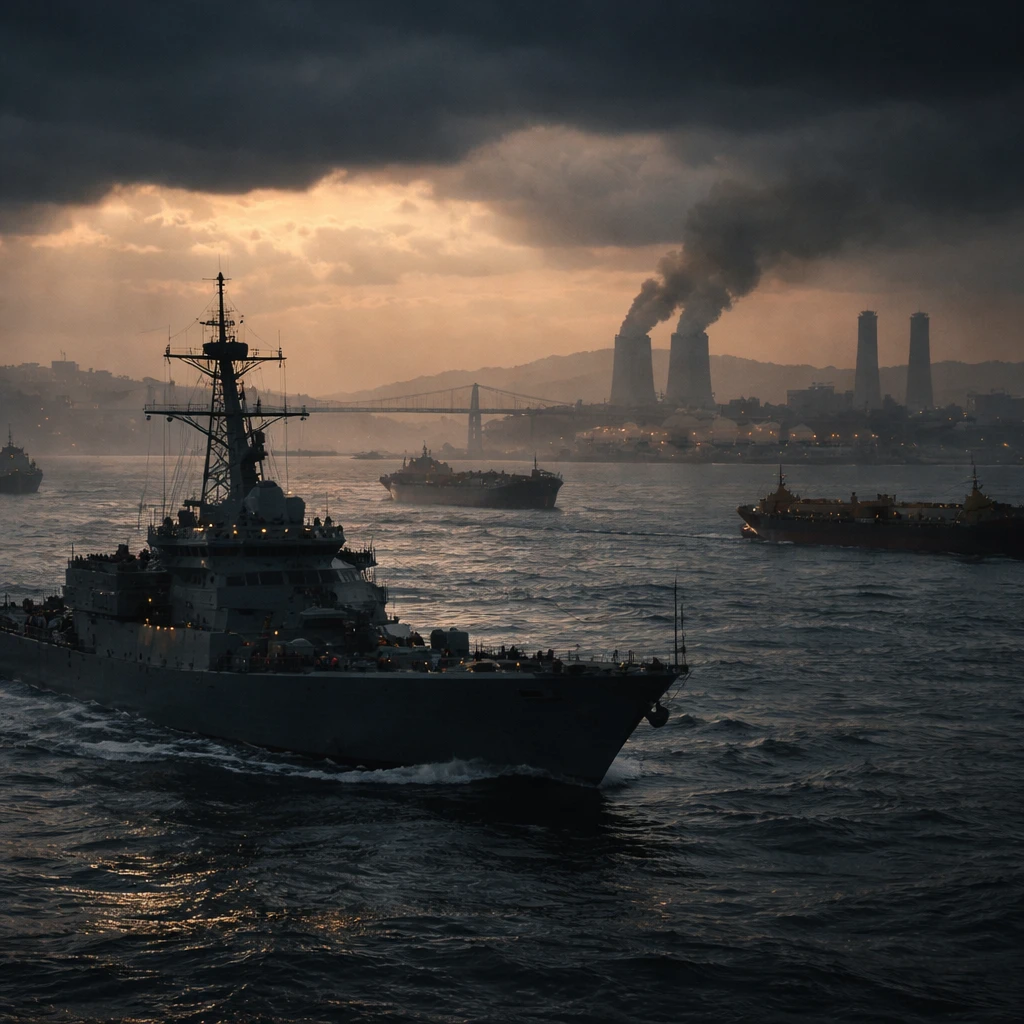
On July 22, President Donald Trump renewed a public warning that the United States will strike Iranian infrastructure in response to attacks on ships in the Strait of Hormuz. In a post on Truth Social he said: "Any time the Islamic Republic of Iran shoots at a ship in the Strait of Hormuz, whether it be by Missile, Rocket, Drone, or any other device or weapon, the United States will bomb and destroy ONE BRIDGE OR POWER PLANT, including those located next to, or in, the Capital City of Tehran."
The remark links specific Iranian actions against vessels in the strategically important waterway to planned U.S. retaliatory strikes against fixed civilian targets, naming bridges and power plants as potential targets. The statement does not provide operational details beyond that explicit contingency.
U.S. and Iranian forces have exchanged and intensified attacks in recent weeks, according to available reporting, as an interim ceasefire agreed last month has begun to unravel. That deterioration is accompanied by what observers describe as a deepening struggle for control of the Strait of Hormuz, a key maritime corridor. Officials and analysts warn that the trend raises the risk of a return to broader hostilities.
International law experts and a number of world leaders have criticized the president's comments, arguing that deliberate strikes on bridges or power plants would likely violate legal prohibitions on attacks directed at civilian targets. Those critics stress the distinction between military targets and infrastructure that serves civilian populations, and have framed the president's declared approach as inconsistent with established norms.
Context and implications
The statement ties retaliation for maritime attacks directly to strikes on land-based civilian infrastructure. While the post specifies the types of weapons Iran might use - "Missile, Rocket, Drone, or any other device or weapon" - it does not expand on selection criteria for particular infrastructure or on timing. The public nature of the declaration and the focus on bridges and power plants has prompted immediate legal and diplomatic objections.
This development comes amid a pattern described as escalating exchanges between the two sides after the collapse of an interim ceasefire. The deepening contest over the Strait of Hormuz has been identified as a factor increasing the possibility of wider conflict, though the statement itself does not forecast specific outcomes.
Reporting on reactions notes international legal concerns and political criticism, but available details in the public statement are limited to the quoted threat and the characterization of recent hostilities and ceasefire erosion.