
Overview
Brazil’s rapid embrace of GLP-1 receptor agonists for weight loss has created a parallel market of smuggled, counterfeit and custom-mixed injections that officials say poses growing risks to public health. Inspections and seizures at the Paraguayan border and across the country have uncovered creative concealment methods and large volumes of unauthorized product, while health authorities track thousands of complications and dozens of deaths linked to the medications.
Seizures and concealment
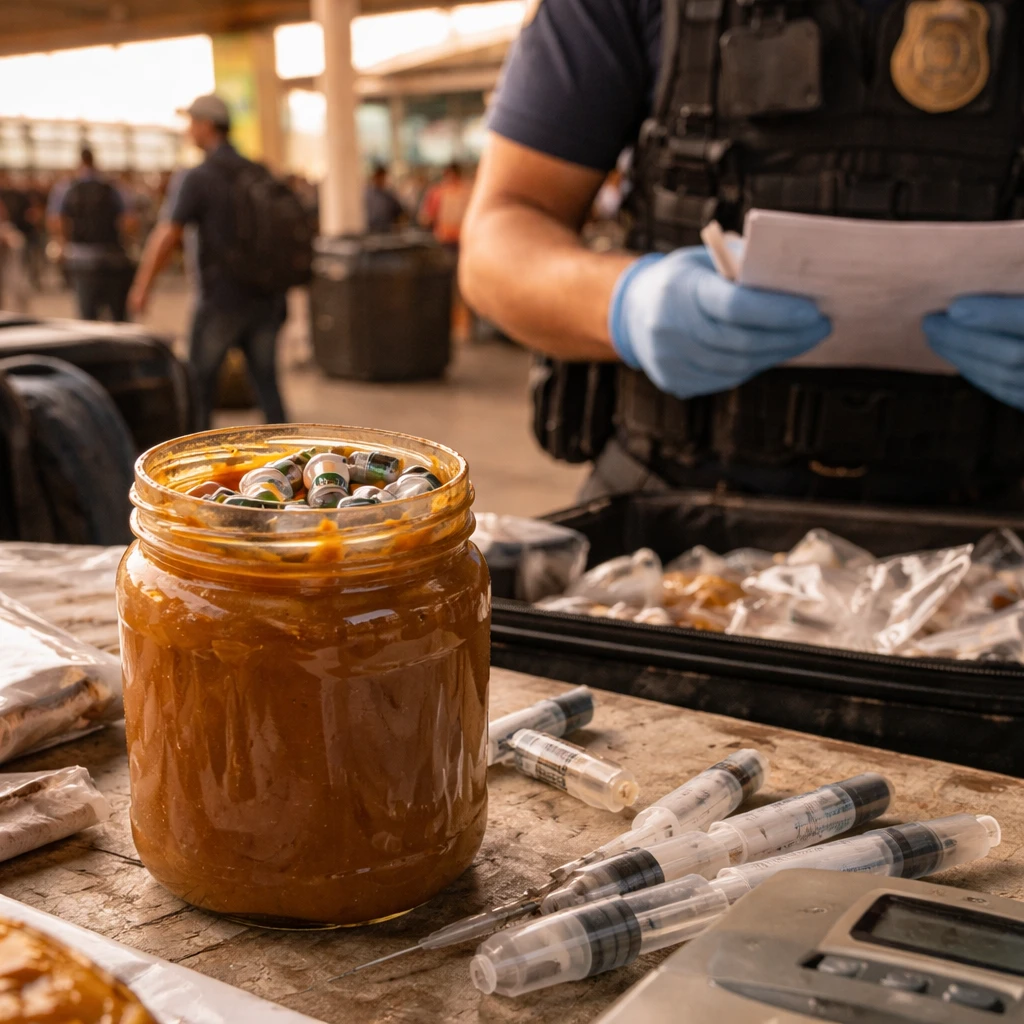
Customs agents conducting a routine inspection of a tourist bus returning from Paraguay in April opened jars of dulce de leche and found hundreds of vials of tirzepatide - the active ingredient in the weight-loss drug Mounjaro - hidden inside the sweet spread. The haul formed one of the largest seizures of weight-loss medications in Brazil, with the total shipment comprising more than 2,500 vials, according to the Federal Revenue Service.
That interception was not an isolated case. Authorities along the border have found slimming drugs tucked into unexpected hiding places, including motorcycle exhausts and false shoe soles. Such concealment highlights the ingenuity of traffickers and the scale of flows into Brazil, a country experiencing high demand for both brand-name and unauthorized GLP-1 products.
Scope of the problem: complications, deaths and untracked sales
Brazilian officials report that between 2018 and mid-August 2026 there have been 83 deaths under investigation and more than 3,600 medical complications linked to weight-loss drugs. Authorities say they were notified of over 60% of those complications in 2025 and 2026, and they have indicated that untracked versions of GLP-1 medications have likely played a significant role in the rise of adverse events. Reuters could not independently establish the precise contribution of unauthorized versions to those deaths and complications.
Market analysts, cited by an investment bank, estimate that about 51% of the country’s projected $7 billion in weight-loss drug sales this year will come from pharmacies that custom-mix medications and from products smuggled from Paraguay. That estimate indicates that a large share of demand is being met outside formal, regulated channels.
Why unauthorized products proliferate
Experts point to a combination of cultural and economic factors that have amplified demand for weight-loss injections. Brazil’s beauty-conscious culture, limited average purchasing power and uneven law enforcement create incentives for consumers to seek cheaper, unregulated options. For many Brazilians, the cost differential between smuggled products and brand-name injections is striking.
One consumer, Taiane Torres da Silva, a pet groomer in Rio de Janeiro who buys a Paraguayan product called T.G. that has not been vetted by Brazil’s health regulator Anvisa, acknowledged the risk but said she keeps buying it. "There is always some fear," she said. "But we do it anyway because we want to lose weight." Silva said she purchases the Paraguayan drug for about $75 every six weeks, a price point within reach given she earns Brazil’s minimum wage of about $300 a month. By comparison, a four-week supply of Mounjaro in Brazil costs roughly $290 for the lowest 2.5 mg dose, while a high-dose, 2.4-mg Wegovy box can sell for close to $340 online through a patient support program. The doses are not directly comparable because Mounjaro and Wegovy contain different active ingredients.
Paraguayan supply and regulatory distinctions
Paraguayan pharmacies legally sell certain weight-loss products that are in demand in Brazil. One such product, T.G., has been approved by Paraguay’s health regulator, Dinavisa, and is manufactured by Laboratorios Indufar Cisa. Dinavisa said in a statement that neither it nor the Paraguayan government is responsible for the transport of medicines, while acknowledging that some individuals transport medicines "irresponsibly." Laboratorios Indufar Cisa did not respond to requests for comment.
Brazil’s regulator Anvisa has emphasized that only smuggled products bypass Brazil’s official evaluation. Custom-mixed, or compounded, medications sold by some Brazilian pharmacies are subject to technical standards and local inspections. Yet consumer perceptions can blur the distinction between regulated brand-name drugs and compounded formulations. Andreia Kohout, pharmaceutical director of the Brazilian Anti-Counterfeiting Association, said consumers often assume compounded drugs are identical to brand names; she also warned that the compounded market, often promoted by influencers, contains unreliable suppliers.
Company and industry responses
Global manufacturers have expressed concern about the spread of unauthorized products and their distribution outside regulated channels. Eli Lilly said it supports Brazilian authorities in efforts to combat the illegal market to protect patient safety, and it stated that it continues to pursue ways to increase affordability within legal, regulated and safe parameters.
Novo Nordisk commented that the rising popularity of GLP-1 drugs in Brazil has increased the market for compounded, counterfeit or illegally imported products often sold without medical supervision or outside regulated channels. The company said it focuses on providing value through evidence-based treatments, education, patient support, program discounts and a partnership with a local manufacturer.
Public health concerns tied to handling and misuse
Beyond unauthorized supply routes, clinicians and regulators worry about how injections are manufactured, stored and handled. Two doctors, a pharmacist and a Brazilian official told reporters that poor storage and exposure to heat can degrade injectables. Labeling for Mounjaro and Wegovy also warns of risks such as acute pancreatitis, which affects an estimated 0.1% to 1% of patients. One physician noted that prolonged fasting while using the drugs can cause hypoglycemia, though he said this is rare when the medications are administered correctly.
Anvisa has issued warnings about other anesthesia-related risks, including aspiration and pneumonia due to slowed digestion from GLP-1 drugs. The regulator has also reported a rising number of acute pancreatitis cases, which can progress to tissue death and, in some cases, be fatal, in connection with improper GLP-1 use. Anvisa has stressed that these medications should be used only as prescribed and under medical supervision.
Clinical accounts and local effects
Medical practitioners are seeing the consequences firsthand. Dr. Leonardo Sebba, who treats obesity in the state of Goias in Brazil’s Center-West, said he has observed severe constipation in patients who used weight-loss injections from unofficial sources. While constipation can also be a side effect of brand-name drugs, some patients he treated experienced complications that required surgical intervention. "Unfortunately, the medication is everywhere, in pharmacies, but also at street markets, hair salons, the gym, and with neighbors," Sebba said. "It has really become, and it is a strong word, drug trafficking."
Health authorities’ seizure data underline the expanding flow of illegal products. Nationwide seizures of illegal GLP-1 weight-loss drugs jumped from 609 units in 2024 to 60,787 in 2025, according to the Anti-Counterfeiting Association, with seizures continuing to rise sharply in the current year.
Personal stories and continued demand
Some users report life-changing results despite the risks. Pamela Erculano Silva, a nurse in Rio de Janeiro who said she recently lost 17 kg (37 pounds), uses the T.G. brand smuggled from Paraguay because it is affordable and easy to obtain through an acquaintance. "It completely transformed my quality of life and self-esteem," she said.
Other users acknowledge adverse effects but continue treatment. Vitoria Braga, a 31-year-old Rio resident, said she and several family members are using a smuggled injection without medical consultation. After a recent dose increase she experienced four days of fever, nausea and flu-like symptoms and was bedridden, but she did not consult a doctor and said she does not know who the supplier is. "The doctor would have said I was crazy and told me to stop," she said.
Investigations into deaths
Authorities are probing more than 80 deaths in Brazil linked to weight-loss drugs. Flavio Fabres, who leads the medical examiner’s office in João Pessoa in the northeastern state of Paraiba, reviewed one such case involving a 31-year-old woman, Jessica Ataide, who died suddenly while using a medication without consulting a health professional. Fabres said that shortly after a dose, the woman’s blood sugar fell sharply, causing severe hypoglycemia; she lost consciousness and choked, with stomach contents entering the airway and causing asphyxiation. Ataide’s family declined to comment on her death. Reporters could not determine the exact type of weight-loss drug she had used.
Law enforcement and market dynamics
Brazil’s revenue service said its officers act broadly to stop the entry of illegal goods, but that it does not have a specific operation focused solely on weight-loss drugs. Paraguay’s regulator noted that the presence of Paraguayan products in Brazil falls under Brazilian authorities’ responsibility once transported across the border. The illegal injections originate largely from Paraguay, where less stringent patent protections allow manufacturers to produce alternatives to brand-name drugs that are otherwise more expensive elsewhere.
Price differentials remain a strong driver of demand for unauthorized products. A legal four-week supply of Mounjaro can cost about $290 at the lowest dose in Brazil, while smuggled Paraguayan options such as T.G. can be purchased for roughly $75 every six weeks by consumers like Silva who earn minimum wage. Such cost gaps help explain why many Brazilians opt for contraband or compounded alternatives despite health warnings.
Regulatory efforts and approved alternatives
Brazilian authorities hope that the entry of lower-priced, properly authorized weight-loss medications will encourage consumers to shift away from illegal imports and unvetted compounded products. In May, Anvisa approved Ozivy, described as the country’s first domestic alternative to Novo Nordisk’s Ozempic, and which can retail for less than $100 for a four-week supply. Since Ozivy’s approval, other brands have obtained regulatory clearance.
Anvisa Director-President Leandro Safatle told reporters that controlling demand is difficult, but that if regulated, safer products are available at prices similar to unauthorized imports, consumers will tend to choose the regulated options. The hope among regulators is that increased access to affordable, approved medicines will help curb the illicit market and reduce health harms tied to improper use.
Implications for the health system and markets
The prevalence of unregulated GLP-1 products affects multiple parts of the economy and healthcare system. Pharmacies, compounding clinics, border trade and law enforcement are all implicated, while manufacturers and patient support programs face challenges from counterfeit and smuggled competition. Health services may carry added burdens from treating complications and investigating deaths.
At present, millions of Brazilians have tried GLP-1 treatments; market research cited in industry reporting places Brazil’s GLP-1 usage rate at 5.5% of the population, above a global average of 3.7%. That penetration, combined with rapid growth in seizures and adverse event reports, underscores both the scale of consumer demand and the risks associated with a market that mixes regulated and unregulated products.
Conclusion
Brazil’s appetite for GLP-1 weight-loss drugs has built a thriving gray market that delivers cheaper but potentially hazardous products to consumers. Authorities have increased seizures and flagged rising complications and deaths, while manufacturers and regulators aim to broaden access to safer, regulated options. For now, however, many Brazilians continue to balance perceived benefits against the risks of unsupervised and illicit use.