
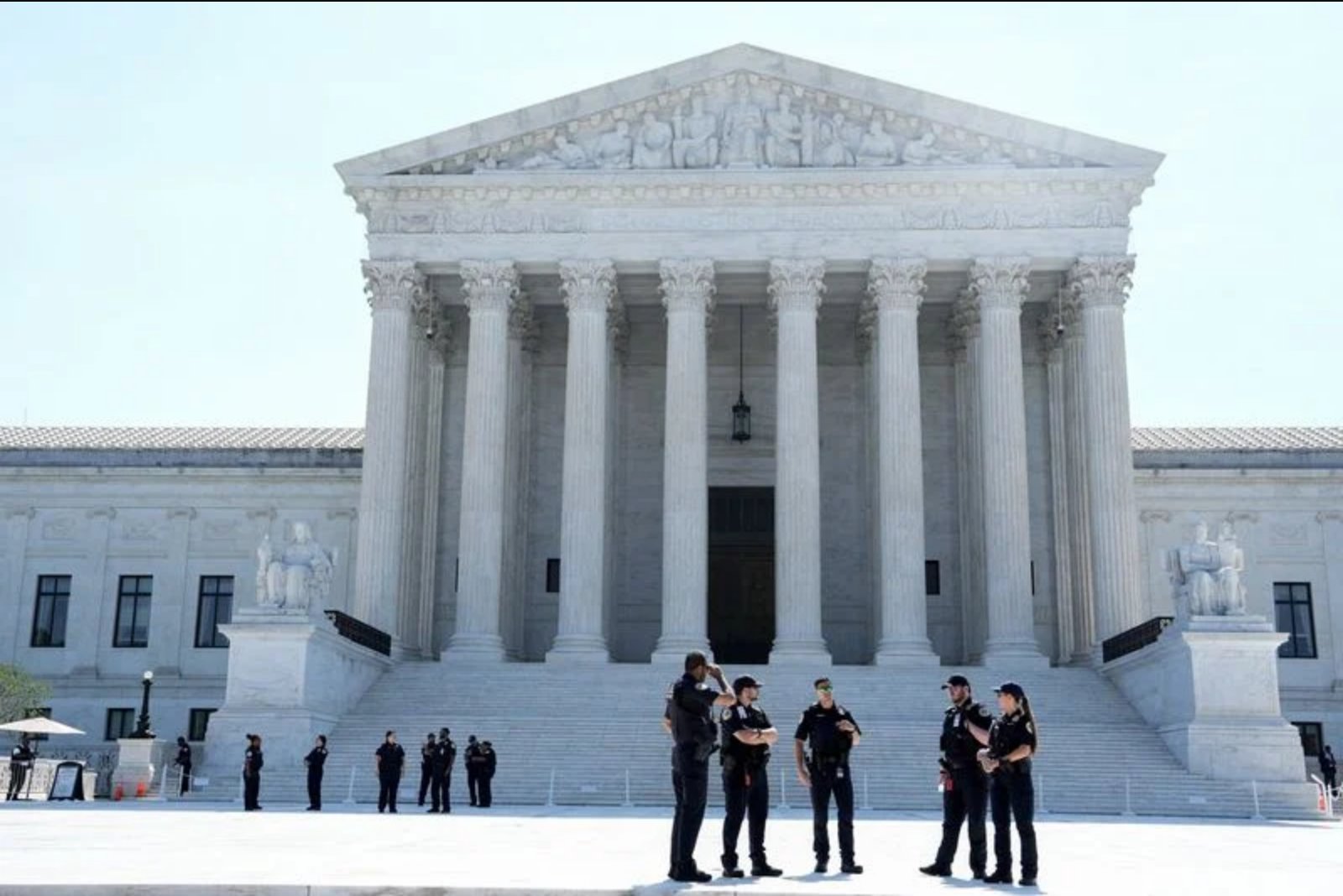
The U.S. Supreme Court closed a packed term by handing the White House a notable legal setback on birthright citizenship while simultaneously sanctioning state-level restrictions on transgender athletes and removing certain federal campaign finance limits.
In a 6-3 decision authored by Chief Justice John Roberts, the court concluded that a presidential directive instructing federal agencies not to recognize the citizenship of children born in the United States when neither parent is a U.S. citizen or a legal permanent resident violated the 14th Amendment. Roberts wrote that "Citizenship, then and now, was the right to have rights - to freely participate in our political community," and added that the framers of the 14th Amendment extended that guarantee to every free-born person in the country. "We keep that promise today," he wrote.
The directive at issue had been a central element of President Donald Trump’s immigration agenda. Limiting birthright citizenship was one of the president’s top priorities, and he signed an executive order on the subject on his first day back in office last year. The administration’s instruction would have compelled federal agencies to deny recognition of U.S. citizenship to children born on American soil whose parents were neither U.S. citizens nor green card holders.
Opponents of the policy contended that the move amounted to racial and religious discrimination in immigration enforcement. The 14th Amendment, ratified in 1868 after the Civil War, confers U.S. citizenship on those born within the country who are "subject to the jurisdiction thereof." The amendment includes limited exceptions, such as the children of foreign diplomats or of members of an occupying force.
Before the ruling, some experts estimated the directive could have affected as many as 250,000 infants born each year and might have required families of millions more to provide evidence of their newborns’ citizenship status. The court’s decision means that, at least for now, the constitutional guarantee remains the controlling law for birthright citizenship.
Transgender athletes and Title IX
The court also addressed a suite of cases that deal with transgender students and public school athletics. Laws in West Virginia and Idaho require that public school sports - including university teams - be organized according to what the statutes describe as "biological sex," and bar "students of the male sex" from participating on female teams. State officials defended the measures as necessary to preserve fair and safe competition for women and girls. The courts were told there are 25 other states with similar laws.
Critics view those measures as part of a broader campaign by some states and the federal administration to curtail the rights of transgender Americans. Lower courts had previously sided with transgender students who challenged the bans on the basis that they violated constitutional protections and federal anti-discrimination law.
On Tuesday the Supreme Court reversed those lower court decisions. The justices unanimously held, 9-0, that the state laws do not violate Title IX, the federal civil rights statute that prohibits discrimination "on the basis of sex" in educational programs that receive federal funding. In a separate, ideologically split ruling, the court's six conservative justices found that the state measures likewise do not breach the 14th Amendment’s guarantee of equal protection.
"Consistent with Title IX and the Equal Protection Clause, we hold that the states may maintain women’s and girls’ sports for biological females. They may determine eligibility for women’s and girls’ sports based on biological sex. The Constitution and Title IX do not require an overhaul of women’s and girls’ sports throughout America," wrote Justice Brett Kavanaugh.
This decision represents the court’s second major ruling against transgender plaintiffs in roughly a year; in June 2025 the court permitted states to ban gender-affirming medical treatments for transgender minors in a Tennessee case.
Campaign finance limits
In another high-profile ruling during the same session, the court struck down federal limits on the amount of coordinated spending parties may undertake with input from candidates. The case was brought by Republican challengers, including Vice President JD Vance, and the decision was handed down 6-3 along conservative lines.
The court found that existing caps on party-candidate coordinated expenditures violated the First Amendment’s protection against government abridgment of free speech. The ruling arrives as major Republican committees head into the November midterm elections with what proponents describe as a substantial cash advantage over Democratic counterparts.
Since 2010 the Supreme Court has issued several rulings that constrained campaign finance restrictions; Tuesday’s decision continues that trajectory by loosening limits on collaborative spending between political parties and their candidates.
A consequential term
This term the court issued numerous decisions with far-reaching implications across policy domains. Earlier in the year, in February, the justices rejected a bid by the administration to impose sweeping global tariffs using a law intended for national emergencies. In April, the court curtailed a key provision of the Voting Rights Act - a decision described as a victory for Republicans.
On Monday, the court sustained the president’s authority to remove a member of the Federal Trade Commission, overturning a 1935 precedent that had limited presidential ability to fire officials at independent agencies. In a separate matter, however, the court declined to allow the immediate firing of Lisa Cook, a member of the Federal Reserve Board of Governors, in a different case.
This month the justices permitted the administration to withdraw a humanitarian status that had shielded hundreds of thousands of Haitian and Syrian immigrants from deportation, and issued rulings favorable to the administration on asylum policies. In March, the court rejected a Colorado law that prohibited psychotherapists from using so-called conversion therapy on LGBT minors.
Over the past several weeks the court also expanded gun rights. It invalidated a Hawaii law that restricted the carrying of handguns on private property open to the public - such as many businesses - without the property owner’s permission, and limited the application of a federal statute that bars firearm possession by certain drug users.
What this term signals
The court’s recent rulings collectively reshaped the legal landscape on a raft of contentious issues: citizenship, transgender rights in education and athletics, campaign finance, presidential authority over agency officials, immigration protections, voting rights, mental health regulations regarding minors, and gun regulation. Its decisions mixed outcomes that both aligned with and opposed the current administration’s priorities across different cases.
Given the court’s 6-3 conservative majority, which includes three justices appointed by President Trump, several of the term’s landmark decisions were decided along ideological lines. At the same time, the court produced unanimous rulings in some areas, including the Title IX finding related to the transgender athletes’ challenges.
As these rulings take hold, they are likely to prompt adjustments in how federal agencies, state governments, educational institutions, political parties, and families navigate the legal and regulatory environment shaped by the Supreme Court this term.