
Overview
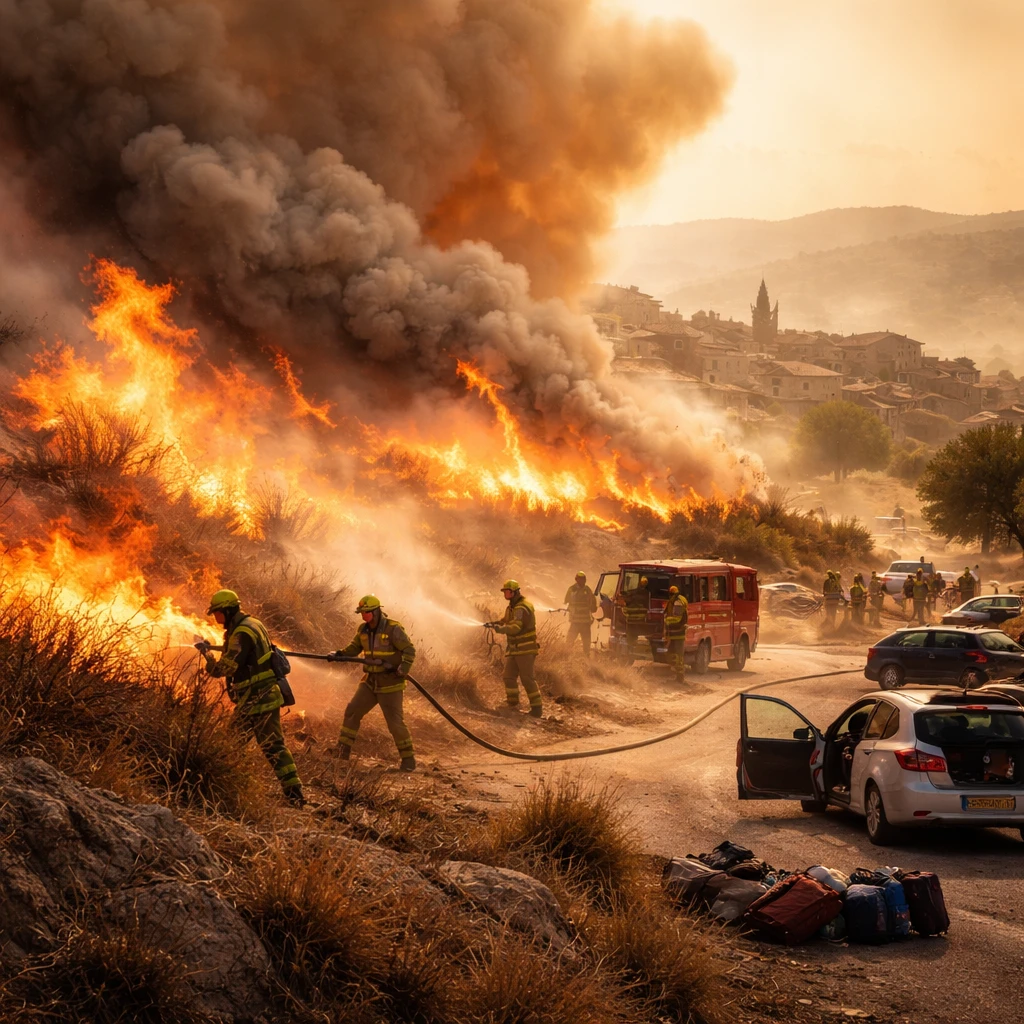
Fire services in Spain and France warned on Wednesday that the likelihood of additional wildfires in the coming days was very high, even as a major blaze in Spain's central province of Guadalajara showed signs of retreat. The broader Western European region has already seen more land burned this year than the two-decade annual average, as unusually persistent heatwaves and dry conditions elevate fire risk across large swathes of the continent.
Spain - Guadalajara fire and nationwide risk
Spain's most severe wildfire of the year has consumed an estimated 32,000 hectares in the Guadalajara region. The blaze began to stabilise on Tuesday, a development that permitted residents of five villages to return, though other restrictions and controls remain in force. Authorities in Castilla-La Mancha's INFOCAM fire service reported the partial lifting of evacuations; at the blaze's peak 34 municipalities were under evacuation orders and 14 others placed under confinement measures.
Visiting the affected area on Wednesday, Prime Minister Pedro Sanchez said Spain had already recorded 22 major wildfires this year. He added: "We have already reached 100,000 hectares before reaching the most critical period of the year in the fight against wildfires." Sanchez noted that 100,000 hectares is comparable to the annual average Spain experienced over the past decade and urged greater prevention efforts.
Spain's weather agency AEMET warned that the danger of wildfires remained "very high or extreme" across most of mainland Spain and the Balearic Islands, and that it was expected to intensify in the coming days. The agency urged citizens to "exercise extreme caution" as the current heatwave combines with dry thunderstorms and Saharan dust.
Weather forecasts indicate a slight easing of temperatures in some areas on Thursday, but a dry westerly wind is expected to push another surge of heat into Mediterranean regions, where highs of 42 to 44 C could occur in some localities. A more notable cooldown is anticipated from Friday, but temperatures are forecast to rebound from Sunday, with intense heat potentially returning across much of Spain early next week.
France - New blazes, fatality and restrictions
In France, firefighting crews are confronting multiple outbreaks. In the southwest Gironde region, a fire that swept across 100 hectares between Bordeaux and Cap Ferret prompted the evacuation of around 600 people near the village of Saumos and led authorities to redirect traffic away from beaches close to the fire zone.
Sophie Brocas, the prefect in Gironde, told reporters that conditions were exceptionally dry and that there were several fire outbreaks including one that remained complex to contain. Brocas announced a ban on all work that uses internal combustion engines - including forestry work and other tasks that could ignite fires.
Official forecaster Meteo France said the risk of additional wildfires would remain very high in western and southwestern France for the rest of the week, and in the southeast at least until Thursday. In the Var department in southeastern France, a separate wildfire that affected 2,500 hectares caused damage to dozens of homes and forced some 400 people to flee their residences. In total, officials said 44,000 hectares have burned in France so far this year, substantially higher than average.
Interior Minister Laurent Nunez visited Gironde on Wednesday to pay tribute to two firefighters who died on Tuesday when their truck was engulfed in flames while responding to a blaze in the region. Officials also reported another active fire in the Hautes-Alpes area of southeastern France.
Human activity, climate factors and regional forecasts
French authorities stressed the role of human activity in starting fires, noting that nine out of 10 wildfires begin as a result of human actions, whether accidental or intentional. In the wake of recent fatalities and the heightened risk period, officials urged the public to avoid behaviours that could spark new blazes, including using barbecues in areas affected by heatwaves.
Scientists cited in coverage have linked human-driven climate change with increased intensity of heatwaves, droughts and wildfires, while also noting the growing potential for sudden, destructive storms. The Reuters Climate Monitor - an interactive tool providing near real-time data - showed the average high temperature across Western Europe was forecast at 26.6 degrees Celsius (79.8 degrees Fahrenheit) for July 22, which is 3 degrees above the historical normal high for that date in the 1961-1990 reference period. The region has experienced three closely spaced heatwaves this year.
Heat and storm impacts in the Balkans and Mediterranean
Beyond Spain and France, the Western Balkans are contending with severe storms and hail after experiencing intense heat. In North Macedonia, a storm on Tuesday night in the capital Skopje felled trees, damaged roofs and caused power outages, sending 11 people to hospital, three with serious injuries. Roads were blocked, and some towns were left without electricity and water.
In eastern Kosovo, the Hydrometeorological Institute warned that more storms were expected on Wednesday and cautioned residents about the threat of lightning strikes, damage to the electricity network, power cuts, flooding and property damage. Local media outlets showed images of roofs blown away, torrential rain and scenes of residents covering their cars with blankets on Tuesday to shield them from hail.
Meanwhile, Greece faces highs forecast to top 41 C, prompting a ban on outdoor work during peak midday sun to protect labourers from extreme heat. Cyprus also imposed a ban on outdoor work during afternoon hours on Wednesday, reflecting elevated heat-related safety concerns in parts of the eastern Mediterranean.
Concluding context
Authorities across the affected countries continue to balance firefighting and evacuation operations with efforts to reduce ignition risks, even as weather patterns remain unstable. Officials emphasise vigilance as temperatures and dry conditions persist, raising the possibility of renewed fire activity while some areas could receive brief relief before heat returns.