
MANILA, Aug 18 - The Philippine government does not anticipate any reduction in its military activities with the United States despite the redeployment of some American defence assets to the Middle East, a military spokesperson said on Monday.
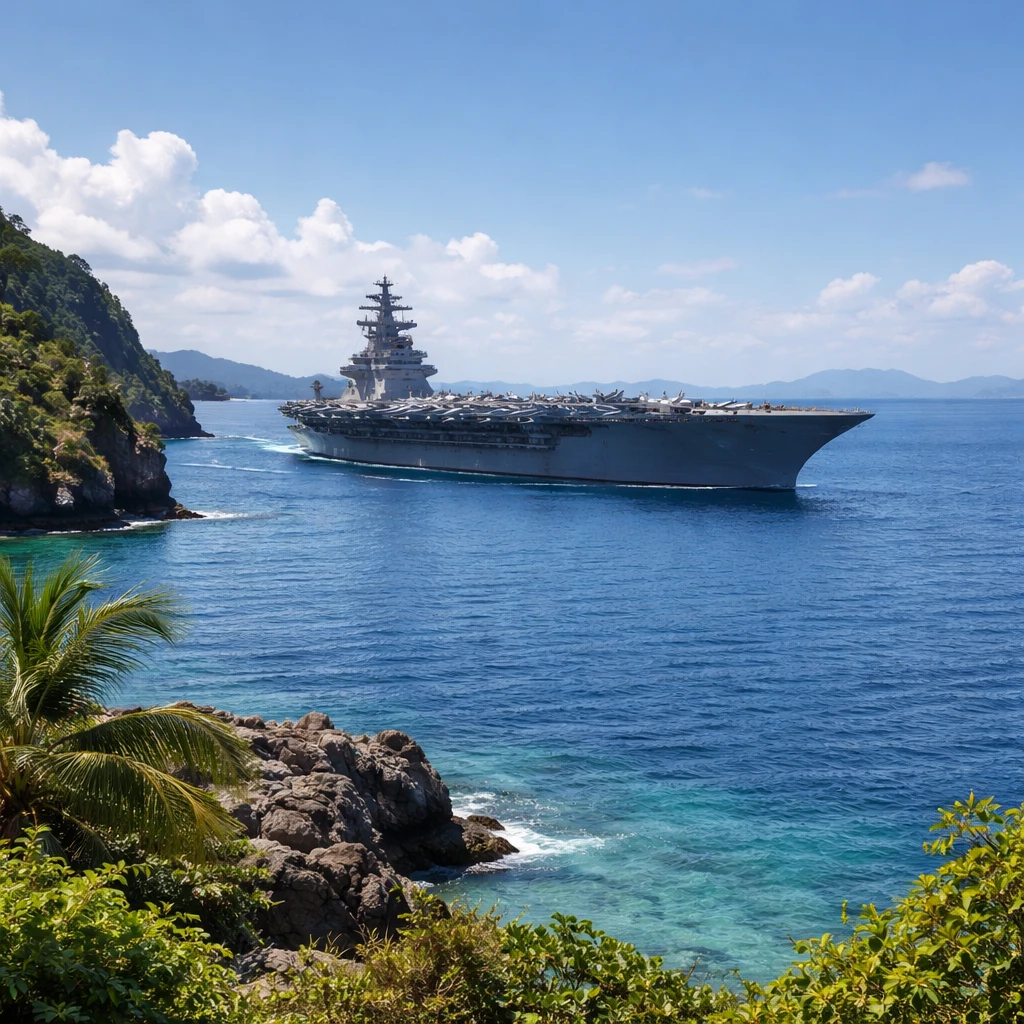
Roy Vincent Trinidad, speaking at a press briefing, addressed concerns raised by the transfer of assets - notably the USS George Washington aircraft carrier - from the Pacific to the Middle East. The move had prompted questions about U.S. defence arrangements in the Indo-Pacific, but Trinidad said the Philippines saw no weakening of Washington's commitment.
"We do not foresee any dip or any slowing down in our activities," Trinidad told reporters. He added, "The defence commitment between the U.S. and the Philippines is ironclad."
The comments came after President Donald Trump instructed the Pentagon to reduce the scale of joint military exercises with South Korea. The president cited the cost of the drills and Seoul's refusal to take part in actions against Iran as the reasons for the instruction.
Manila is one of Washington's closest defence partners in Asia. The two countries maintain a long-standing mutual defence treaty, as well as agreements governing visiting forces and U.S. access to various defence sites and bases across the Philippine archipelago.
Each year the Philippines hosts numerous events and war games with U.S. forces involving thousands of military personnel. In recent years the bilateral relationship has included some of the allies' largest joint exercises, and Manila has approved a new slate of activities for the coming year that includes large-scale drills and exchanges among subject-matter experts.
During a visit to Manila last week, Pentagon policy chief Elbridge Colby reaffirmed Washington's stance on regional engagement, repeating that the United States is not disengaging from Asia and is focused on sustaining a favourable balance of power in the Indo-Pacific.
Philippine officials framed the ongoing volume of planned exercises and exchanges, along with recent high-level U.S. visits, as evidence that redeployments to other regions will not translate into a reduced tempo of joint activities in the Philippines.