
Summary
July 20 - Nicaragua's long-serving president, Daniel Ortega, announced that the Central American nation will stop holding elections, effectively removing the possibility of an electoral challenge when his current term concludes next year. Ortega offered no specifics on the mechanism for such a ban during remarks marking the 1979 Sandinista revolution.
Ortega's announcement and immediate context
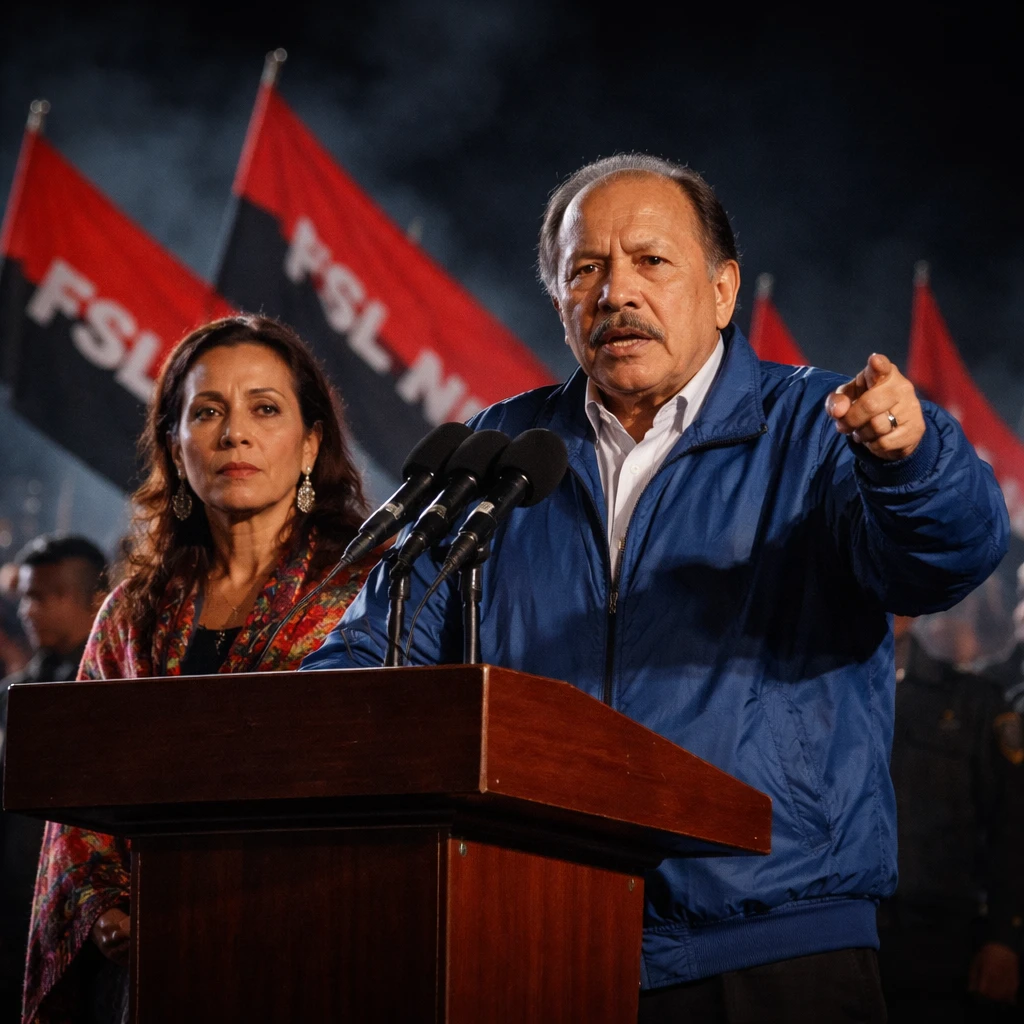
In a Sunday evening address meant to commemorate the Sandinista uprising that toppled the Somoza dictatorship in 1979, Ortega said the country would no longer stage elections. He described the change as closing off any path the opposition might use to seize power, but he did not outline steps for how the prohibition would be carried out. "There won’t be any more elections here for them to try to seize the government and seize power," Ortega said. He added: "The days when parties backed by the Yankees (United States) and the Somocistas would return to power are over - never again." The speech was the 80-year-old leader’s first public appearance in two months.
International response and sanctions
The U.S. State Department did not immediately respond to a request for comment following Ortega's remarks. The previous U.S. administration characterized the Ortega government as a dictatorship and imposed sanctions covering more than 2,350 Nicaraguan officials and their relatives.
Background on the political environment
Nicaragua's last national vote in 2021 was widely contested after the Ortega government detained opponents and business figures and criminalized dissent. In the year since, constitutional amendments were enacted that named Ortega’s wife, Rosario Murillo, as "co-president" and extended the presidential term to six years. Together, Ortega and Murillo now exercise control across the state, including the armed forces and the judiciary, according to observers cited in the available record.
Human rights and past crackdowns
The U.N. Human Rights Council has accused the Ortega-Murillo administration of turning Nicaragua into an authoritarian state and of systematic human rights violations. In 2018, a government crackdown on widespread anti-government protests resulted in more than 300 deaths, an episode frequently referenced by critics of the administration.
Reactions from analysts and opposition figures
Analysts and opposition leaders in exile said Ortega's declaration highlighted the reality of two-person rule and signaled the couple's apprehension about the emergence of a viable opposition. Tiziano Breda, a senior analyst at Armed Conflict Location & Event Data, said: "Ortega and Murillo are evidently afraid at the idea that the slightest political opening could create the conditions for dissent to manifest and threaten their grip on power. Instead of staging a rigged election, they have opted to eliminate electoral competition altogether." He added that the country has become a "full-fledged, family-run dictatorship."
Felix Maradiaga, an opposition presidential hopeful who was jailed between 2021 and 2023 and later expelled to the United States, described Ortega's remarks as "a confession of fear." Maradiaga said Ortega had publicly acknowledged his intention to prevent his project from ever facing democratic competition.
Salvador Marenco, coordinator of the Costa Rica-based Nicaragua Nunca Más Human Rights Collective, said Ortega had effectively neutralized competition in previous election cycles, including re-elections in 2011, 2016 and 2021. Marenco argued that last year’s constitutional amendments had already entrenched a one-party dynamic in a country where opposition leaders no longer exist because they have been exiled. He said Ortega was trying to "avoid the risk of an electoral defeat, because he knows that the people reject him."
Implications
Ortega’s announcement removes the formal route for political turnover and further concentrates authority in the hands of Ortega and Murillo. The declaration also underscores persistent tensions between the government and international actors, and it intensifies concerns raised by human rights bodies and opposition figures about democratic backsliding and systemic repression.