
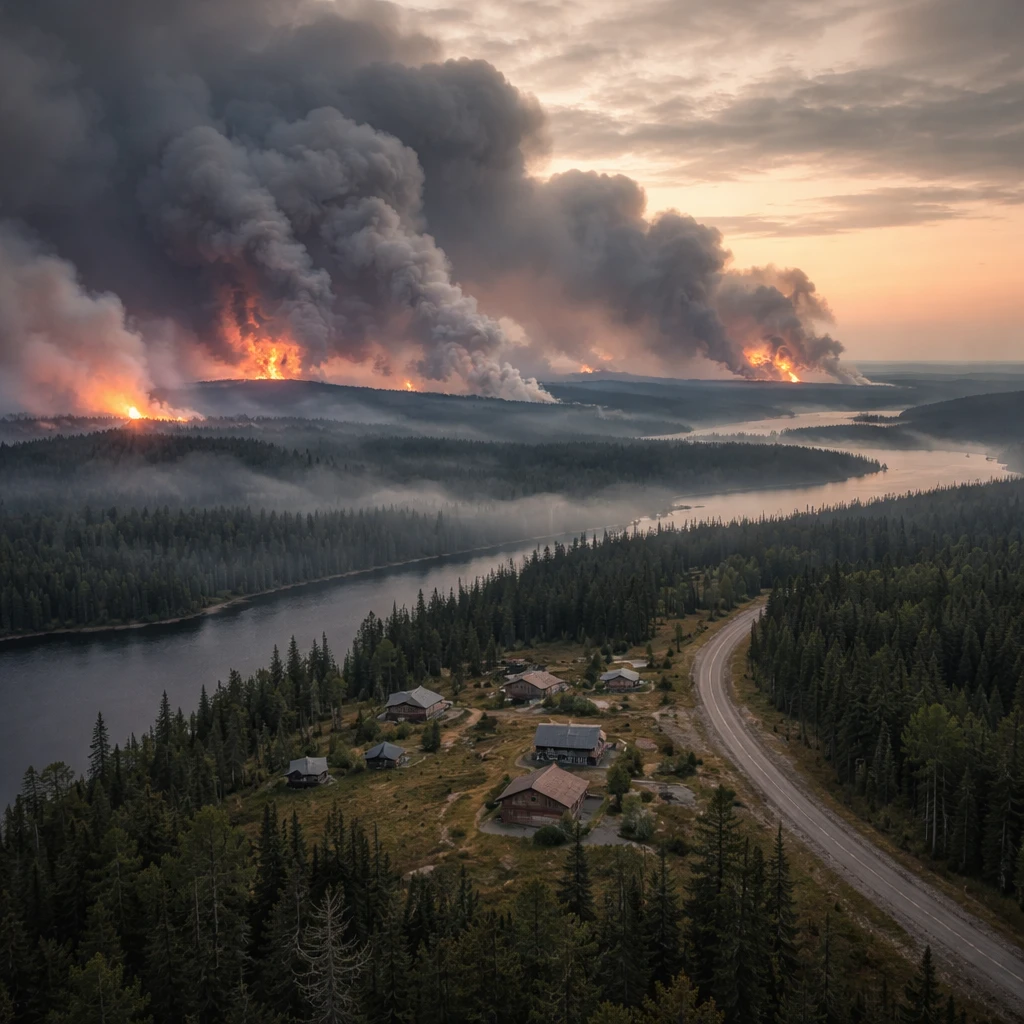
Ontario’s wildfire crisis has intensified, with the total area burning rising to 735,000 hectares from 650,000 hectares over the weekend, Premier Doug Ford said on Monday during a news conference in Toronto.
Ford said the province is confronting 190 active fires and that approximately 1,800 residents had been evacuated from sparsely populated communities in northwestern Ontario. "We will not spare a penny fighting these fires and keeping people safe," he said.
Most of the blazes are in areas that are hard to access, limiting containment options and complicating firefighting operations. The size and location of the fires have also contributed to broader air quality impacts well beyond the province.
Last week, dense smoke originating from fires in northern and western Ontario, together with smoke from northern Minnesota, produced some of the worst air quality in the world in Toronto before drifting eastward to New York and Washington. Since then, air quality has improved in southern Ontario and in parts of the U.S. Northeast and Mid-Atlantic. However, conditions remained poor in several U.S. states in the Midwest.
As of 11:30 a.m. ET (1530 GMT), the U.S. Environmental Protection Agency’s AirNow site rated conditions as "unhealthy" or "unhealthy for sensitive groups" across areas that include parts of Wisconsin, Iowa, Missouri, Illinois, Indiana, Ohio and Michigan.
The wildfires have heightened tensions between Canada and the United States after criticism from some U.S. politicians of Canada’s wildfire response. U.S. President Donald Trump said on Sunday that he told Canadian Prime Minister Mark Carney that Canada must do better at controlling Ontario wildfires. The conversation took place at the FIFA World Cup final that both leaders attended on Sunday, according to Trump.
Trump’s comments followed an earlier threat to impose additional tariffs on Canadian goods as a response to the smoke. Carney has not directly replied to Trump, though he has said that all countries including the U.S. must do more to address climate change.
Premier Ford described the criticism and threatened tariffs as "unacceptable," saying it was inappropriate for the U.S. leader to criticize Canada’s response rather than offer assistance. Ford pointed to past Canadian help during U.S. disasters as evidence of reciprocity: Ontario sent hydro workers to the U.S. in 2024 to assist after Hurricane Helene, and water bombers were sent to California to fight wildfires in 2025.
"Rather than criticize and threaten Canada, your closest friends, maybe one day you're going to need our help," Ford said.
Major forest fires have become a recurrent phenomenon in Canada, which contains some of the world’s largest forested areas. Climate experts cited in the context of the situation say rising temperatures have made timber drier, increasing the risk of large fires.
Context note: Information in this report reflects statements and data provided by provincial and U.S. agencies and officials during the referenced period.