
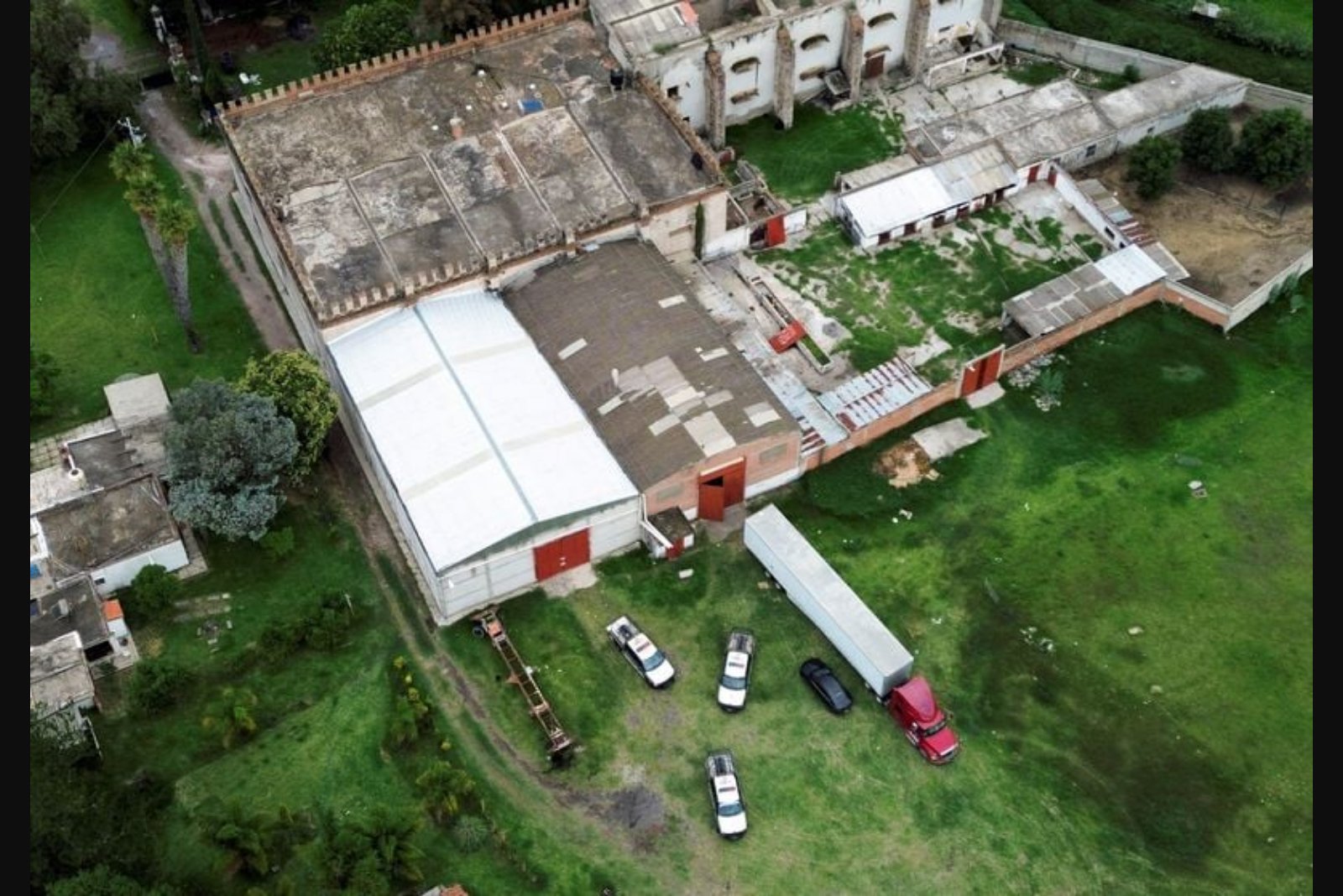
Mexican authorities reported that on June 22 they seized just over three metric tons of cocaine in two separate operations, one in the western state of Guerrero and another in the central state of Tlaxcala. The scale and location of the seizures have prompted analysts to suggest organized criminal groups may be shifting larger quantities toward the capital to satisfy a surge in consumption during the World Cup.
Tlaxcala, a landlocked state that neighbors Mexico City and is not usually cited as a trafficking corridor, was the site of one of the large seizures. Six security experts interviewed by reporters pointed to the timing of the tournament and the influx of visitors as a plausible explanation for why significant quantities of cocaine would be stored in facilities closer to the capital.
"The increase in demand expected for the World Cup in Mexico City may have led criminal groups to increase their supply in warehouses near Mexico City, which facilitated such a large seizure," said Andrés Sumano, a security expert at El Colegio de la Frontera Norte in Tijuana. "Just like any company does at massive events... large groups that are dedicated to drug trafficking have more drugs in warehouses to be able to meet the demand."
Reporters also spoke with three drug sellers operating in Mexico City who said they had observed a rise in demand tied to the World Cup. Mexico had been expecting 5.5 million visitors for the tournament. One dealer, who spoke on condition of anonymity, described the trade as a business and said international events present strong opportunities to increase sales: "This is a business, and if the client wants something, then we have to see how we’re going to give them what they’re looking for," he said, adding that events like the World Cup are always a "good opportunity" to boost business.
Government authorities did not explicitly associate the seizures with the World Cup in their public announcement, and requests for comment to the Mexico City government and the presidency received no response. Local officials in Tlaxcala also urged caution before drawing conclusions from the incident.
Antonio Martínez, a spokesperson for the Tlaxcala government, said the seizure in his state "does not constitute evidence that Tlaxcala is a center of operation or distribution for organized crime, nor is there any information that allows linking this fact to international events."
At the same time, a researcher with Mexico's National System of Researchers said the tournament is a plausible explanation for the unusual cache found in Tlaxcala. Vicente Sánchez said the proximity of the state to Mexico City makes the World Cup a likely motivator for storing larger volumes of cocaine closer to urban demand.
"The hypothesis is that this unusual seizure in Tlaxcala could be linked to drug use, such as cocaine, around the time of the World Cup, especially given its proximity to Mexico City," Sánchez said.
Officials and analysts offer contrasting emphases: some point to operational motives for traffickers to stage product nearer to demand centers ahead of a mass event, while local authorities caution that a single seizure does not by itself prove the existence of a broader distribution hub. The public statements and interviews reflect both the intelligence perspective that traffickers adapt logistics to large gatherings, and the local government view that ties to international events have not been established in this specific case.
As investigations continue, the seizures underscore the interplay between large-scale public events, expected visitor flows, and how illicit supply chains may respond. Authorities and analysts are watching whether further operations reveal more about the intended destination and distribution networks for the seized narcotics.