
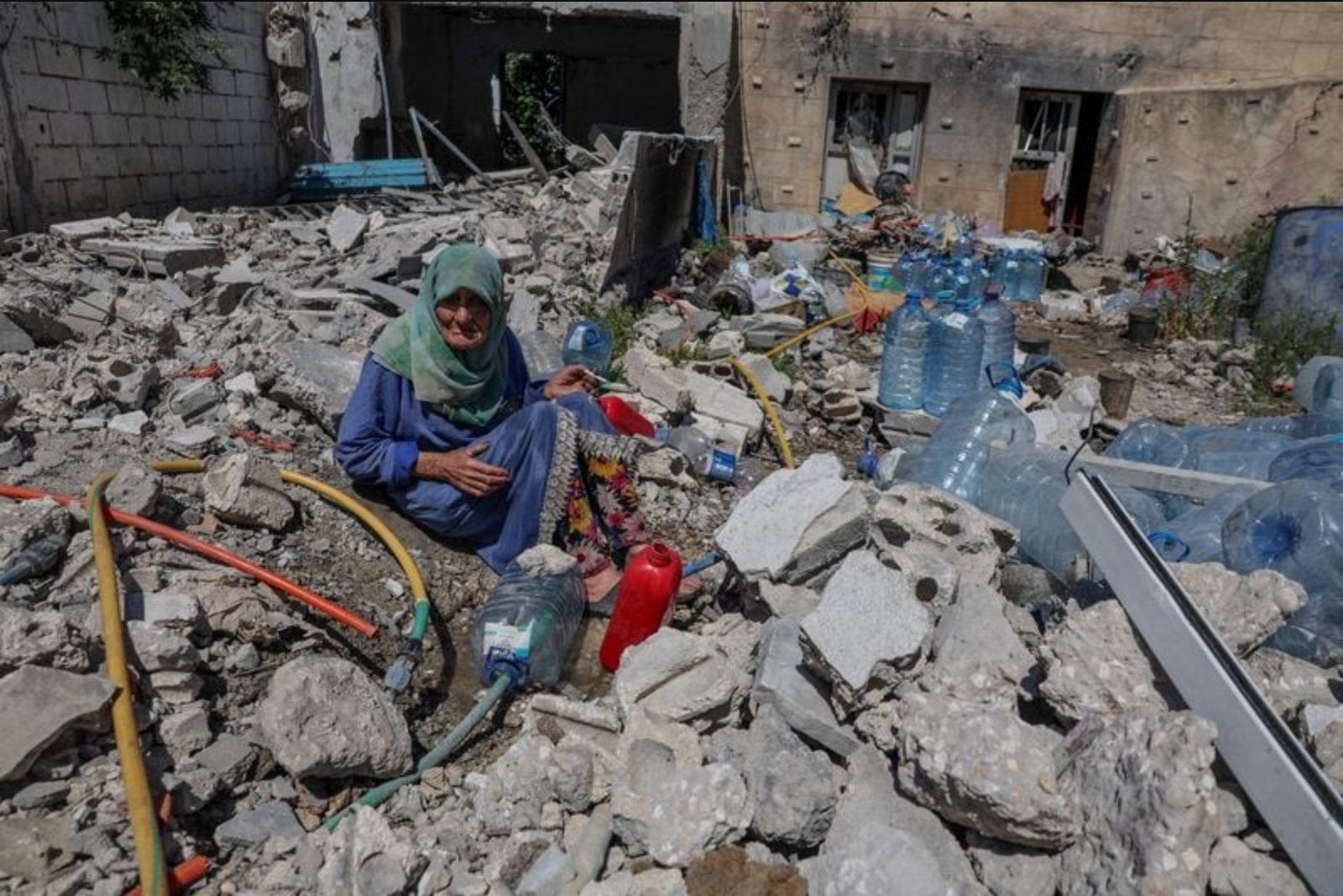
When Abed Hachem rebuilt his house following damage sustained during fighting in 2024, he hoped the structure would stand for years. The 46-year-old father of three returned to Qlaileh this week only to find the place where his home had been reduced to rubble, and the garden that once bloomed layered in dust. Toys and pieces of furniture lie scattered and coated in fine gray powder inside what remains of his living room.
"Oh dear... Oh God. There was a building here... here... there was a building here," Hachem said as he pointed to the husks of neighboring houses. The mosque spire is one of the few elements of the village still standing amid the devastation.
The most recent phase of fighting between Hezbollah and Israel began on March 2, when Hezbollah fired at Israel in support of Iran, drawing Lebanon into a wider regional conflict. Israel responded with air strikes and a ground invasion that occupied parts of southern Lebanon. Officials report more than 3,900 people killed and some 1.2 million displaced, while Israeli forced evacuation orders emptied entire villages in the south.
Israel has stated that its campaign targets Hezbollah forces and military infrastructure. For residents returning now, that explanation does little to ease the loss they confront as they try to reassemble daily life.
"The whole village is destroyed. My house is destroyed. The village is destroyed. Where are we supposed to go now?" Hachem asked. "There is nothing left. A lifetime's work is all gone." He spoke of a neighbor he considered a brother, a man with whom he shared tea each morning; both the neighbor and the neighbor's son were killed. "They have nothing to do with political parties, nothing to do with weapons, nothing to do with wars," Hachem added. "The man was just trying to support his family, and he and his son died for nothing."
An interim deal between the United States and Iran brought a temporary lull earlier this week, permitting some displaced people to return home. Fighting flared again before a new ceasefire took effect on Friday afternoon, underscoring the fragile nature of pauses in the violence and the uncertainties facing those attempting to go back.
Hachem said he wished the agreement that briefly eased the violence had come sooner. "This agreement they reached, they should have made it from the very beginning," he said. "Not after people were destroyed."
Contextual note: The accounts in this piece reflect the conditions and statements reported by residents returning to southern Lebanon and summarize the course of the recent fighting as described by local sources and official statements.