
The International Olympic Committee has told human rights group FairSquare that its complaint against FIFA President Gianni Infantino does not fall within the remit of the IOC Ethics Commission, an IOC spokesperson said on Friday.
FairSquare had charged that Infantino repeatedly breached rules on political neutrality by publicly expressing support for the actions and policies of U.S. President Donald Trump. The organisation said it would pursue the matter further after receiving the IOC response.
According to the IOC spokesperson, "The IOC Ethics Commission thoroughly analysed the complaint by FairSquare." The statement continued: "The IOC Ethics Commission noted that the current complaint, including with regard to the FIFA President, refers only to the IF’s decisions on its governance and its management, including its relations with government, and to the IF’s implementation of the rules of its sport, which are both outside the scope of application of the IOC Code of Ethics." The spokesperson added: "The complaint falls outside the IOC Ethics Commission’s jurisdiction. FairSquare has been informed accordingly."
FairSquare has already taken related steps within football's own structures. Last year it submitted a complaint to FIFA’s Ethics Committee accusing Infantino of publicly backing the policies and actions of President Trump on multiple occasions.
Infantino, who has been a member of the IOC since 2020, has drawn attention for a number of public appearances alongside the U.S. president, an element central to FairSquare’s allegations. The group has pointed to those appearances as evidence of a pattern that it says violates political neutrality expectations for sports officials.
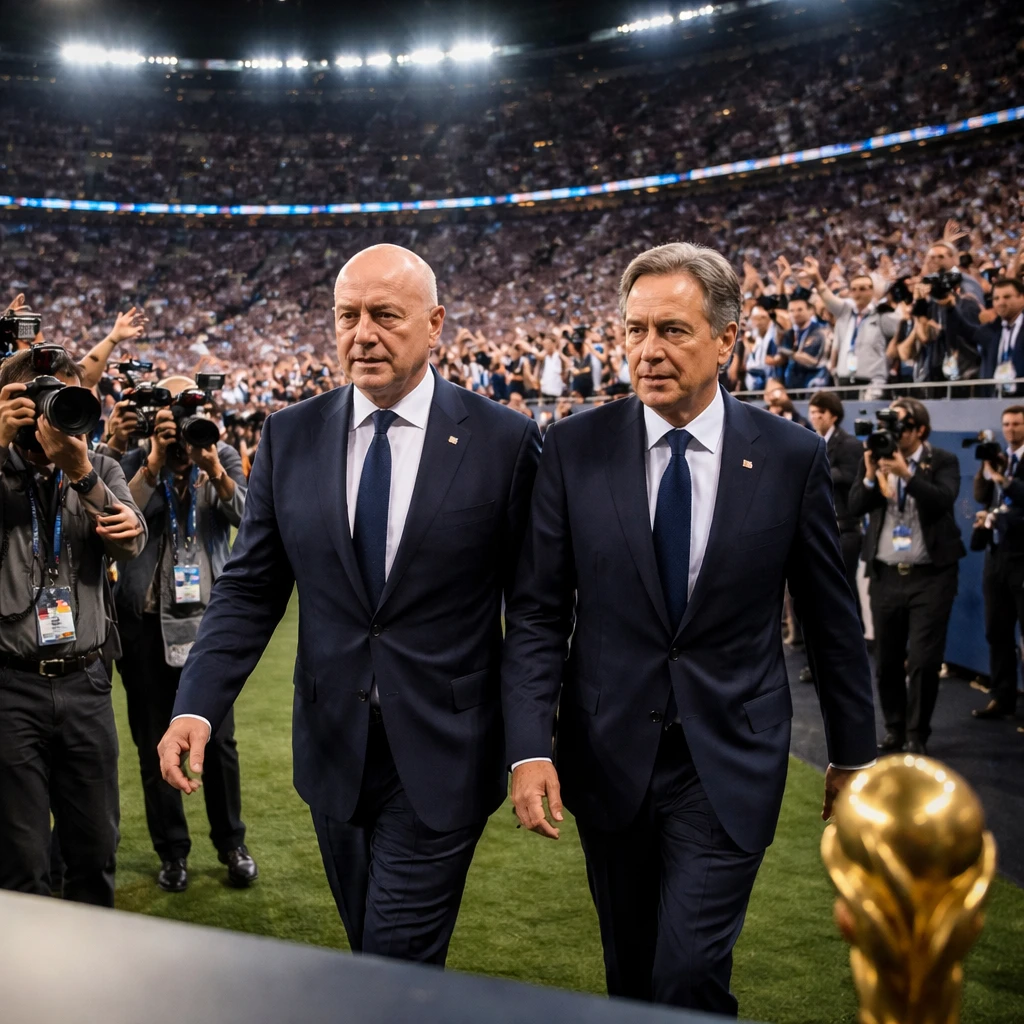
Their concerns were highlighted during this year’s World Cup, co-hosted by the United States, Mexico and Canada, where incidents involving President Trump attracted controversy. At the World Cup final trophy presentation at the New York New Jersey Stadium, boos were reported as the two men walked onto the field. The IOC statement did not address these incidents directly; it limited its response to the jurisdictional question.
Separately, President Trump said that earlier in the tournament he had phoned Infantino to request a review of a red card issued to U.S. striker Folarin Balogun in the last-32 match against Bosnia and Herzegovina. Balogun had been suspended for the last-16 fixture against Belgium but ultimately was permitted to play in that match, which the United States lost 4-1.
The U.S. president was also awarded FIFA’s inaugural Peace Prize in December, an award cited in discussions around his involvement in the sport and his interactions with football governing bodies. The IOC’s decision to decline the complaint leaves FairSquare to continue pursuing its claims through FIFA’s internal ethics process.
Implications and next steps
The IOC’s ruling on jurisdiction does not determine the merits of FairSquare’s allegations; it only states that the specific complaints relate to areas the IOC considers outside the application of its Code of Ethics. FairSquare has indicated it will continue to press its case within FIFA’s own ethics mechanisms.