
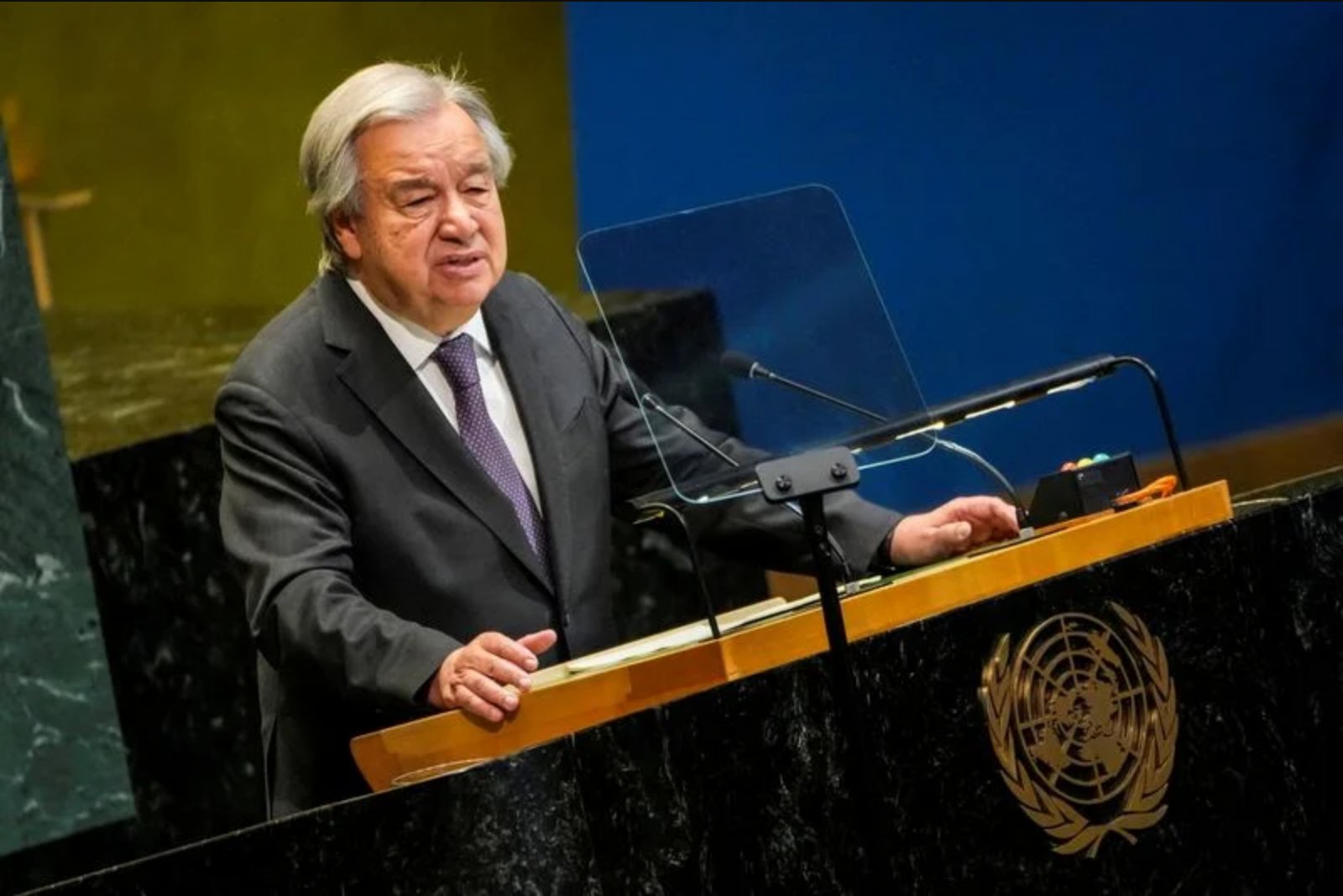
U.N. Secretary-General Antonio Guterres used an ad hoc General Assembly meeting on voluntary contributions to sound the alarm over an acute funding shortfall facing the U.N. Palestinian refugee agency, UNRWA. He said the organization was confronting a $100 million gap that, combined with broad operational restrictions in occupied Palestinian territory, has left the agency's situation increasingly precarious.
UNRWA delivers aid, education, healthcare, social services and shelter to 2.6 million Palestinians across Gaza, the West Bank, Lebanon, Jordan and Syria. Guterres warned that the agency's liquidity crisis endangered its capacity to fulfill the mandate that the General Assembly renewed with overwhelming support six months ago.
"They cannot keep going like this without urgent backing and financial support from member states," Guterres said, noting that UNRWA had already implemented deep cost-cutting and austerity measures. The secretary-general highlighted that the agency had taken decisive steps to institute reforms and revise its policy on outside and political activities following accusations from Israel.
Guterres described UNRWA as "a stabilizing force in an age of instability," and rejected what he called ongoing attempts to undermine the agency through "disinformation, smear campaigns, legislative actions, operational restrictions, diplomatic roadblocks and more." He warned that such actions imperil the welfare of millions of Palestinians and the safety of UNRWA staff.
The secretary-general cited heavy human costs in the conflict environment in which UNRWA operates. He said 390 UNRWA staff had been killed in Gaza since October 2023, and he noted that 1,000 Palestinians had been killed in Israeli attacks since a ceasefire announced in October.
Guterres also referenced donor actions that have affected UNRWA's finances. The United States, historically UNRWA's largest contributor, suspended funding in January 2024 after Israel accused about a dozen UNRWA staff of involvement in the October 7, 2023 attack that triggered the Gaza war. Sweden has also cut its 2025 funding. Several other major donors temporarily paused contributions while investigations into the allegations proceeded; most of those donors have since resumed funding.
The U.N. has said it fired nine UNRWA staff who may have been involved in the October 2023 attack, a strike that killed about 1,200 Israelis and foreign nationals. The U.N. has disputed organizational links with Hamas and pledged to investigate all accusations. Guterres noted an additional complication when a Hamas commander in Lebanon, who was killed in September by Israel, was found to have held a UNRWA position.
Operationally, UNRWA has already reduced the scale of its services. Guterres reported that the agency cut service delivery hours by 20% this year, reduced salaries for local personnel and left 15% of international posts vacant. He warned that "Any further cuts could push conditions past the breaking point."
U.N. spokesman Stephane Dujarric described UNRWA as facing an existential crisis. The results of the ad hoc meeting on voluntary contributions were scheduled to be announced on Wednesday, the spokesman said.
Financial figures on UNRWA's public website show that in 2025 the agency received roughly $887 million in pledges and $829 million in contributions. Those contributions represent only 27% of UNRWA's total funding needs of $3.3 billion, underscoring the scale of the shortfall compared with program requirements.
Conclusion
Guterres' intervention framed UNRWA's funding and operational constraints as an urgent international responsibility: without rapid and sustained financial support from member states, the agency's ability to provide essential services to millions of Palestinians and to protect its staff will be severely compromised.