
Summary
Laboratory results from the first round of environmental testing following a controlled military detonation of deteriorating lead-based explosives in rural Iowa indicate no measurable elevation in lead concentrations in surrounding soil, water or local drinking supplies compared with levels recorded before the operation. Air monitoring also registered no airborne lead for an extended interval after the blast, according to the Environmental Protection Agency.
Background and what was detonated
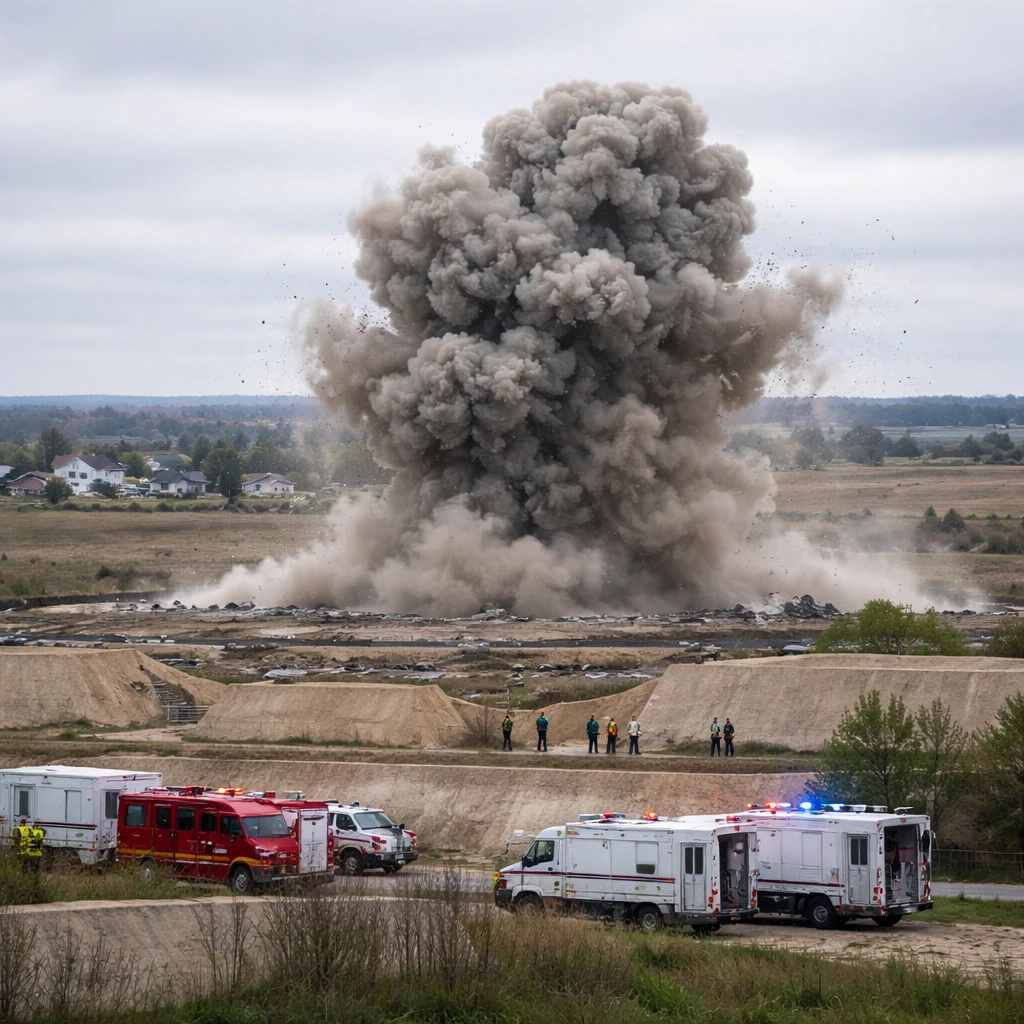
The Army carried out a planned demolition of almost 5 tons (4,500 kg) of highly volatile lead azide that had been stored in 68 degrading plastic drums. The demolition involved two simultaneous explosions at a munitions facility near the small farming community of Middletown, Iowa, located about 150 miles southwest of the state capital. The destruction was described by officials as a controlled, mitigated detonation intended to neutralize an immediate safety risk posed by the deteriorated stockpile.
EPA testing and early findings
Three days after the demolition, the Environmental Protection Agency posted initial laboratory readings gathered as part of an expanded sampling effort. According to the agency, results from about 88% of the post-detonation samples showed that measurable concentrations of lead in soil, water and drinking supplies were not higher after the blast than the concentrations measured in samples taken beforehand.
In a public statement posted on the social media platform X, the EPA said the first lab results indicated the Army's controlled detonation "did not result in an elevation of lead in the water bodies that act as drinking water sources." The agency added that there were "no detection of lead in drinking water sources taken after the detonation."
The EPA reported that its teams collected more than 1,600 samples of air, water, soil and dust following the detonation - a number similar to the samples taken prior to the operation. As part of the assessment, the agency said it evaluated 187 homes and other structures, including schools, playgrounds, churches and daycare centers.
Air monitoring and immediate response
Authorities evacuated residents living closest to the Army Ammunition Plant as a precaution ahead of the detonation. Other local residents were advised to shelter in place to minimize potential exposure to any lead-laden dust. In the hours immediately following the explosions, both the Army and the EPA reported that emission monitors detected zero airborne lead across the surrounding area. Later that day, an all-clear notice informed residents they could resume normal activities.
The EPA said its air monitoring recorded "0.0 µg/m3 readings" of airborne lead for 30 consecutive hours after the controlled detonation. Army officials credited the favorable air results to a set of containment measures intended to muffle the blast and limit the dispersal of dust and particulate matter beyond the detonation site.
Expert cautions and the need for continued sampling
Independent specialists welcomed the initial air quality findings but emphasized that atmospheric monitoring alone cannot fully define the extent of any fallout. Those experts noted that the definitive indicators of whether lead settled into the environment will come from comprehensive analysis of water, soil and structural surface samples - work that requires more time to complete.
Health risks from lead are well known and were highlighted by officials during the response. Lead exposure can produce a range of adverse outcomes, particularly for children, where it can interfere with cognitive development. Once lead settles onto surfaces and into environmental media, it does not break down and can persist.
Context: controversy, legal challenges and official rationale
The controlled detonation followed several days of heated public debate and legal challenges over the Army's disposal plan. Government officials maintained that the detonation was the safer option compared with leaving the unstable chemicals in place until they might detonate spontaneously. The Army said an inspection earlier in the year found the stockpiled drums were at imminent risk of spontaneous explosion, leaving officials with limited safe disposal options; officials stated it was too late to relocate the containers or to apply chemical neutralization.
Critics countered that the situation escalated because of mismanagement of the stockpile and poor planning, and environmental groups filed suit contesting an emergency permit the EPA issued to allow the Army to proceed. At one point, a presidential intervention ordered a pause until courts reviewed the matter. The 8th U.S. Circuit Court of Appeals subsequently upheld the EPA permit and lifted a previous injunction, enabling the Army to move forward with the operation two days later.
Local reaction and agricultural concerns
In the days after the demolition, residents expressed mixed reactions - relief that early indicators suggested limited toxic exposure and skepticism about transparency from authorities. Before the detonation, Army projections had suggested that lead dust could potentially settle on surfaces as far as 40 miles southwest of the site, stretching through southeastern Iowa into northern Missouri. Agriculture officials at the federal and state levels estimated that weather forecasts indicated as many as 350 farms might be affected by any fallout.
Ongoing work and what remains uncertain
The initial laboratory results posted so far cover a majority but not all of the samples, and the agency continues to analyze the remaining specimens. Officials have said that further analysis of the collected water, soil and structural surface samples will be needed to provide a fuller picture of any environmental impacts. Until that process is complete, uncertainties remain about longer-term contamination patterns and the persistence of any localized deposits.
Key takeaways
- Early lab analyses indicate no measurable increase in lead in soil, water and drinking supplies after the controlled detonation compared with pre-blast levels.
- Air monitoring recorded sustained zero readings for airborne lead for at least 30 hours following the explosion, and authorities credited containment measures for limiting dispersal.
- Comprehensive assessment of potential contamination requires continued analysis of water, soil and structural surface samples, and those results will determine the longer-term picture.
Who is affected
The testing and the event itself have direct implications for residents near the munitions plant, local schools and childcare facilities, farmers and the agriculture sector in the wider region. Markets and industries tied to regional agriculture and local property use may also be sensitive to any future findings about contamination and long-term remediation needs.
This report consolidates the agency statements, Army accounts and independent expert perspectives made public as testing and analyses proceed.