
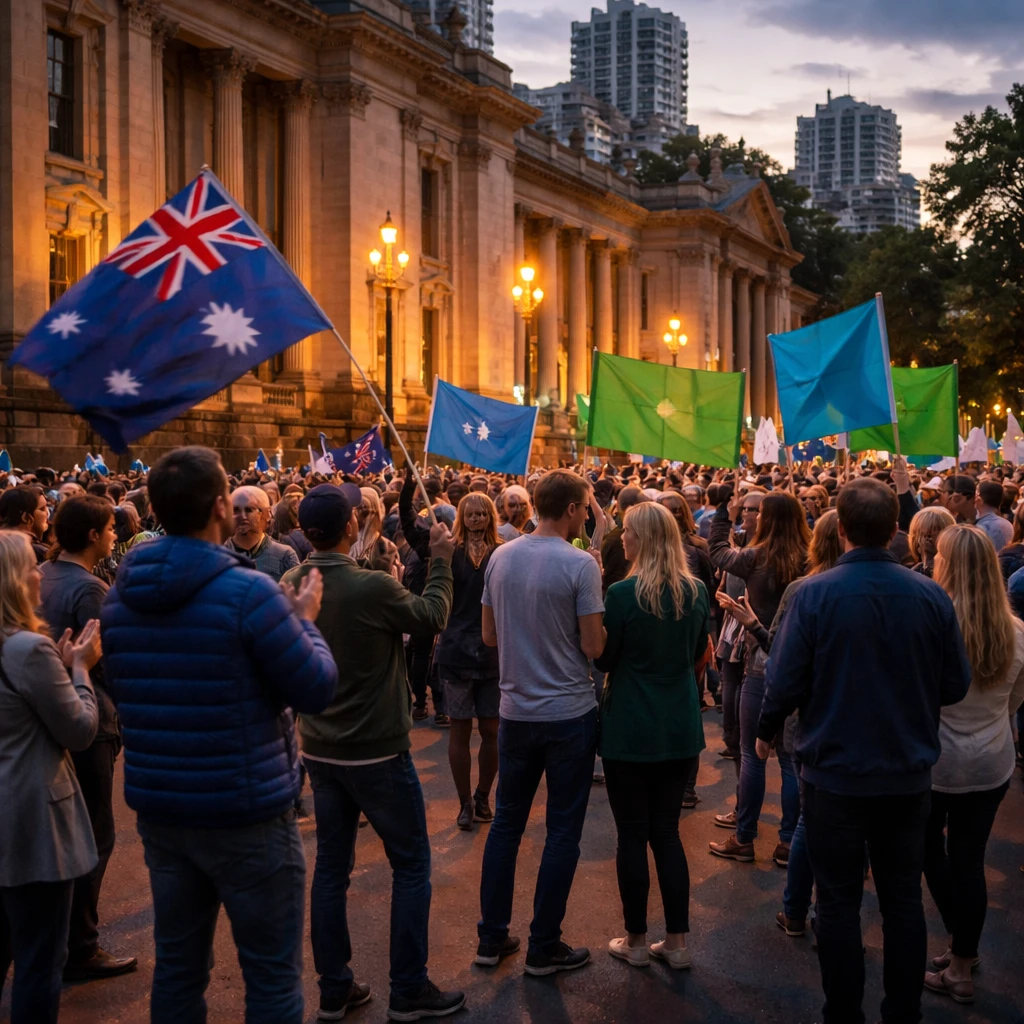
Conservative forces appeared set to win the state election in Victoria on Saturday, according to early counting and media projections, delivering a defeat to the incumbent Labor government after 12 years in office and staving off a breakthrough by the One Nation party.
As returns were tallied, Premier Ben Carroll conceded defeat, saying: "Victorians have spoken, and their message is clear: they want change." Projections by the Australian Broadcasting Corp, based on early vote counts, showed the centre-right Liberal-National coalition on track to secure a majority of the state’s 88 lower-house seats, marking the end of Labor’s long stretch governing the state.
About an hour and a half after polls closed, ABC election analyst Casey Briggs said: "We’re confident at this point that that number is not going to climb anywhere near enough to see Labor win enough seats to form government," adding, "We have a Coalition government in Victoria."
The result will reverberate beyond Victoria, signaling potential challenges for Labor at both the state level in New South Wales and federally, where elections lie ahead amid similar economic pressures. At the same time, analysts said the outcome could reassure parts of Australia’s political establishment that the populist forces reshaping politics in some other countries have not fully remade the Australian political landscape.
Projections indicated Labor would secure far fewer than the 45 seats required to form government, a steep decline from the 54 seats it held going into the election. The party also suffered notable personal losses, including Premier Carroll losing his seat in a state Labor has administered for 23 of the last 27 years.
One Nation, which had climbed in opinion polls over the past year on the back of voter frustration with housing costs, immigration and living standards, was projected by the ABC to win as few as no lower-house seats. Founded by Pauline Hanson in 1997 and long a fringe force, the party positioned itself after the federal conservative coalition’s defeat in 2025 as an Australian analogue to populist movements overseas. The early returns suggest that while dissatisfaction on issues such as affordability has grown, many voters opted to register their discontent through mainstream parties rather than entrusting power to an anti-establishment movement.
For Labor in Victoria, the scale of the defeat had been widely anticipated by some observers given a dozen years in power that included overseeing Melbourne through what has been described as the world’s longest lockdown during the COVID-19 pandemic, a legacy that left residual distrust among parts of the electorate and contributed to what the article describes as the state’s biggest debt.
The incoming leader of the Liberal-National coalition, Jess Wilson, 36, who will become both the state’s youngest premier and its first female premier, was expected to address supporters at a campaign event later on Saturday. Pauline Hanson was also scheduled to speak to her supporters that evening.
Summary and context in brief:
- Early counting and media projections indicate the centre-right Liberal-National coalition will form government in Victoria.
- Labor is projected to fall well short of the 45 seats needed to govern, dropping from 54 seats prior to the election.
- One Nation’s surge in polls did not translate into expected lower-house seats in early returns.