
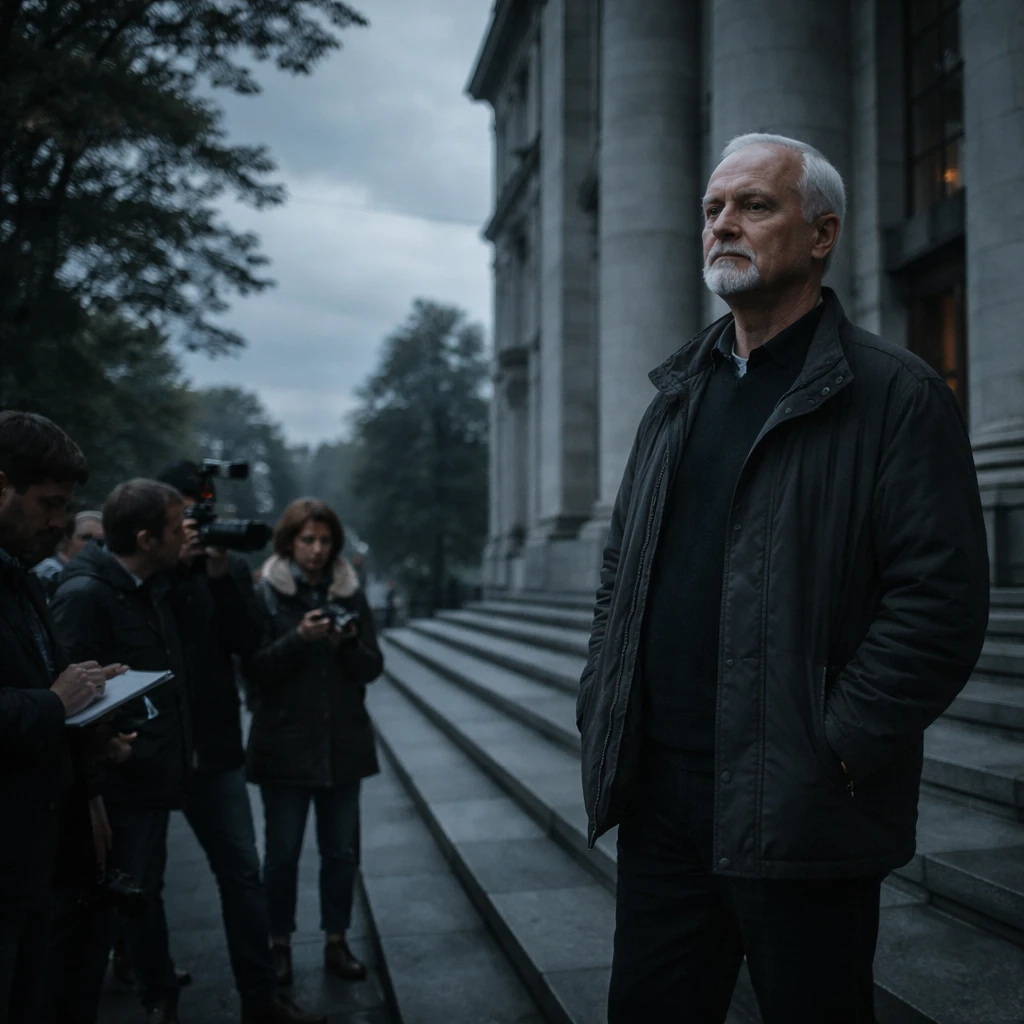
Ales Bialiatski, the Belarusian human rights advocate freed after 4-1/2 years behind bars and expelled from Belarus last December, told Reuters that U.S. engagement with Minsk has achieved tangible releases of detainees but failed to alter the country’s repressive governance.
Bialiatski, who shared the 2022 Nobel Peace Prize, was released as part of negotiations organized by John Coale, the United States envoy on Belarus appointed under President Donald Trump. Coale has said he expects to return to Minsk this month and hopes to secure another substantial group of releases in talks that would include a meeting with President Alexander Lukashenko - their first since March.
While acknowledging his gratitude to U.S. negotiators for obtaining his freedom, Bialiatski argued that the transactional nature of the diplomacy - easing sanctions in exchange for prisoner releases - does not change the foundational characteristics of Lukashenko’s rule.
"It’s essentially a pure trade. An exchange is taking place - hostages for a change in sanctions - but this doesn’t alter the fundamental nature of the Belarusian regime," Bialiatski, 63, said during an interview on a visit to Oslo. "While I am glad to be free... the machinery of repression keeps running. Every week we see new political prisoners and new methods of repression."
Lukashenko rejects the label of political prisoner for those detained, describing them instead as "bandits." Nevertheless, rights activists and opposition figures describe a pattern in which authorities release some detainees only to detain others, calling it a "revolving door."
Coale has taken credit for securing the release of between 700 and 800 people since mid-2025. Human rights group Viasna, which Bialiatski founded, reports that the net total of political prisoners has fallen to 888 from 1,185 at the start of June 2025, indicating that while many have been freed the overall scale of detentions remains significant.
Observers and opposition leaders question whether diplomatic approaches can pull Lukashenko away from his close ties with Russian President Vladimir Putin, noting Belarus’ political and economic reliance on Moscow as a complicating factor in efforts to produce broader political change.
Bialiatski also said pressure against activists outside Belarus was rising. He discovered last month that Belarus and Russia had placed him on a "wanted" database, though he said he did not know the specific grounds for that listing.
On the question of European policy, Bialiatski called for continued sanctions on Belarus, including measures targeting the export of potash fertiliser, a sector in which Minsk is a major producer. He said the European Union should not consider easing its stance while Belarus is assisting Russia in the Ukraine conflict.
Speaking about the prospects for Belarusian leadership change, Bialiatski said he saw little likelihood that Lukashenko, now 72 and in power since 1994, would voluntarily leave office, suggesting the president fears facing criminal charges if he steps down. "I think he’ll hold onto power until the very end," Bialiatski said.
Contextual notes embedded in the reporting indicate a diplomatic shift under the Trump administration: a decision last year to re-engage with Lukashenko represented a marked departure from previous U.S. policy that had treated him as a pariah because of his human rights record and his backing for Moscow’s war in Ukraine.
As Coale plans further visits to Minsk, advocates and analysts will monitor whether additional releases reduce the overall population of politically detained people or whether the pattern of new arrests offsets the freed detainees. For now, the human rights community and the opposition point to continuing repression even as individual detainees are returned to freedom.