
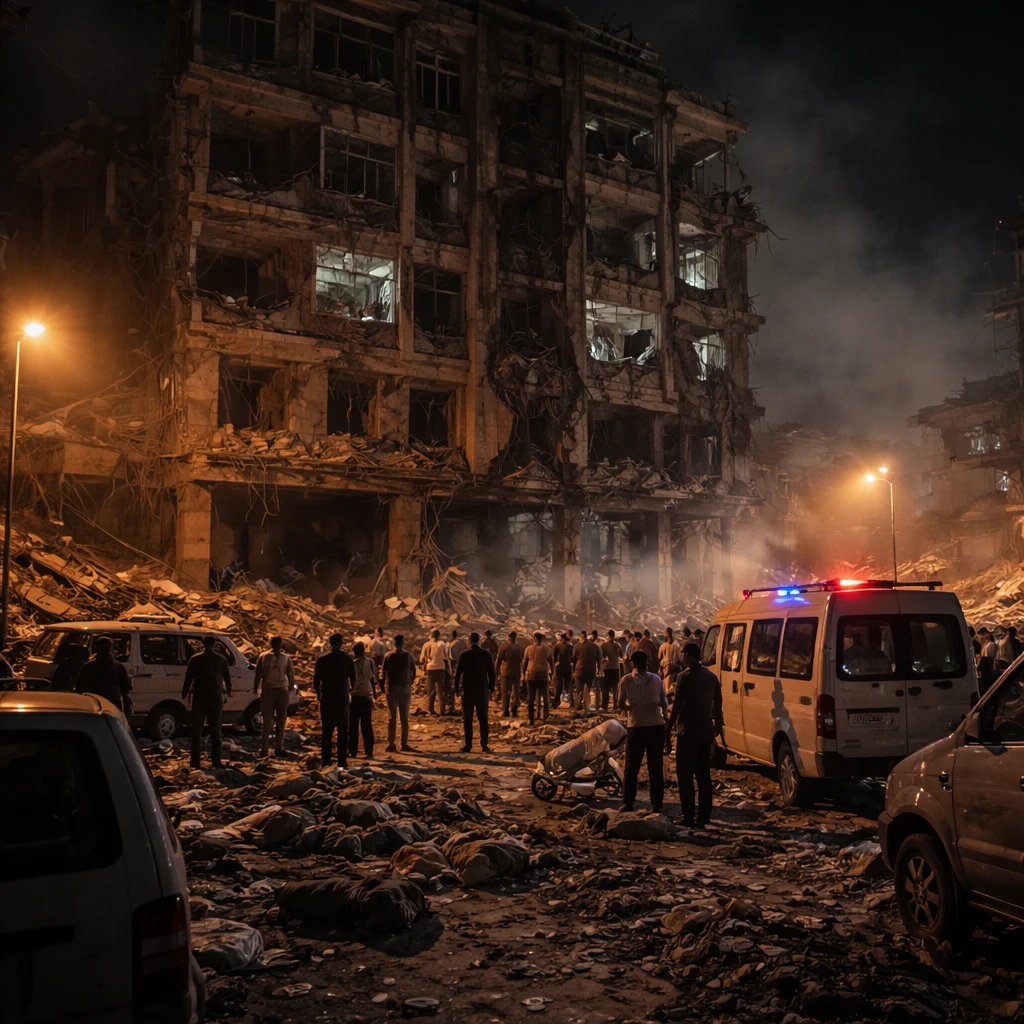
Amnesty International on Wednesday urged a formal inquiry into airstrikes carried out by Pakistani forces in Kabul on March 16, characterizing the incident as a "possible war crime." The United Nations Assistance Mission in Afghanistan (UNAMA) had earlier reported that the strikes killed at least 269 civilians and wounded 122 more.
The human rights organization said it found no evidence to substantiate Pakistan’s assertion that the strikes were aimed at "military and terrorist infrastructure." Instead, both UNAMA and the Taliban-run government have said the strikes hit a drug rehabilitation centre.
In its statement, Amnesty said the strikes violated the special protection afforded to healthcare facilities under international humanitarian law (IHL). It added that the attacks also breached the IHL principles of distinction, precaution and proportionality - principles designed to limit civilian harm in armed conflict.
Amnesty said its conclusions were based on a review of more than 60 photographs and videos taken at the site, alongside satellite imagery and interviews with current and former employees of the drug rehabilitation centre, among other sources.
Pakistan’s foreign ministry did not immediately issue a response to Amnesty’s findings. The day after the strikes, on March 17, Pakistani Information Minister Attaullah Tarar dismissed the Taliban government’s accusations as a "falsehood," writing that "no hospital, no drug rehabilitation centre, and no civilian facility was targeted."
The March strikes occurred amid a period of heightened clashes between Pakistan and the Taliban government in Afghanistan. The two sides have continued to report exchanges along the border in recent months.
Islamabad has defended the strikes as measures taken in response to a surge in militant attacks inside Pakistan, which it attributes to actors operating from Afghan territory. The Taliban government has denied that it supports Pakistani militants.
Context and implications
Amnesty’s appeal for an investigation centers on its assertion that the strikes damaged or destroyed a facility that enjoyed special protection under IHL. The group’s claim that Pakistan’s stated target - military or terrorist infrastructure - is unsupported by the evidence it reviewed raises questions about whether the strikes complied with legal protections for civilians and healthcare-related facilities.
At the time of Amnesty’s statement, official comment from Pakistan’s foreign ministry was not available, and Pakistani officials have previously publicly denied targeting civilian facilities.
What remains uncertain
- Whether an independent inquiry will be launched and, if so, what its scope and findings will be.
- How ongoing border clashes between Pakistani and Afghan forces may evolve, and whether they will lead to further cross-border incidents.
- The extent to which accountability mechanisms will address allegations of violations of international humanitarian law.