
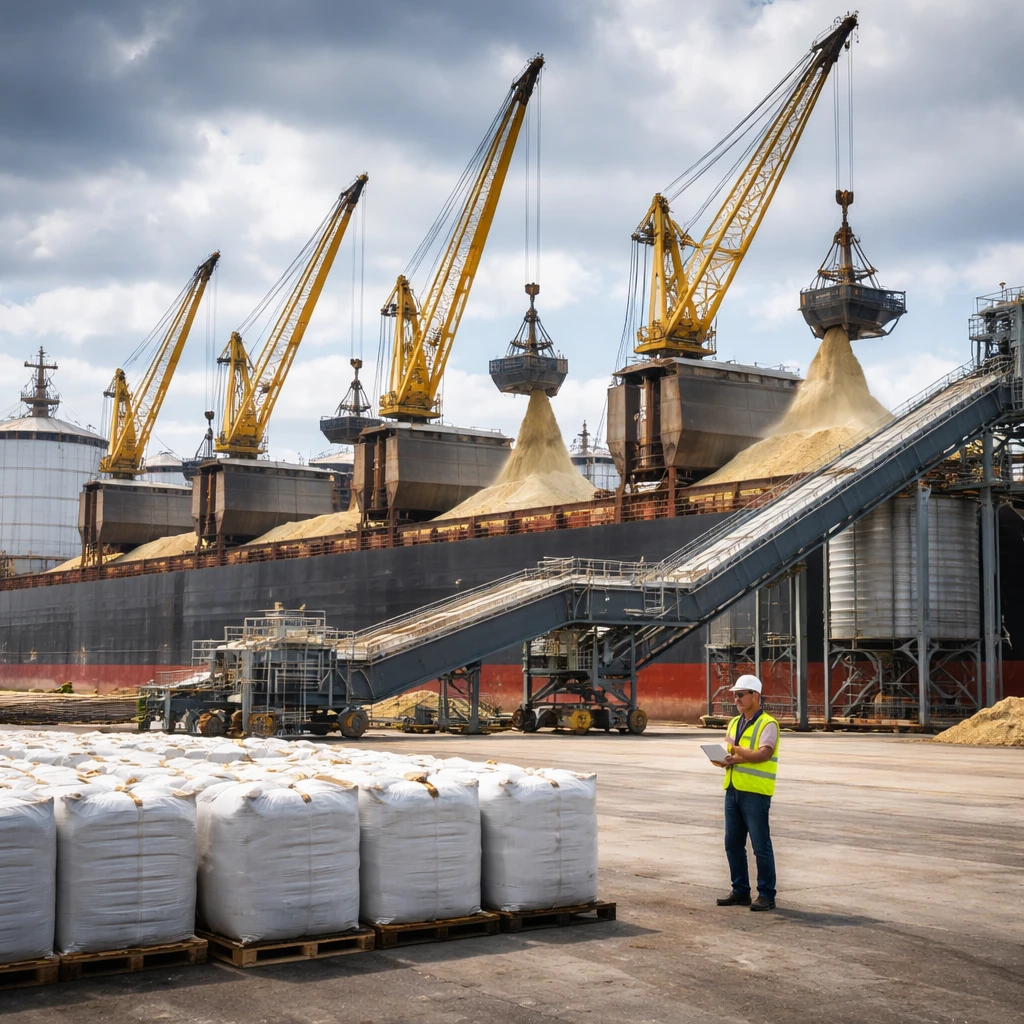
The White House late Monday approved a temporary suspension of antidumping and countervailing duties on selected phosphate fertilizers imported from Morocco, allowing those duties to be paused for up to eight months or until the declared emergency ends.
The measure removes tariffs that had been introduced in 2021 and that could reach 16.8% on affected imports. Officials framed the action as a response to production cutbacks tied to constraints in both the availability and price of sulfur, a key input for producing phosphate-based fertilizers.
U.S. phosphate producers reacted unevenly. Mosaic Corp. and other smaller domestic phosphate producers have signaled support for keeping the duties in place while the review continues. By contrast, Nutrien has been a notable voice in favor of lifting the countervailing duties.
Analysts expect the policy change to put downward pressure on Mosaicshares. Oppenheimer said the announcement could weaken Mosaic's equity as additional supply from Morocco becomes more likely. The firm also noted that affordability throughout the phosphate chain - both for producing and applying phosphate - remains under strain.
Market participants stressed that the full effect on U.S. domestic phosphate prices is unlikely to show up immediately. The current period is not a typical peak-demand season for fertilizers, which limits the pace of price discovery. Producers have also described a wait-and-see approach until third-quarter sulfur contract prices are settled before finalizing production plans for the third and fourth quarters.
Wholesale phosphate prices stayed elevated through June, trading near $778 per short ton at the New Orleans (NOLA) market. That level represents a 7% increase year-over-year and a 41% rise from June 2024 readings, according to market figures referenced by industry participants. The ongoing restriction on phosphate output has been linked to the tightening sulfur supply.
Attention is now on the upcoming settlement of the third-quarter Tampa sulfur contract, which market participants expect to be posted soon. Observers anticipate the third-quarter sulfur price will rise relative to the second-quarter settlement, which was $655 per long ton CFR.
Complicating the supply picture, Morocco's OCP has curtailed production because of weak stripping margins, a factor that has limited an immediate increase in available phosphate volumes despite the tariff suspension.
The White House action was described by officials as part of broader administration efforts to blunt the cost impact of trade tensions and geopolitical conflicts on U.S. agriculture. In connection with those efforts, the administration has also urged Congress to approve an additional $11 billion in farmer assistance and to authorize year-round sales of E15 gasoline blends.
What this means
- Domestic phosphate pricing and producer output decisions are likely to evolve over several months rather than immediately.
- The sulfur market and its forthcoming contract settlements will be pivotal in shaping third- and fourth-quarter production expectations.
- Policy actions aimed at easing agricultural costs are influencing trade measures and market expectations across the fertilizer supply chain.