
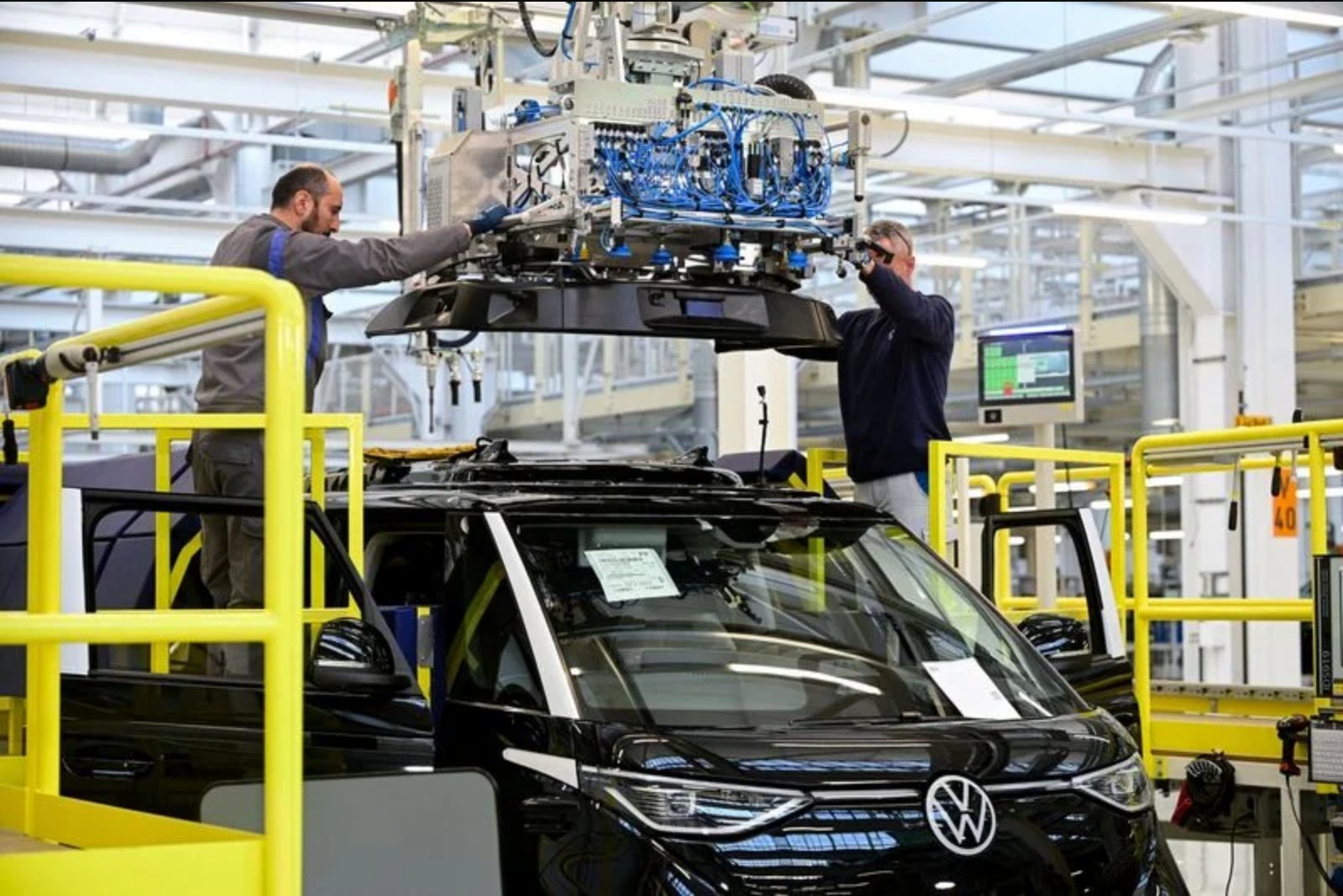
Volkswagen is examining the potential closure of four of its German factories - Emden, Hanover, Zwickau and Audi’s facility in Neckarsulm - a development that, if enacted, would place more than 45,000 jobs in jeopardy, according to people familiar with the matter. Those possible closures would come on top of approximately 50,000 roles the automaker agreed to cut with unions in late 2024.
This report outlines the key features, employment levels and production profiles of each plant under consideration.
Emden
The Emden site, Volkswagen’s inaugural plant in the Lower Saxony region - itself home to about 8 million people and a significant Volkswagen shareholder - opened in 1964 to leverage proximity to a seaport. Initially known for producing the Volkswagen Beetle, Emden has, since the end of 2024, shifted to manufacturing electric vehicles exclusively, focusing on models from the Volkswagen ID. series.
More than 7,700 employees work at the Emden factory. In 2025 the plant produced roughly 147,000 vehicles. By comparison, the city of Emden has a population of about 50,000.
Hanover
The Hanover factory employs around 14,000 people. Production at this site traces back to 1956 when it began making the Volkswagen 'Bulli.' Today, the plant builds the sixth and seventh generations of the T-Series camper van line - including vans and minivans - as well as the ID. Buzz electric van.
Beyond vehicle assembly, Hanover's 1.1 million square metres of facilities are also used for making heat exchangers, and its foundry produces cylinder heads and inlet manifolds for the Volkswagen Group.
Audi - Neckarsulm
The Audi facility in Neckarsulm employed 15,509 people as of March 2026. Its production mix includes combustion engines, hybrid technologies and fully electric vehicles. Models assembled at the site include variants of the A5, A6 and A8, as well as the e-tron GT.
Audi regards Neckarsulm as the birthplace of the fully electric Audi e-tron GT and the location houses the headquarters for Audi Sport GmbH.
Zwickau
Established in 1990, the Zwickau plant has produced seven million vehicles across its history. In June 2020, the last internal combustion engine vehicle rolled off its line as the facility completed a transition to electric vehicle production.
About 8,000 employees work at Zwickau, where models such as the Volkswagen ID., the Audi Q4 e-tron and the Seat Cupra Born are manufactured. The plant also produces bodies for the Bentley Bentayga and the Lamborghini Urus. In 2025, Zwickau completed 212,000 vehicles and produced the bodies of 10,800 cars.
Zwickau was the first factory within the Volkswagen Group to be fully converted to electric mobility; that conversion cost 1.2 billion euros. The article notes the exchange rate at the time as $1 = 0.8765 euros.
Implications and context
If Volkswagen proceeds with closures, the plants involved represent a mix of legacy production sites and facilities that have already undergone major transformations toward electric vehicle output. The situation touches large numbers of employees, broad manufacturing footprints and recent capital investments, particularly at sites such as Zwickau that have been fully converted to EV production.
Details remain subject to confirmation from Volkswagen and from official announcements. The figures cited reflect employment and production levels reported for the individual sites, as well as the previously agreed workforce reductions from late 2024.