
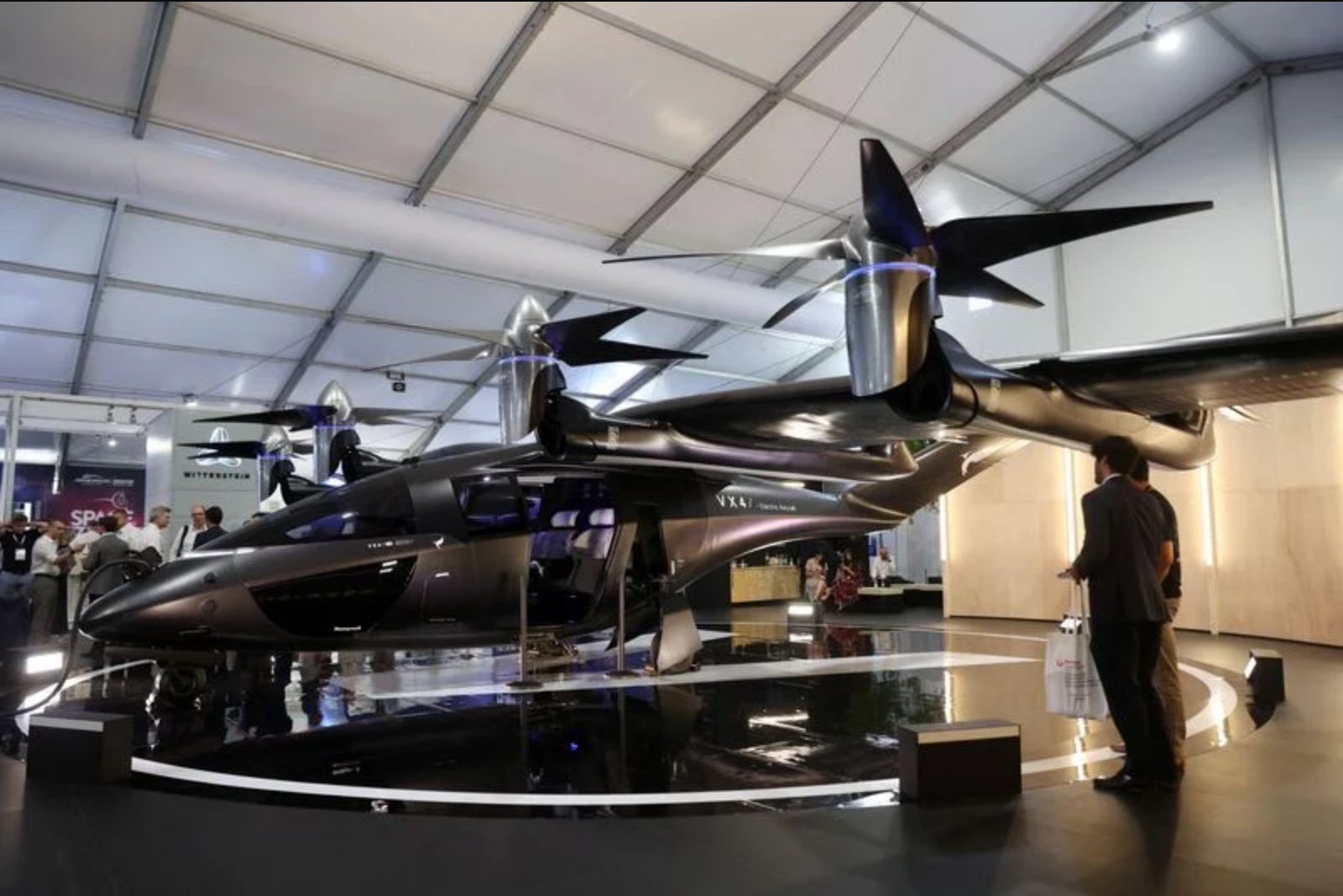
July 16 - Vertical Aerospace said on Thursday it will work with Near Earth Autonomy to add autonomous flight capability to its Valo aircraft as the British electric aviation company expands into uncrewed defense and commercial missions.
The partners said Near Earth’s autonomy stack will be integrated with Honeywell Aerospace’s Anthem avionics system, which is already intended for the Valo. The arrangement positions the Valo to operate with both the Anthem avionics suite and Near Earth’s autonomous flight controls.
Startups in the aerospace sector are increasingly sourcing specialist components such as avionics and autonomous flight systems from external suppliers. Companies doing so say this approach helps reduce the internal cost of development and can shorten the time required to achieve certification.
Vertical is developing the Valo in two variants: an all-electric tiltrotor configuration and a hybrid-electric version. Near Earth Autonomy, which was founded in 2012, has supplied autonomous flight systems for programs involving the U.S. Marine Corps, the U.S. Army and Honeywell.
Developers in the eVTOL space are tapping into defense technology opportunities as a way to broaden potential revenue streams beyond urban air taxi services. The urban air taxi market faces obstacles including lengthy certification processes, gaps in infrastructure and constraints on funding, factors that have slowed its path to commercialization.
"Defense is an increasingly important strategic market for Vertical, and this partnership moves us from ambition to capability," Vertical CEO Stuart Simpson said. The company’s strategy aligns with moves by rivals, with firms such as Joby Aviation and Archer Aviation also emphasizing defense or dual-use programs.
Context and implications
This partnership consolidates three elements on the Valo platform: the Valo aircraft design in its two propulsion variants, Honeywell’s Anthem avionics, and Near Earth’s autonomous flight technology. For Vertical, combining those elements supports an expansion into uncrewed missions in both defense and commercial arenas while relying on specialist suppliers to manage technical complexity.
What remains limited in public disclosures
- The companies have outlined the integration plan but have not provided detailed timelines for deployment or certification milestones.
- Further specifics about operational roles, performance parameters or contract sizes tied to defense or commercial customers were not disclosed in the announcement.