
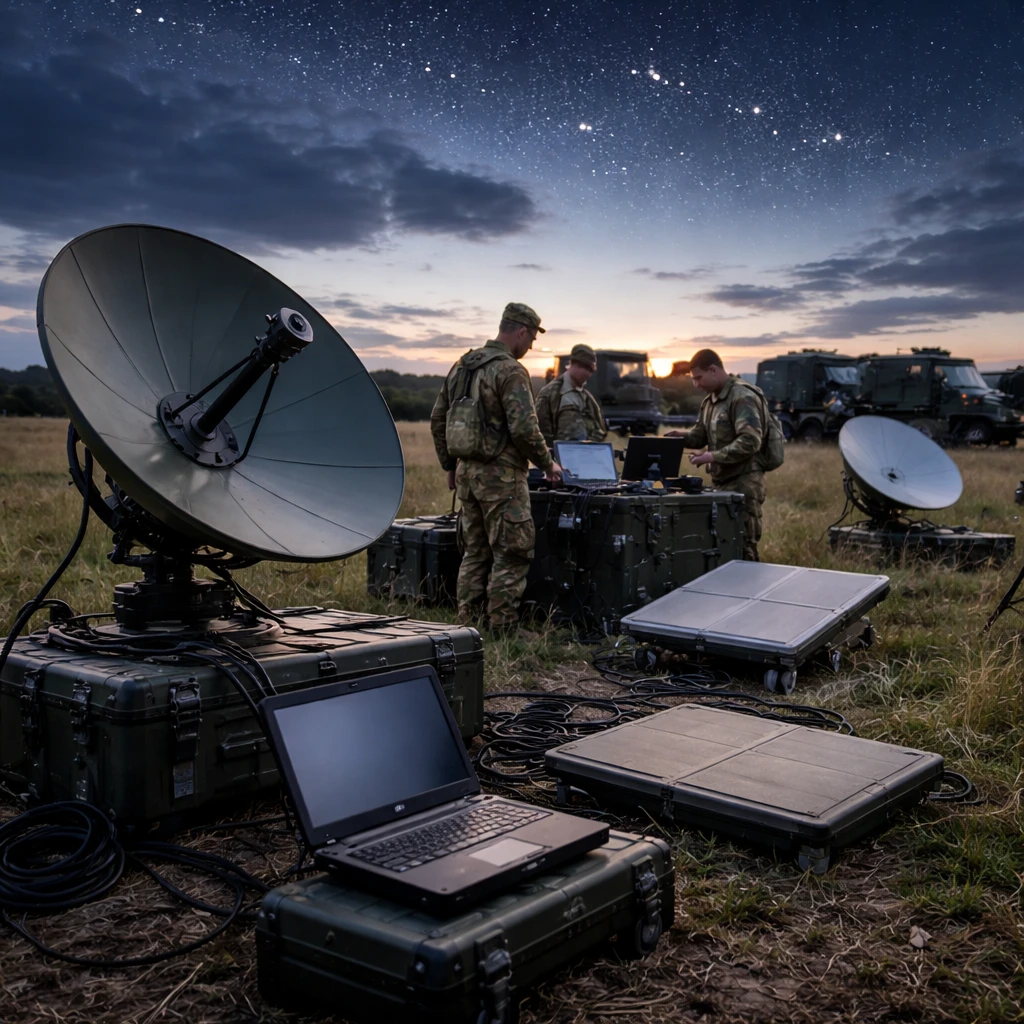
Britain has revealed it has committed nearly $40 million to SpaceX satellite services, including significant outlays for Starshield and Starlink, marking the first public acknowledgement by a country outside the United States that it uses Starshield for military and intelligence communications.
The defence ministry provided the spending information in response to a freedom of information request. According to the disclosure, the ministry now operates about 1,000 Starshield terminals alongside some 500 Starlink terminals. The total reported expenditure includes approximately a313 million ($17.6 million) allocated to Starshield for terminals and airtime, and a316.5 million on Starlink.
Operational shift and rationale
Britain first began using Starlink in mid-2022. Over time the ministry moved operational military communications from Starlink to SpaceXb9s Starshield service. That transition followed a change in SpaceXb9s permitted use policy for Starlink, which restricted Starlink to morale, welfare, recreation and training purposes only, prompting the defence ministry to adopt Starshield for operational requirements.
Starshield is presented by SpaceX as a military and intelligence communications service that runs on the same satellite constellation as Starlink but uses dedicated terminals and separate ground-based network gateways. The defence ministry described the service as providing enhanced encryption, military-specific terms of service, the highest level of network prioritization, flexible licensing arrangements, and expanded coverage.
Procurement timeline and hardware
Britain began using Starshield airtime with existing Starlink terminals in 2024 and subsequently purchased its first dedicated Starshield terminals in 2025. The disclosure notes a clear pricing gap between the two offerings: Starshield is substantially more expensive than Starlink.
- Two Starshield plans are available in Britain: a35,500 monthly for five terabytes of data, and an unlimited plan at a325,000 monthly.
- By contrast, UK Starlink business customers can pay a31,830 monthly for two terabytes of global data.
- Starshield terminals are reported to cost between a34,000 and a37,000 each, at least double the price of business-grade Starlink terminals.
International context and other programmes
Other governments have shown interest in Starshield as well. New Zealand is testing Starshield to evaluate its utility for supporting military operations, according to a New Zealand Defence Force spokesperson. In the United States, the government has awarded more than $6 billion in multi-year Starshield contracts, primarily through two major U.S. Space Force programmes for low-Earth orbit constellations, as disclosed in SpaceXb9s most recent quarterly results.
Britain continues to operate its own military satellite communications network, Skynet, and also holds a stake in France-based Eutelsat.
Implications for procurement and budgets
The defence ministryb9s disclosure lays out both the scale of terminal deployment and the material cost differential between commercial Starlink services and the military-grade Starshield offering. The choice to move operational communications onto Starshield reflects policy constraints on Starlink use and a willingness to pay for dedicated military capabilities including encryption and prioritized network access.
Questions about ongoing licence arrangements, continued terminal purchases and the relationship between commercial and government-owned satellite communications assets remain limited to the details provided by the ministry in response to the information request.