
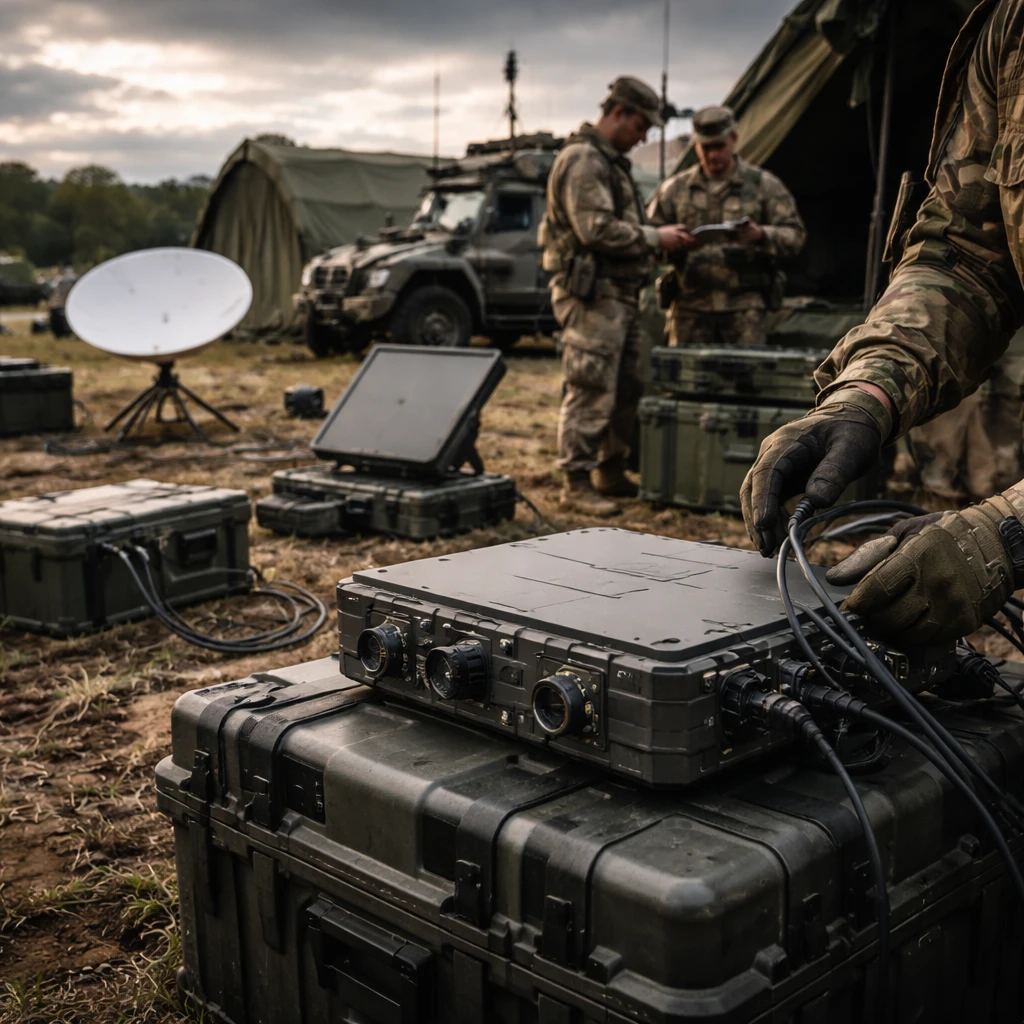
Britain has allocated nearly $40 million to services from Elon Musk's SpaceX, deepening official dependence on the company for military communications even as European officials voice concern about reliance on U.S. security infrastructure. The spending, disclosed by the UK defence ministry in response to a request, shows the country is the first outside the United States to publicly acknowledge adoption of Starshield - SpaceX's product marketed specifically to government and intelligence customers. SpaceX’s consumer and commercial offering continues to be sold under the Starlink brand.
According to the defence ministry, the UK holds about 1,000 Starshield terminals alongside roughly 500 Starlink terminals. Financial disclosures show the ministry has spent around A313 million (about $17.6 million) on Starshield, covering terminal purchases and airtime, and A316.5 million on Starlink services. Officials say the ministry began using Starlink in mid-2022 and more recently has shifted a portion of operational military communications traffic to Starshield. The ministry reports that Starshield airtime was put into use with existing Starlink terminals in 2024, and that the first dedicated Starshield terminals were purchased last year.
The ministry outlined several capabilities that influenced its move to Starshield. Those include enhanced encryption, military-specific terms of service, the highest level of network prioritisation, flexible licensing arrangements, and expanded coverage. For the UK, Starshield is implemented using the same satellite constellation, ground stations and terrestrial infrastructure as Starlink, but it operates via dedicated terminals and separate ground-based network gateways, according to the ministry's response.
SpaceX has been drawing a clearer distinction between Starlink and Starshield. Company leadership has described Starlink as intended for civilian use, while Starshield is pitched to government and national security purchasers. The ministry said it adopted Starshield after SpaceX required that Starlink be restricted to morale, welfare, recreation and training purposes in certain contexts. SpaceX did not provide responses to questions about which countries have access to Starshield.
Starshield carries a materially higher price tag than Starlink in the UK, based on pricing information disclosed by the ministry. Two Starshield plans are listed: A35,500 a month for five terabytes of data, and an unlimited option at A325,000 a month. By contrast, the ministry noted that Starlink business customers in the UK can pay A31,830 a month for two terabytes of global data, alongside a range of lower-cost plans with smaller data allowances or more local coverage. Terminal prices also differ materially: Starshield terminals are said to cost between A34,000 and A37,000 each, which the ministry indicated is at least double the advertised price of business-grade Starlink terminals.
The ministry's disclosure places the UK alongside other countries that have evaluated or trialled Starshield. Officials in New Zealand told the UK ministry that their defence force is trialling Starshield to investigate its usefulness in supporting military operations. Separately, the ministry reiterated that the UK also maintains its own dedicated military satellite communications network, Skynet, and that the country is a shareholder in France-based Eutelsat, which operates the only other major operational low-Earth orbit broadband satellite constellation outside of Starlink.
SpaceX has secured significant commitments from the U.S. government for Starshield. Company filings referenced by the ministry show the U.S. government awarded more than $6 billion in multi-year Starshield contracts, primarily through two large U.S. Space Force programmes for low-Earth orbit constellations. The ministry also pointed to the evolution of SpaceX's broader satellite business: since launching Starlink in 2020, SpaceX has built the world's largest low-Earth-orbit constellation. The business is now the company's biggest revenue source and played a central role in supporting its recent stock market debut, which the company described as the largest initial public offering on record.
The ministry's disclosure comes amid wider political and strategic tensions. European governments are seeking to bolster their own defence capabilities amid concern about Washington's long-term commitment to the continent's security. At the same time, Musk repeatedly publicly criticised Britain's government during the premiership of Keir Starmer, who was recently replaced by fellow Labour party politician Andy Burnham. The ministry's decision to purchase Starshield follows SpaceX-determined usage limits for Starlink, and the ministry has characterized Starshield as offering the specific security and contractual features necessary for operational military communications.
Pricing differentials and contracting choices have drawn scrutiny elsewhere. Earlier reports noted instances where SpaceX increased the price charged to the U.S. Department of Defense for certain Starlink services used in operational contexts, with company representatives stating that Starshield would have been the appropriate product for those uses. Those dynamics underscore the financial and operational trade-offs confronting defence buyers when selecting between civilian and government-tailored satellite services.
Summary
The UK has spent nearly $40 million on SpaceX's Starshield and Starlink services, acquiring about 1,000 Starshield terminals and 500 Starlink terminals. Officials have transitioned some operational traffic from Starlink to Starshield, citing enhanced encryption, prioritisation and licensing features, while retaining national systems such as Skynet and stakes in Eutelsat. Starshield carries substantially higher pricing than Starlink in UK plans and terminals. SpaceX has also received billions in U.S. government Starshield contracts.
Key points
- Britain reports holding roughly 1,000 Starshield terminals and 500 Starlink terminals, with nearly $40 million spent across the two services - sectors affected include defence communications and satellite infrastructure.
- Starshield is positioned as a government-grade service with higher prices and dedicated terminals and gateways, affecting defence procurement budgets and the military communications market.
- The UK retains national military satellite capabilities such as Skynet and a stake in Eutelsat, reflecting a mixed approach to sovereign and commercial satellite services - implications for satellite operators and defence suppliers.
Risks and uncertainties
- Dependence risk: Deepening reliance on a U.S.-based commercial provider for military communications may raise strategic exposure and political sensitivity - impacts defence policy and procurement planning.
- Cost risk: Starshield's substantially higher pricing compared with Starlink creates budgetary pressures and trade-offs for military communications spending - impacts defence budgets and contractors servicing satellite connectivity.
- Operational uncertainty: Evolving usage rules for Starlink and the need to shift to Starshield for operational traffic could create transition costs and logistical complexity for forces using these services - impacts military operations and satellite service integration.