
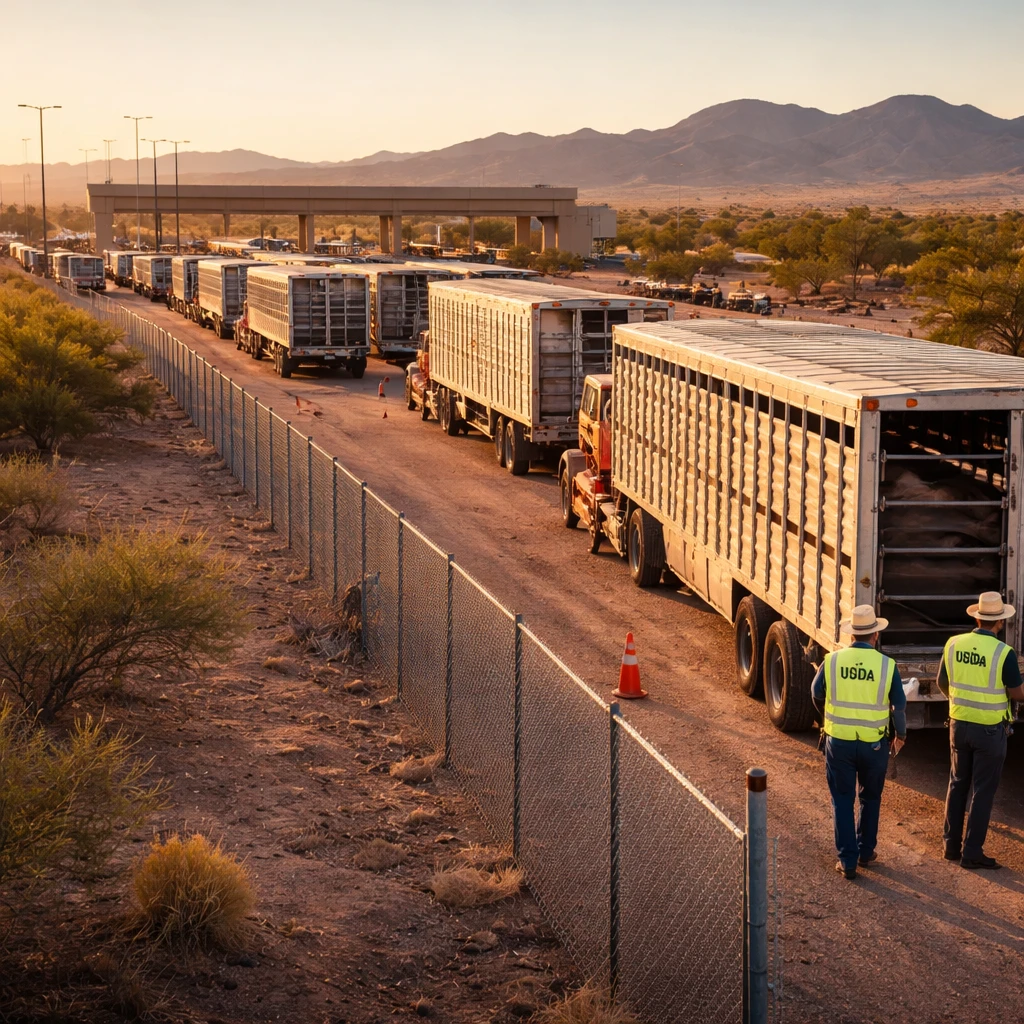
Shares of major meatpackers climbed on Monday after the U.S. Department of Agriculture disclosed plans to resume limited cattle imports from Mexico. Tyson Foods Inc. saw its stock jump, and JBS NV also recorded a notable gain, as markets reacted to the announcement that the USDA will begin a phased reopening of cattle entry at the Douglas, Arizona port on August 24.
The USDA framed the decision as a cautious resumption of trade intended to address a domestic cattle shortage that has elevated costs for meatpackers. Mexican shipments historically supplied more than a million head of cattle annually to U.S. processors and typically included younger animals that were raised and processed domestically. That flow has been largely stopped since late 2024 to prevent spread of the New World screwworm parasite.
Reopening is not unconditional. The USDA said Mexico must adhere to a Joint Action Plan and that each animal entering through the reopened ports will undergo full USDA inspection to verify absence of signs of New World screwworm. The department emphasized a staged approach: after assessing the initial reopening at Douglas, it will consider whether to reopen the Santa Teresa, New Mexico, and Columbus, New Mexico ports. The timetable for those subsequent steps may be adjusted depending on Mexico's progress against milestones in the Action Plan.
"The closure of the Southern ports of entry for the last year has been a tough but necessary action to control the spread of NWS in Mexico and protect the American livestock industry," said U.S. Secretary of Agriculture Brooke L. Rollins.
In its risk assessment the USDA identified Sonora and Chihuahua as the lowest-risk Mexican states based on their inspection programs and geographic distance from southern regions where most New World screwworm cases have been concentrated. The department noted the closest active case to the Douglas port was detected on July 22 and is about 325 miles away.
The USDA's approach links trade resumption to verifiable animal inspections and to Mexico meeting agreed-upon steps in the Joint Action Plan. Market participants priced in the prospect of additional supply and lower input costs for processors, driving the intraday gains for major U.S. and international meatpackers.
Sectors affected: livestock producers, meatpacking and processing, agricultural trade and transportation.