
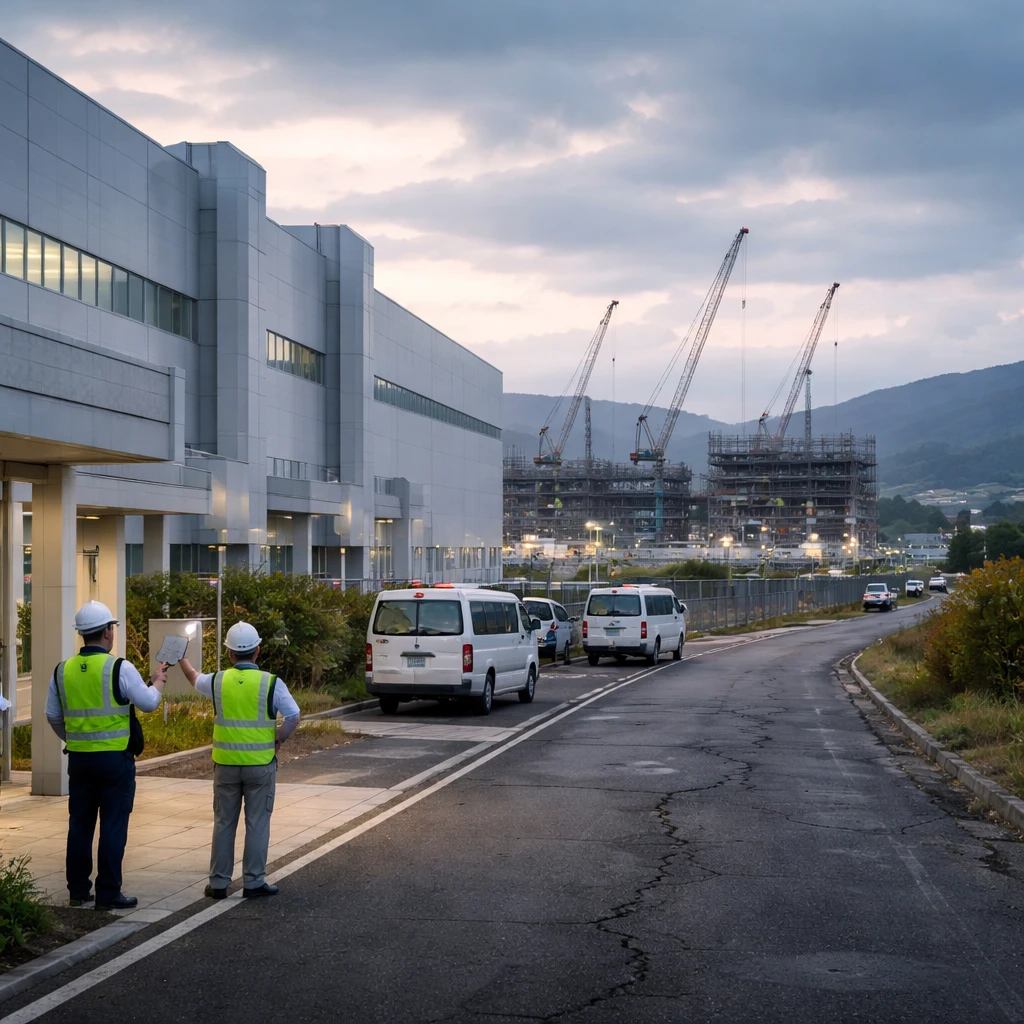
Taiwan Semiconductor Manufacturing, the world's largest contract chipmaker, has started to restore operations at its Kumamoto, Japan, manufacturing site after a strong earthquake prompted an immediate evacuation of staff.
The earthquake, which measured 7.1 in magnitude, caused significant damage in the surrounding area, including ruptured roads and power outages affecting thousands of homes, and resulted in at least 13 fatalities near the southern city of Kumamoto.
Company officials confirmed that all personnel at the Japan Advanced Semiconductor Manufacturing (JASM) facility were safely evacuated following the quake. Subsequent inspections of the plant's structures indicated they remained safe, allowing TSMC to initiate a staggered resumption of production.
Engineers are performing detailed inspections to determine whether equipment or operational systems sustained any impact. Production is being ramped up in stages as those checks continue, with TSMC emphasizing the methodical nature of the restart while assessments are completed.
Separately, the company reported that construction work at the JASM expansion site did not suffer damage from the earthquake. Nevertheless, some construction activities have been temporarily paused as a precaution because of the ongoing risk of aftershocks.
The Kumamoto facility, which began producing chips earlier this year, is a central component of TSMC's strategy to broaden manufacturing beyond Taiwan and to reinforce Japan's domestic semiconductor production capacity. The project has drawn substantial financial support from the Japanese government as Tokyo seeks to strengthen its chip production amid heightened geopolitical and supply chain concerns.
Context for markets and industry
The phased restart and continued inspections are immediate priorities for operations at the plant. Investors and supply-chain managers will be watching the progress of equipment checks and the timeline for full production restoration. The temporary suspension of certain construction tasks at the expansion site introduces a near-term variable for capacity growth plans, but the reported lack of structural damage to both the operating facility and the expansion footprint is an important detail for assessing longer-term disruption risk.
Bottom line - The JASM plant is back to controlled operations after a full evacuation and structural clearance, with engineers assessing equipment impact and parts of the expansion put on hold as a safety precaution amid aftershock concerns.