
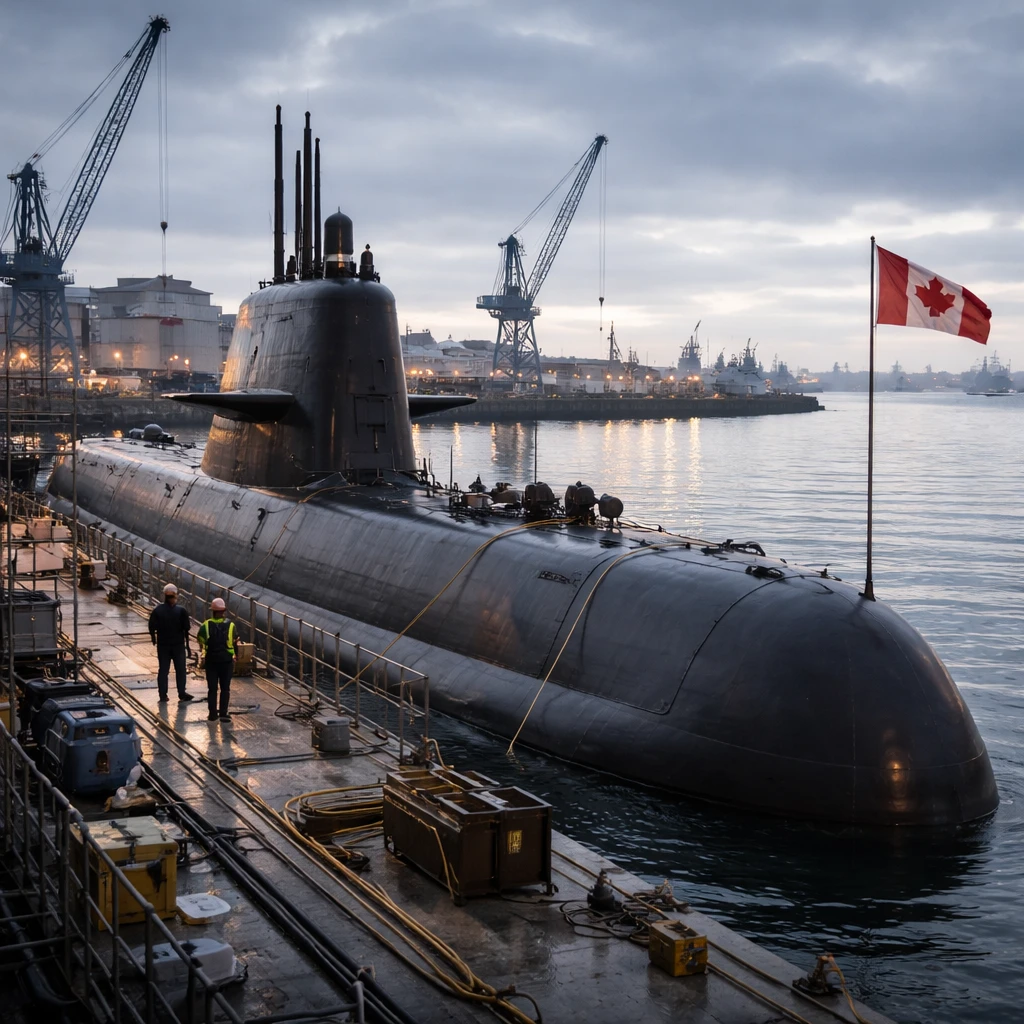
Thyssenkrupp shares rose sharply in afternoon trading, gaining 8.7% after reports indicated that Canada has selected Thyssenkrupp Marine Systems (TKMS) as the preferred bidder to supply 12 new submarines to the Royal Canadian Navy. Industry sources told reporters that the award - if finalized - would include not only the construction of platforms but also long-term support and maintenance obligations, producing a lifetime program value estimated to top $100 billion.
Two senior industry sources confirmed the government’s choice of TKMS, and media reporting attributed the selection to the Globe & Mail, which cited people familiar with the matter. The reports said TKMS was chosen over South Korea’s Hanwha Ocean in the Patrol Submarine Project tender. A formal announcement is expected from Prime Minister Mark Carney in Halifax before he departs for a NATO leaders’ meeting.
Market participants noted several elements in the reporting that help explain the magnitude of the market reaction. TKMS’s position within the broader Thyssenkrupp group is widely regarded as strategically important, and a contract on this scale would underpin recurring revenues for decades through maintenance and support services. A German government official, speaking to reporters in Berlin, described the TKMS offer as unbeatable and said the German government is confident Ottawa will select the German bid.
The marine systems division is offering its 212CD class submarine model in the tender. That model is also being delivered to Norway under a joint modernization initiative. TKMS is majority-owned by Thyssenkrupp and is described in the reporting as the world’s largest builder of non-nuclear submarines, supplying roughly 70% of NATO’s conventional submarine fleet.
Broader equity market movement provided a positive backdrop to the sector-specific surge; during the session the S&P 500 rose by 0.7% and the NASDAQ climbed 1.1%. Observers said the combination of a potentially transformative contract, backing from Berlin and a general increase in defense spending among NATO allies contributed to investor enthusiasm.
The contract’s structure - which reportedly includes paying for 30 to 50 years of maintenance in addition to procurement - highlights the long-duration revenue visibility the program would deliver to TKMS and, by extension, to Thyssenkrupp as its majority owner. That long-term service component is a key factor cited for the strong share-price response following the reports.
Context and next steps
According to the reports, the selection of TKMS is at the preferred-bidder stage. A formal contract award has not been published in the sources cited, and the announcement by the prime minister is expected to clarify the government’s intentions. If the procurement is finalized in line with the reporting, it would represent a major industrial and financial commitment for the winning bidder, affecting military shipbuilding and long-term defense services revenue streams.