
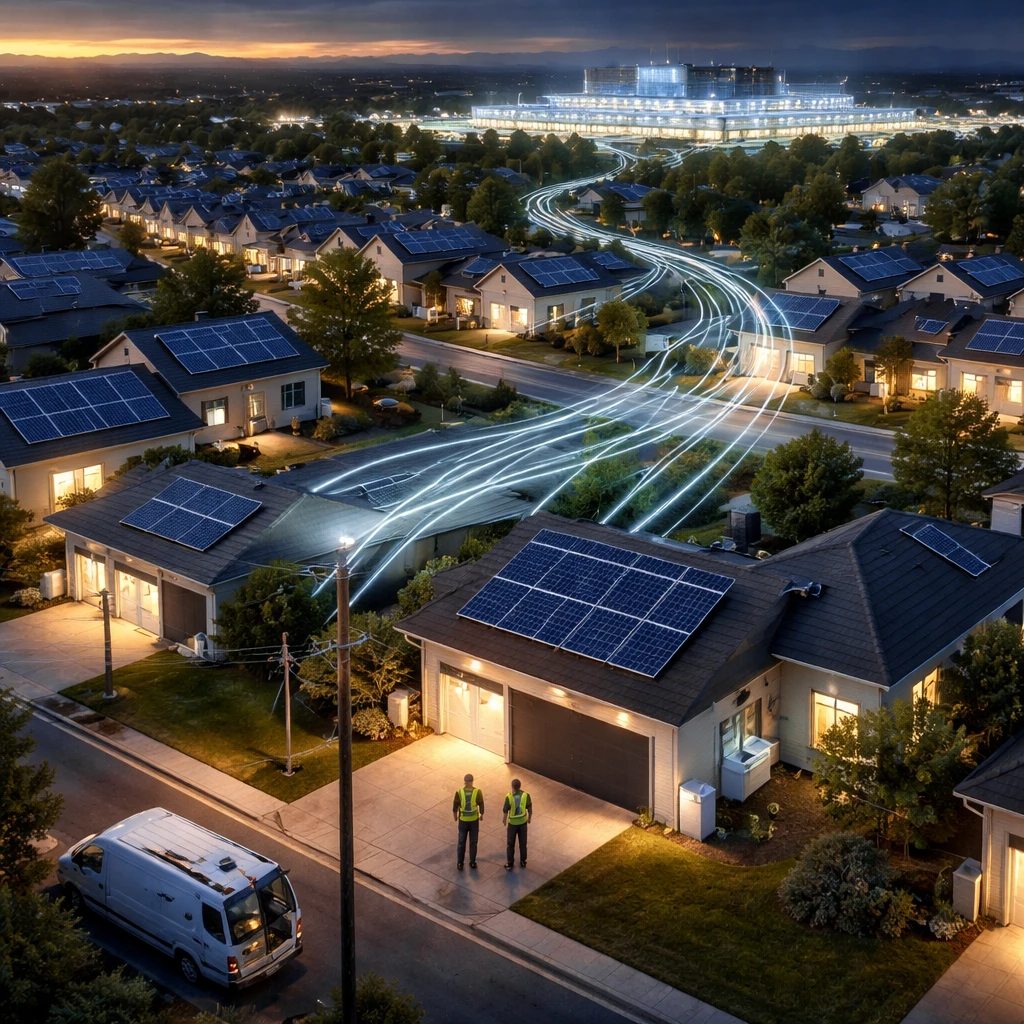
Sunrun shares climbed +26.6% in morning trading after the company, together with Tesla and Renew Home, announced a framework to provide in excess of 16 gigawatts of flexible energy capacity to hyperscalers and utilities. The duo of solar-and-storage fleets and the fleet of connected devices represents one of the largest distributed energy resource arrangements ever disclosed in the residential segment.
The agreement aggregates hundreds of thousands of home battery systems run by Sunrun and Tesla with more than 8 million smart thermostats and other connected devices managed by Renew Home. Collectively, the partners say the assembled assets could form what may become the largest distributed virtual power plant in the United States, capable of delivering dispatchable capacity to grid operators and large power consumers.
Strategic importance rests on the plan's direct link to rising AI-driven electricity demand. Rather than waiting years for new generation or transmission to be permitted and built, the collaboration uses existing residential hardware that can be commissioned within months - a speed advantage the companies highlight as critical to meeting emerging load needs.
The group already reports tangible commercial traction in key markets. In Virginia, more than 300 megawatts of capacity are committed to PJM's Reliability Backstop Process, and the partners have set a target of at least 500 megawatts by 2030, signaling near-term practical deployment as well as a longer-range milestone.
Sunrun's chief executive framed the initiative as a response to modern energy demands, stating, "The grid of the 1800s cannot power the innovation of 2026." The quote underscores the partners' argument that distributed, dispatchable residential assets can help bridge the gap between current grid capabilities and the fast-growing power needs of hyperscalers and other large electricity users.
Market context for the move was modestly constructive. The S&P 500 rose +0.3% and the Nasdaq also gained +0.3% during the session, recovering from a prior-day technology sector sell-off that had been led by chip stocks. Investors in clean-energy names and firms involved in virtual power plant deployments may view the pact as aligned with growing utility and hyperscaler interest in dispatchable distributed resources, which could bolster sector momentum.
Taken together, the size of the announced 16-gigawatt framework, its explicit connection to an AI-driven data center power challenge, and the immediate commercial commitments such as Virginia's PJM filings combined to produce an outsized single-session move in Sunrun stock. The rally moved the shares well off recent lows and toward the midpoint of their 52-week trading range between $6.98 and $22.44.
Summary
- Sunrun rose +26.6% after unveiling a broad distributed energy framework with Tesla and Renew Home to deliver more than 16 gigawatts of flexible capacity.
- The plan pools hundreds of thousands of residential batteries with over 8 million smart thermostats and connected devices, aiming to create a very large virtual power plant.
- Virginia commitments include more than 300 megawatts in PJM's Reliability Backstop Process, with a target of at least 500 megawatts by 2030.
Key points
- The deal directly targets surging AI-driven electricity demand by providing dispatchable residential capacity to hyperscalers and utilities.
- Using existing residential hardware allows deployments on a shorter timeline compared with building new generation or transmission.
- Broader market sentiment was mildly positive, with major indexes up +0.3% during the session, offering a constructive backdrop for the rally.
Risks and uncertainties
- Execution risk - scaling aggregated residential resources to deliver predictable capacity across markets may face operational and regulatory challenges that could affect timelines and results.
- Market reception - although initial commitments exist, broader utility and hyperscaler uptake is necessary for the longer-term commercial potential implied by the 16-gigawatt framework.
- Regulatory and interconnection processes - the speed advantage cited depends on the ability to deploy residential assets rapidly; permitting, market rules, or grid-operator processes could influence outcomes.