
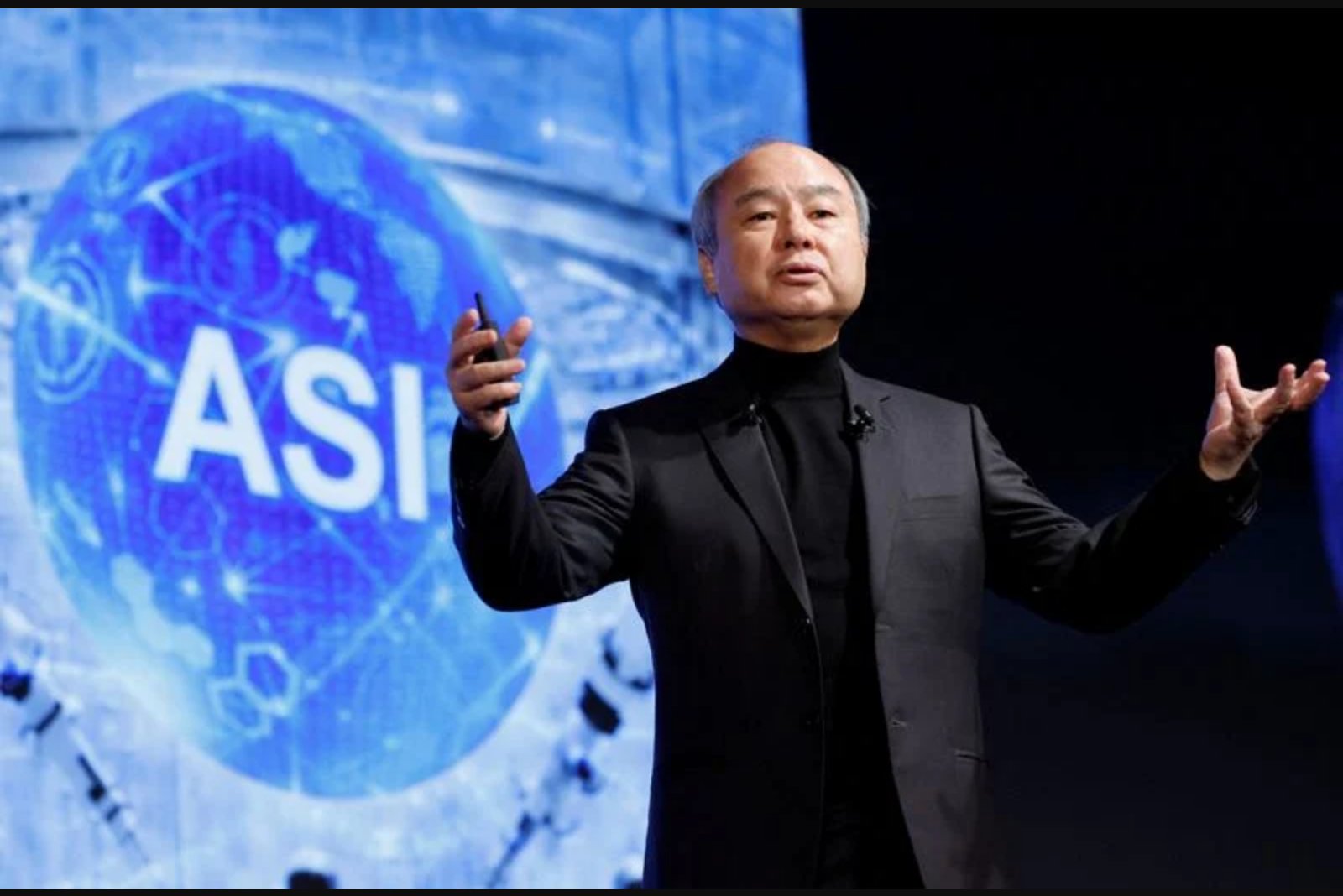
Masayoshi Son, chief executive of SoftBank Group, told a Tokyo audience on Tuesday that the global build-out of artificial intelligence will require roughly $5 trillion a year by 2040, an amount he also expressed as about 800 trillion yen. He rejected the notion that enthusiasm and valuation in the sector amount to a bubble.
At SoftBank’s annual corporate conference, Son reiterated the group’s rapid investment push over the past two years to position itself as a foundational AI investor. That programme has included large capital commitments to OpenAI, spending on data centre capacity and stakes in robotics businesses. He said the scale of spending he outlined may sound implausible, but that he is confident in the projection.
"Every year $5 trillion, or 800 trillion yen, you might think that’s a lie, but I am confident that’s what it will cost," Son said.
Son argued the expenditure will be economically sustainable if AI-derived revenue becomes a substantial share of global output. "The business model will be viable because by 2040, if AI revenue makes up 20% of global GDP, spending 800 trillion yen a year is a rounding error," he said. The CEO did not provide details on how he calculated the $5 trillion figure or the 20% share of global GDP referenced in that comment.
He also addressed concerns about returns and capital intensity in the sector. Over recent years AI-related firms have seen valuations surge while capital expenditure to underpin the technology has expanded sharply, leading some observers to question whether those companies will be able to generate adequate returns on those investments.
"Asking if AI is a bubble is absurd. I don’t think people who ask that question know what AI is about," Son said, reiterating his dismissal of bubble talk.
SoftBank has a track record of high-conviction technology bets. Son built significant wealth through early investment in Alibaba and by helping bring the iPhone to Japan, though the group has also backed ventures that did not deliver on expectations, such as bankrupt shared-office provider WeWork. At present, SoftBank’s largest single bet centers on OpenAI, with the company’s cumulative investment in the ChatGPT-maker set to exceed $60 billion before the end of 2026.
Son laid out an energy profile for a world running widespread AI systems. He predicted AI data centres will require 3 terawatts of power by 2040 - a demand he said amounts to about 1.8 times current global power consumption. He suggested that gas will supply much of this demand initially before nuclear fusion becomes the predominant energy source.
"Will we use solar power in space as Elon Musk says? Maybe we will use both, but if you ask me fusion on earth will be the cheaper, cleaner energy source," Son said.
Looking further ahead, Son painted a picture of a society dominated by autonomous AI systems. He predicted a future in which 100 trillion AI agents act, make decisions and communicate with one another, moving society from what he described as a human-centric world to an "agent-centric" one. He said the era in which humans occupy the topmost position among life forms will end and that this change is inevitable.
Market data shown during the conference noted SoftBank Group Corp. (9984) trading at 6,534.00 JPY, up 2.67% at the time referenced. The company’s AI investments and the wider industry’s capital needs have generated debate about where profits will accrue and how infrastructure and energy systems will scale to meet demand.
Summary and context are limited to Son’s comments and the figures he and the company provided at the event. Where he cited proportions of global GDP and projected costs, he did not supply the underlying calculations that produced those estimates.