
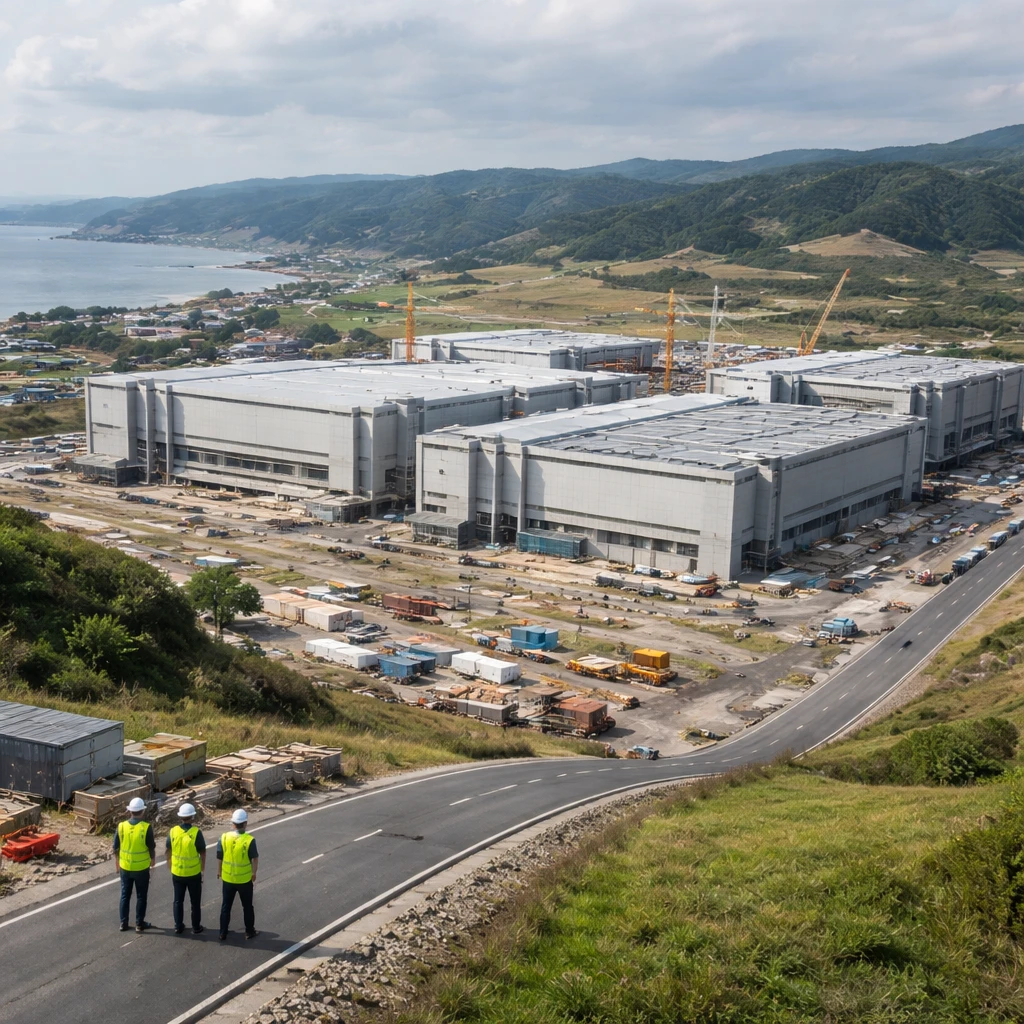
SK Hynix is pursuing plans to build a large memory semiconductor manufacturing plant in Japan, according to a report in South Korea's press. The proposed site is in Miyagi Prefecture in the country's northeast, and the scale of the investment being discussed is described as tens of trillions of won.
Market reaction to the report was positive for the company's shares. On Friday, SK Hynix stock rose 1.5% to KRW1.717 million, significantly outperforming the broader KOSPI index, which declined 0.67% to 6,806.38.
Industry sources cited in the report said SK Group Chairman Chey Tae-won recently visited the Miyagi area, signaling senior-level interest in the project. The proposed Miyagi facility would expand SK Hynix's overseas production footprint while the company continues to deepen investments in its domestic semiconductor cluster in Yongin-Honam.
Those close to the discussions view the Japan project as a preemptive expansion of capacity amid a persistent global shortage in memory chips. If the plan proceeds to completion, SK Hynix would become the third foreign semiconductor company to establish a manufacturing plant in Japan, following U.S.-based Micron and Taiwan Semiconductor Manufacturing Co.
The report also notes that Samsung Electronics currently operates a next-generation semiconductor packaging research center in Yokohama, rather than a full manufacturing fab, underscoring different approaches by Korean firms to engagement with Japan's semiconductor ecosystem.
Proponents of the potential investment say it could strengthen SK Hynix's ties with Japan's semiconductor industry as the Japanese government works to rebuild and bolster its domestic semiconductor capabilities. Miyagi has been identified as one of several regions being developed as semiconductor hubs, alongside Kyushu and Hokkaido.
At the same time, the report highlights several strategic complications that could affect the company's broader investment calculus. U.S. pressure on South Korean firms to increase memory-chip production within the United States is intensifying, creating the potential for competing demands on where to allocate future capacity. The tension between building capacity in Japan versus meeting expectations to invest in the U.S. is presented as a factor that could complicate decision-making.
The report further points to possible political and public opposition inside South Korea to a large-scale investment in Japan, noting that semiconductors are widely viewed as a strategic industry in the country. Such domestic sensitivities could shape both public perception and policy responses to any decision to locate significant production abroad.
Finally, the report did not supply a final investment figure, a construction timeline, or confirmation that SK Hynix's board has formally approved the project. Those details remain unresolved as discussions continue.