
Stock Markets June 30, 2026 11:04 AM

Shell Says Prolonged Strait of Hormuz Disruption Could Trim LNG Supply in 2026

Annual LNG outlook flags possible yearly contraction if shipping through the vital waterway does not normalize this summer

By Nina Shah
Share
Twitter Reddit Facebook LinkedIn
SHEL

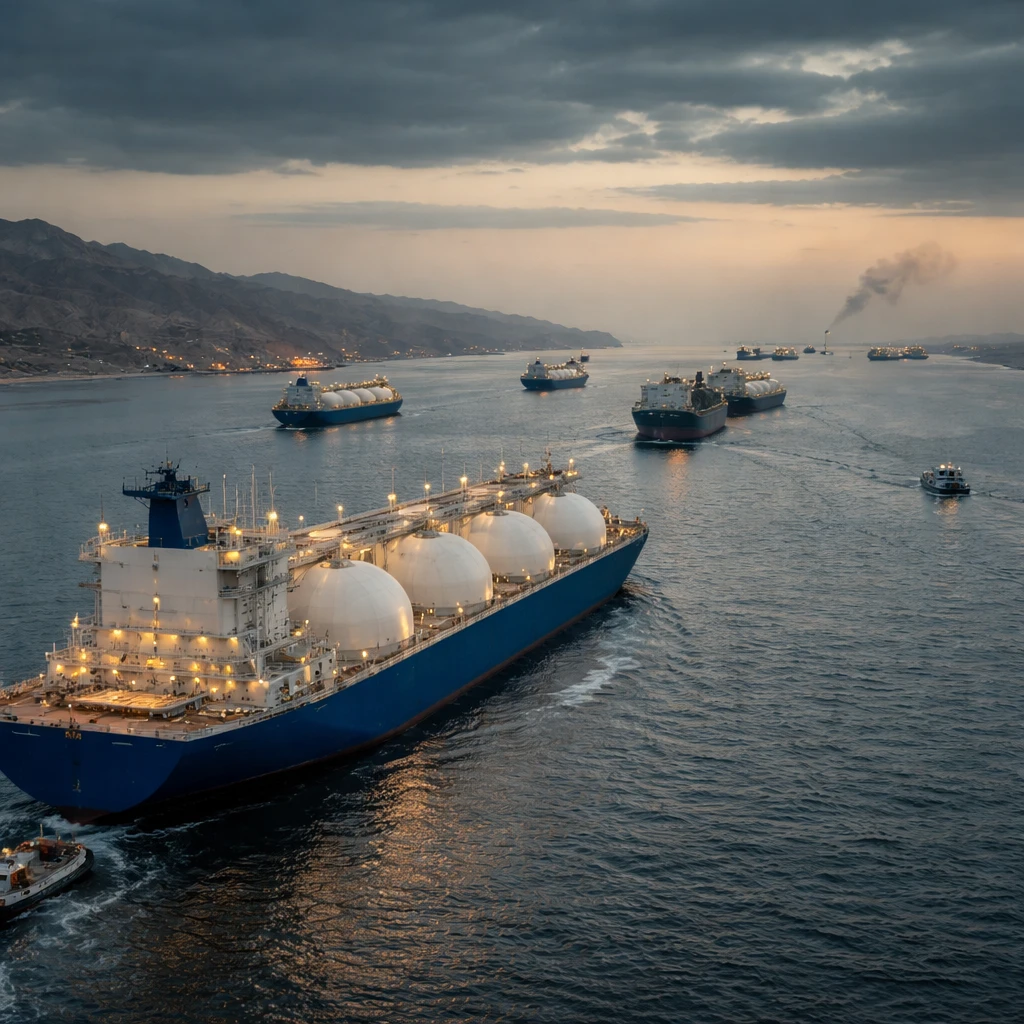
Shell's latest annual LNG report warns that continued disruption in the Strait of Hormuz could cause global liquefied natural gas supply to shrink in 2026. The company expects physical LNG cargo volumes this year to match 2025 levels at 422 million tonnes, with a return to growth projected for 2027 if shipping resumes normal operations over the summer.

Shell Says Prolonged Strait of Hormuz Disruption Could Trim LNG Supply in 2026
SHEL
Summarize with
ChatGPT Perplexity Claude Grok Gemini

Key Points

  • Shell warns that sustained disruption in the Strait of Hormuz could produce a contraction in global LNG supply in 2026.
  • Physical LNG cargo volumes this year could match 2025 levels at about 422 million metric tonnes, with growth anticipated to resume in 2027 if shipping normalizes this summer.
  • Long-term outlook remains for rising LNG demand toward nearly 700 million tonnes by 2050, and about 180 million tonnes of new annual supply expected by 2030.

Shell cautioned that a prolonged disruption of shipping through the Strait of Hormuz could result in a rare reduction in global liquefied natural gas (LNG) supply in 2026, according to its annual LNG report. The British energy firm said the outlook published Tuesday shows physical LNG cargo volumes this year could remain level with 2025 at about 422 million metric tonnes, rather than rise, and that growth would only resume in 2027 if transit through the waterway returns to normal this summer.

The company noted that if interruptions persist for the remainder of the year, the market may experience an unusual year-on-year supply contraction. Shell attributed the immediate supply pain to conflict in the Middle East that has left roughly one-fifth of global LNG volumes unable to transit the strategic strait. The report also cites damage to regional energy infrastructure as a factor restricting near-term supplies.

Prior to the conflict, Shell had expected a meaningful increase in global LNG sales during 2026. The recent disruption has altered that trajectory in the near term, even as some cargo-laden vessels are currently navigating out of the strait.

Shell's report emphasizes the fragile nature of the situation. While cargoes are moving, diplomatic progress remains uncertain: the company referenced exchanges of fire between the U.S. and Iran over a recent weekend, and noted that the two sides were due to resume peace talks as soon as Tuesday. At the height of the crisis in the Middle East, Asian spot LNG prices rose above $20 per million British thermal units.

Looking further ahead, Shell's report maintains a long-run view of rising global demand. The company projects world LNG demand will approach nearly 700 million tonnes per year by 2050 - about a 65% increase from 2025 levels. Separately, Shell forecasts roughly 180 million tonnes of annual new supply entering the market by 2030.


What this means

  • Near-term market balance is contingent on the resumption of normal shipping through the Strait of Hormuz this summer.
  • Continued disruption could lead to an uncommon annual contraction in LNG supply in 2026.
  • Shell retains a long-term expectation of materially higher LNG demand by mid-century, with substantial new supply additions planned by 2030.

Risks

  • Prolonged interruption to shipping through the Strait of Hormuz could reduce available LNG supplies - impacting energy producers, utilities, and commodity markets.
  • Damage to energy infrastructure in the region may constrain near-term supply flows and market stability - affecting supply chains and price volatility for LNG consumers.
  • Fragile diplomatic conditions, illustrated by recent exchanges of fire and tentative peace talks, create uncertainty for shipping access and market recovery timelines - relevant to shipping, insurance, and trading sectors.

More from Stock Markets

Sherwin-Williams Reclaims Ground From April Lows as Citi Sees Full Recovery to $380 Jun 30, 2026 Chip index posts near-historic first-half surge as AI-related demand lifts sector Jun 30, 2026 BMW Cuts Automotive Margin Forecast to 1-3% as Demand Wanes and Geopolitical Shock Bites Jun 30, 2026 S&P Elevates Airbus to A+ Citing Large Cash Buffer and Strong Backlog Execution Jun 30, 2026 Moody's Raises ATS Corporation Rating After Year of Rapid Deleveraging Jun 30, 2026