
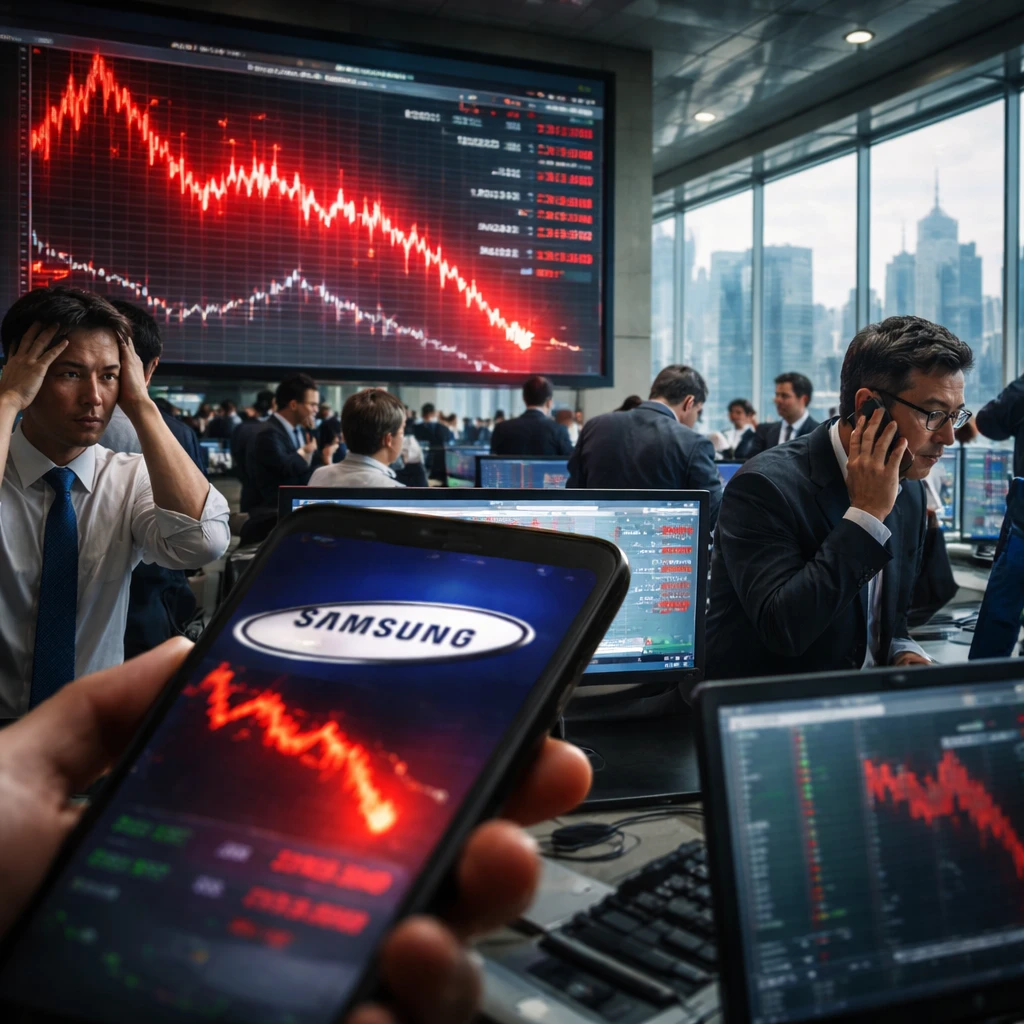
Samsung Electronics plunged almost 9.0% on the day, sliding to ₩172,400 as a dramatic reversal of the prior session’s AI-led surge rippled through the Seoul market. The abrupt sell-off traced back to a steep decline in U.S. semiconductor names overnight that removed the rally that had taken hold just 24 hours earlier when reports surfaced of Nvidia CEO Jensen Huang’s return.
On the previous trading day, Samsung had jumped more than 10% as investors globally rotated into stocks tied to artificial intelligence hardware. That optimism proved short-lived: U.S. semiconductor shares, including Nvidia, turned sharply lower overnight and the Philadelphia Semiconductor Index fell about 7.9%, wiping out the momentum that had driven the earlier advance.
Short-term profit-taking intensified the slide as traders who had chased the quick rally exited positions, adding selling pressure. Foreign investors moved to net selling in Seoul, further weighing on the stock. The move was not isolated to Samsung; peers across the sector suffered steep declines.
The broader Korean market felt the impact. The KOSPI dropped as much as 5% in early trading, slipping into the 4,700 to 4,750 range and activating a sell-side sidecar at about 9:08 AM KST - a temporary halt on program sell orders. The sell-side sidecar came a day after a buy-side sidecar had been triggered during the prior session’s surge. The KOSDAQ also fell roughly 3.6%.
Sector peers such as SK Hynix and Samsung Electro-Mechanics posted sizable losses, underlining that the downturn was industry-wide rather than a single-company event. Intraday index moves and selected tickers reflected the scale of the reversal, with KS11 down 5.69%, KQ11 down 2.15% and the SOX down 7.88%. Individual ticks in the session included 009150 down 10.72%, 000660 down 9.33% and 005930 down 8.92%.
The episode highlights how closely Samsung’s near-term price action has become tied to shifts in global AI sentiment and momentum originating from Nvidia. Even with Samsung reporting a record third-quarter operating profit and otherwise solid fundamentals, the stock continues to react sharply to swings in U.S. technology market sentiment. That sensitivity has left Samsung exposed to the large two-way swings that have characterized the KOSPI’s volatile 2026 trading environment.
Market snapshot
- Samsung Electronics: down nearly 9.0% to ₩172,400
- Philadelphia Semiconductor Index (SOX): down roughly 7.9%
- KOSPI: plunged as much as 5%, trading in the 4,700-4,750 range; sell-side sidecar triggered
- KOSDAQ: down about 3.6%