
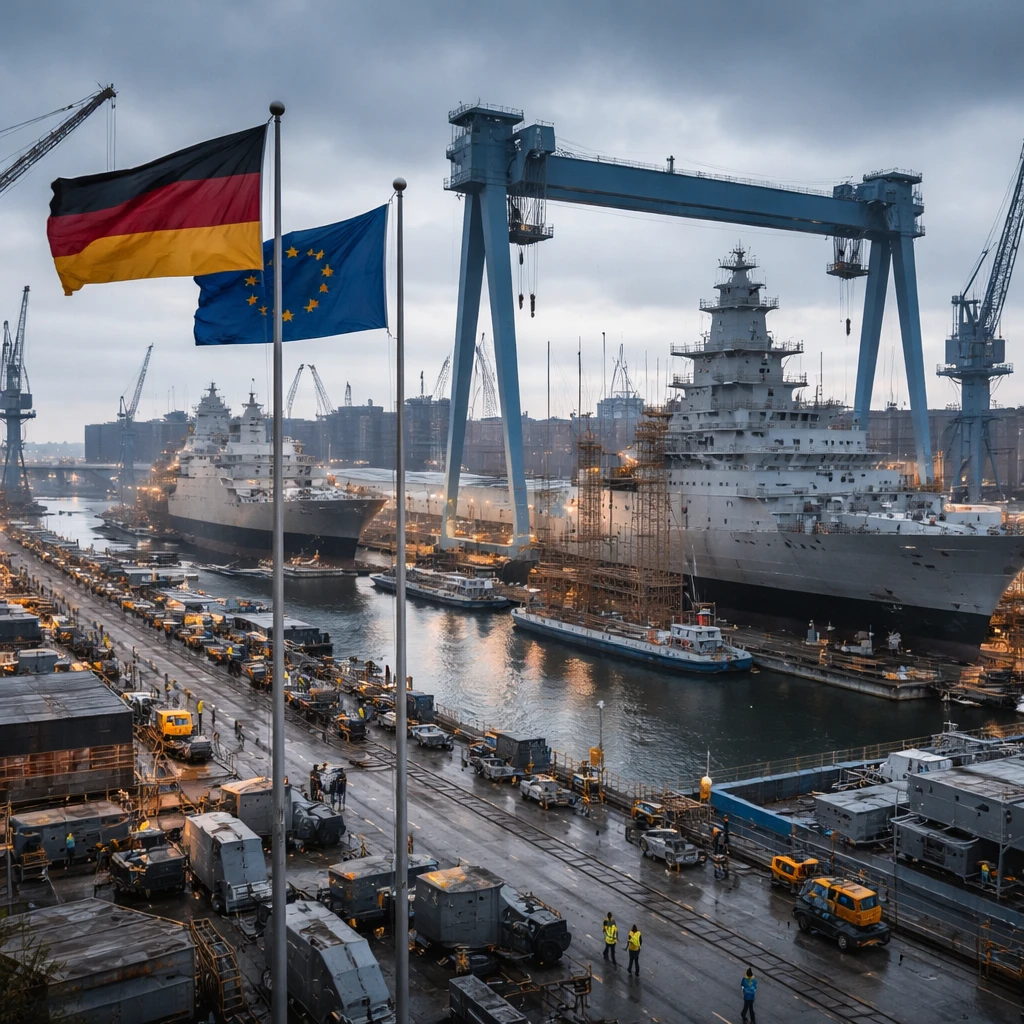
European defence equities weakened on Wednesday after a sharp decline in Rheinmetall shares following reports that Germany has decided to cancel the F126 frigate programme. The move, reported by the Financial Times, said Berlin will not proceed with the vessel class that had been slated to be the largest warships commissioned by the country since World War Two.
Market reaction
Rheinmetall, the German munitions and defence systems company that had been positioned to lead the F126 effort, fell more than 13% on the news. The selloff extended to other defence contractors across Europe, with Hensoldt, Indra, BAE Systems, Thales, Saab AB and Leonardo each slipping between about 1% and 5%.
Government decision and programme pivot
According to the reports, Defence Minister Boris Pistorius and senior officials informed industry representatives and lawmakers that Germany will abandon the F126 programme and instead procure eight smaller Meko A-200 frigates. The change in procurement strategy is expected to result in around 2 billion in sunk costs that will be written off.
Implications for shipbuilders and suppliers
The decision hit Rheinmetall particularly hard given the company een expanding into shipbuilding this year, including a 1.5 billion acquisition of Naval Yards Lfcrssen. The F126 contract had been central to that expansion strategy.
By contrast, thyssenKrupp Marine Systems (TKMS) saw its shares rise more than 9% by mid-morning in Europe after reports indicated the government ecision effectively enlarges TKMS ommercial opportunity. TKMS already holds a contract to deliver four Meko A-200 frigates at roughly 1 billion apiece, and the move broadens its role in the shipbuilding pipeline.
Programme history and remaining context
The F126 project has faced persistent issues since its inception, including cost overruns, software-related delays and strained relations between Germany entral procurement agency and Damen Naval, which originally won the contract in 2020. Those challenges were cited in accounts of the cancellation.
Separately, the cancellation occurs as Berlin continues a broader defence spending push, planning a 780 billion modernisation programme through 2030 aimed at strengthening Germany efence capabilities.
What to watch next
- Near-term stock volatility among European defence and shipbuilding names tied to contract reallocation.
- Accounting impacts for companies with sunk costs tied to F126-related investments.
- Contract awards and delivery schedules for the Meko A-200 frigates and how those flow through existing shipbuilder orderbooks.
This report confines itself to the facts as reported about the cancellation, corporate moves and market responses. No additional forecasts or attributions beyond those facts are included.