
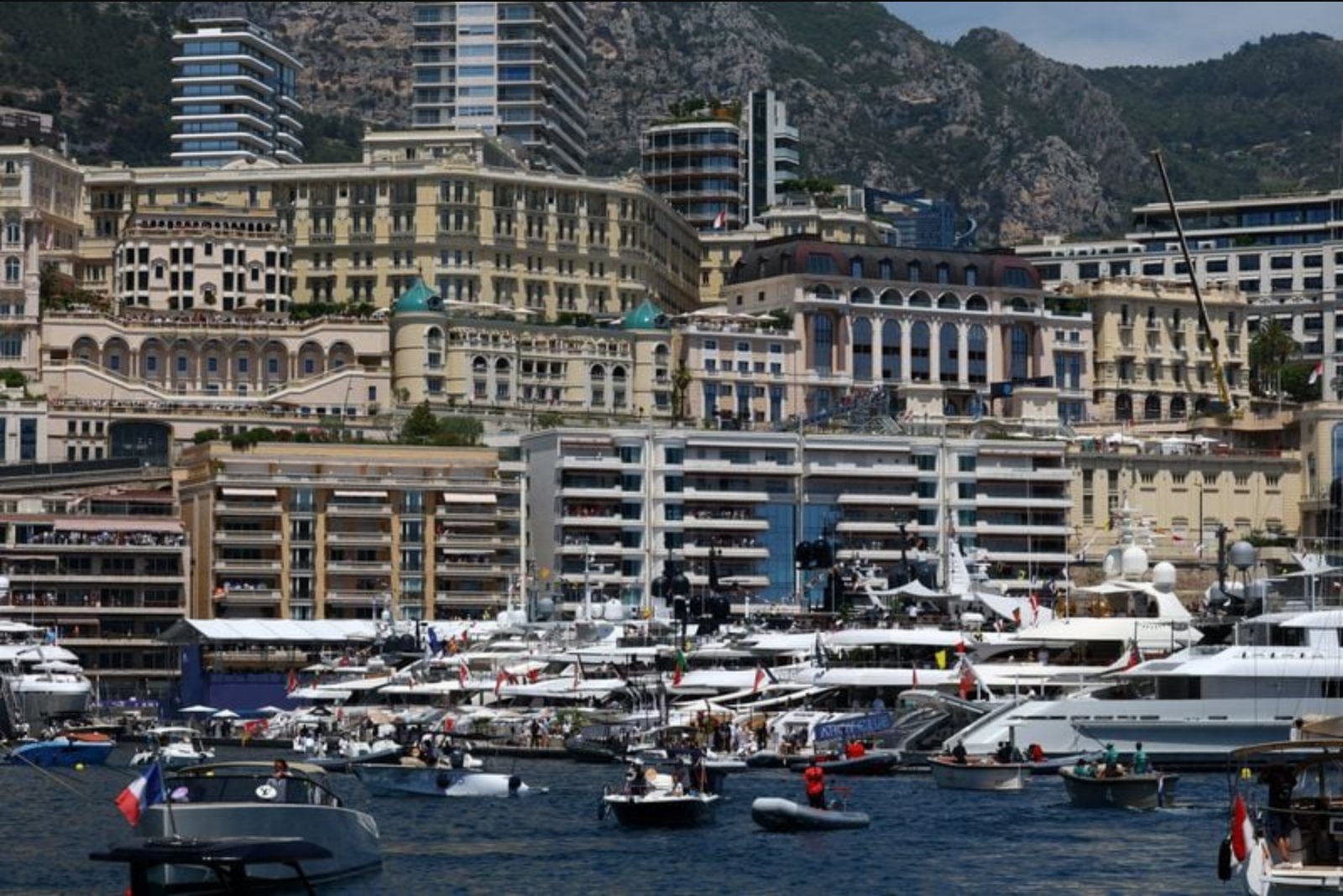
Rising jet fuel prices and heightened risks in regional airspace have not deterred a segment of high-net-worth travellers, who are increasingly opting for private jets to reach major social and sporting events. From the Cannes Film Festival to the Monaco Grand Prix, charter operators and manufacturers report stronger activity as wealthy clients switch away from commercial flights.
Industry participants link the trend to a widening divergence in consumer spending patterns that observers label a "K-shaped" economy - a dynamic in which affluent households continue to spend while middle- and lower-income groups pare back. The pattern is apparent across travel and consumer markets, with budget carriers feeling particular pressure.
Since the onset of the conflict in late February, jet fuel prices have roughly doubled, a rise that has prompted some airlines to cancel services and lift ticket prices. At the same time, missile and drone activity around the Gulf has sharply reduced flights in a region that had previously served as a major global connection hub - air traffic there has almost halved, industry sources say.
Yet for many private jet customers, higher fuel costs and security worries are an acceptable trade-off for convenience and control. "The world is in turmoil, but not our passengers," said Deniz Weissenborn, owner of Platoon Aviation, a charter operator of eight-seat jets, explaining that his clientele can absorb the extra cost. "If you fly in a private jet, I don’t think you’re bothered by an increase of 1,000 or 2,000 euros."
Market data corroborates the anecdotal accounts. Aviation data firm WINGX reports that private flight activity is up about 4% globally so far this year, representing thousands of additional trips. By contrast, aviation analytics company Cirium estimates that overall global capacity has fallen between 3% and 4% over the same period.
Charter suppliers and private jet executives say they have seen a meaningful uplift in demand around headline events as travellers who previously flew premium cabins on commercial services switch to charters to reduce the risk of cancellations or disruption. Kolin Jones, founder and CEO of Amalfi Jets, noted roughly a 25% increase in requests for Cannes this year versus last, while inquiries for the Monaco Grand Prix were up nearly a third.
"Lots who could afford it but flew commercial are now happy to pay more for the safer option," Jones said. "Cannes Film Festival, Monaco Grand Prix, and World Cup-related travel from Europe to the U.S. are driving demand."
Private aviation insiders say the shift is not uniform across all regions. While demand to Europe and the United States is expected to near record levels, traffic to the Middle East has softened because of concerns about airspace safety. "It is as busy as ever," said Andy Spencer, a private jet pilot with experience on routes in the Middle East and Asia, reflecting the overall strength of private traffic even as regional patterns alter.
Event-related spikes also demonstrate the scale of private travel around major U.S. sporting events. WINGX reported that during the early February U.S. Super Bowl in California, private operations at nearby airports were three times a normal day's activity. For April’s Masters Tournament in Augusta, private flights surged to more than 400 from fewer than 50 on a typical day - roughly a tenfold rise.
Manufacturers supplying the executive aviation market are tracking sustained flight hours. Francisco Gomes Neto, chief executive of private jet maker Embraer, told industry attendees at an executive aviation show in Sao Paulo in May that customers' flight hours continue to reach record highs month after month.
Private aviation has faced criticism from environmental and equality campaigners who argue that its growth highlights inequality and that the sector's emissions and regulation warrant scrutiny. Industry representatives counter that business aviation plays a role in connectivity and that recent increases in private travel are primarily driven by client preferences for greater security and control amid global uncertainty.
"Every time there are world events, private aviation gets a little bit of a bump, every single time," said Jason Middleton, owner of Silver Air Private Jets, citing recent crises such as the Iran conflict, the Covid pandemic and unrest in South America. "It’s like a safety thing...People feel safe when they have control."
The present environment underscores a bifurcated travel market: premium travellers absorb higher costs and seek alternatives to commercial flying, while airlines and lower-cost carriers confront reduced capacity and price-sensitive customers. Operators, manufacturers, and analysts will be watching whether private flight growth persists if fuel prices remain elevated or if broader economic pressure shifts demand patterns.