
Outokumpu, the Finnish stainless steel producer, said EU trade measures have supported stronger demand for regional steel output, but mounting input costs have largely counterbalanced that improvement, the company's chief financial officer told Reuters on Thursday.
The group recorded an adjusted core profit of c17 million in its European operations for the second quarter. That marks an improvement from a c13 million loss in the first three months of 2026 and is marginally higher than the c16 million posted in the same quarter a year earlier.
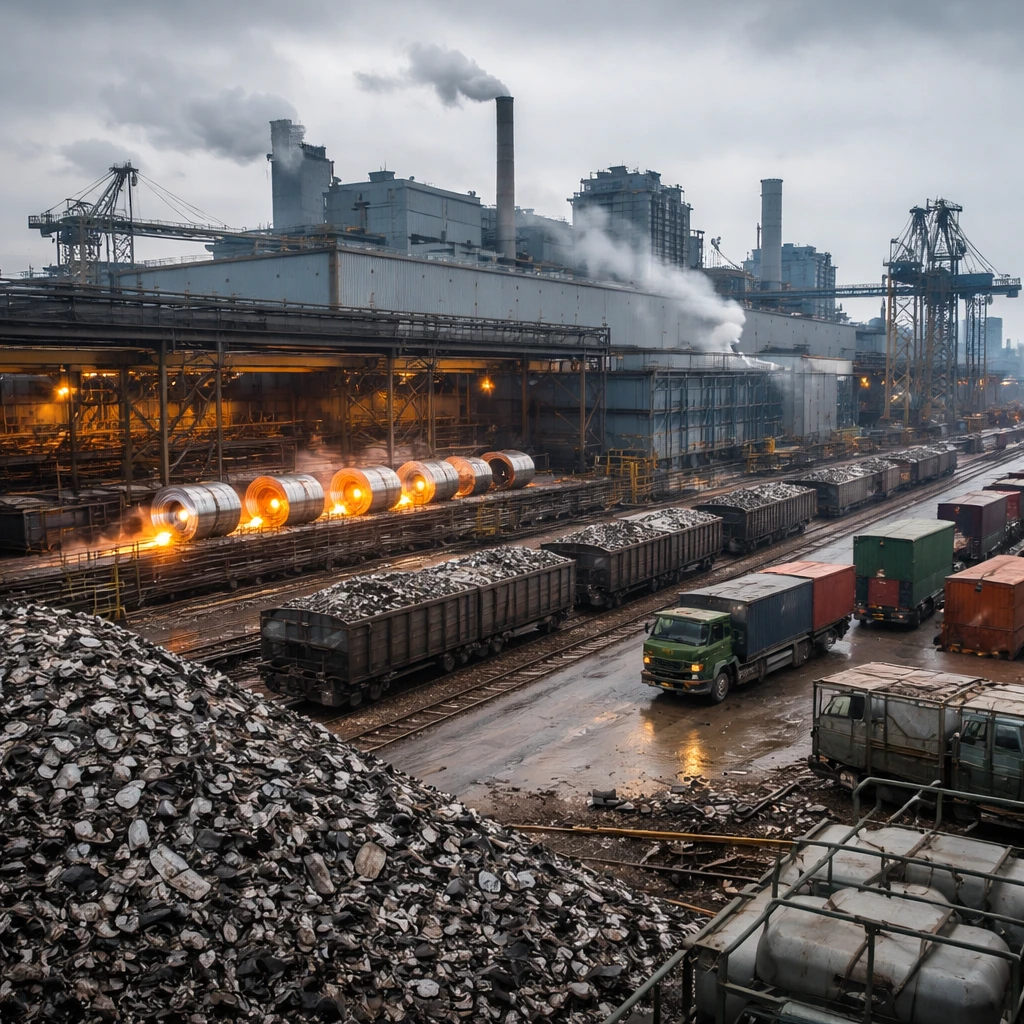
Chief Financial Officer Marc-Simon Schaar said the EU measures that have encouraged consumption of locally produced steel have also pushed up demand for scrap metal, which is the principal raw material for producers operating in Europe. At the same time, weaker end-user demand has led to less scrap being generated, tightening supply and driving raw material prices above last year's levels.
Schaar singled out higher freight, transport and fuel costs as additional pressures on the company's results. He also noted that state aid designed to help companies with costs linked to the EU emissions-trading system - estimated at roughly c35 million to c40 million annually - has come to an end.
On the trade front, the immediate effect of EU measures on imports has not entirely matched expectations so far. The CFO reported that imports made up 17% of European steel consumption in April and May, up from 15% in the first quarter. He added that imports likely rose further in June ahead of tighter safeguard measures taking effect on July 1.
Overall, the company described a quarter in which policy-driven demand supported regional production but was met by higher feedstock and logistics costs, as well as the removal of prior support tied to emissions costs. The net effect left Outokumpu with only a modest improvement in adjusted core profit compared with the previous quarter.
Market and sector implications
- Steelmakers in Europe may see demand shifts tied to trade measures but remain exposed to raw material availability and logistics cost volatility.
- Scrap metal markets are directly affected by end-user demand and trade policy, influencing producers that rely on recycled feedstock.
- Transportation and energy cost dynamics play a significant role in industrial margins for commodity-intensive manufacturers.