
Needham has designated Carvana as its primary pick within the transportation technology segment, placing the online used-car retailer on the firm's Conviction List. In its assessment, Needham stressed that Carvana's trajectory points to durable unit growth and market share expansion while noting that the wider market appears to be underappreciating those developments.
The brokerage wrote that analysts were surprised by the muted investor reaction to Carvana's progress. Despite forecasts for consensus adjusted EBITDA growth of 30%, Carvana shares trade at roughly 20 times fiscal year 2027 estimates, according to Needham's calculations.
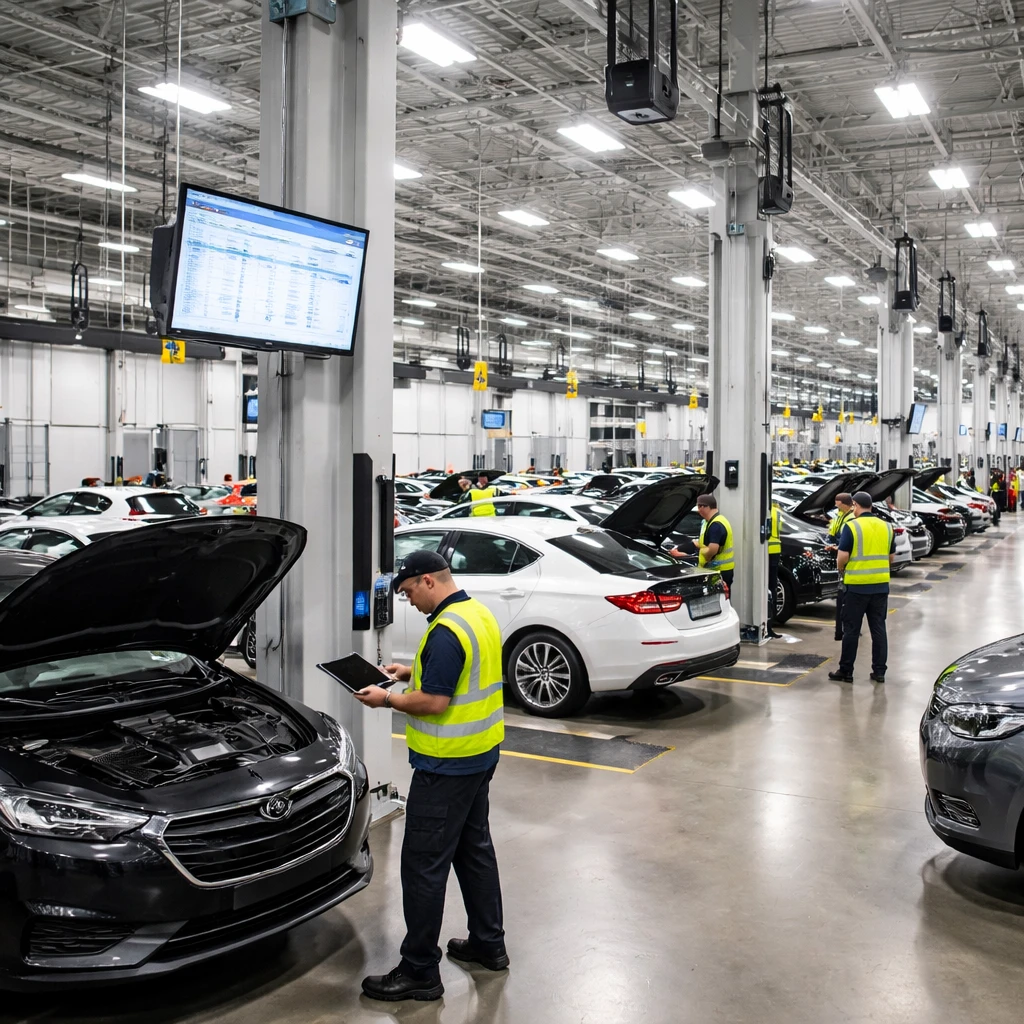
Needham pointed to several recent data points and engagements that have eased concerns about near-term retail gross profit per unit, particularly in the second half of 2025. The firm cited language included in Carvana's first-quarter 2026 shareholder letter and insights gathered during a tour of the company's Cleveland Inspection and Reconditioning Center as evidence of constructive operational change.
At a recent investor event in Cleveland, Needham observed that Carvana has progressed beyond merely rolling out tools and technology for vehicle reconditioning. The company is now installing internal software intended to optimize the management of on-site personnel and to remove inefficiencies in how human capital is deployed at reconditioning facilities. Those changes, Needham argues, are meaningful within the transportation technology category because they speak directly to unit-level cost control and throughput.
According to Needham's analysis, current market prices appear to give little credit for the company's pathway to its longer-term targets. The firm calculated that prevailing share valuations imply Carvana will sell 3 million units in 2037, a volume that the firm says lies outside the company's guided range, and will achieve profitability metrics similar to those expected in 2025. Needham interprets that pricing as the market anticipating slowing growth and no efficiency gains for a business it describes as having high fixed costs.
Needham's write-up frames a disconnect between Carvana's operational advances - particularly in reconditioning and labor management systems - and how the market is valuing the stock. The brokerage treats those internal improvements as substantial developments in the transportation technology space, while concluding that the market is assigning minimal credit for progress toward longer-term guidance.
Sector implications
- Transportation technology - operational execution and software-driven labor optimization are core themes.
- Used-vehicle retail - unit economics and retail gross profit per unit are central to the investment thesis.
- Technology-enabled operations - internal software deployments to manage on-site personnel affect margins and fixed-cost leverage.