
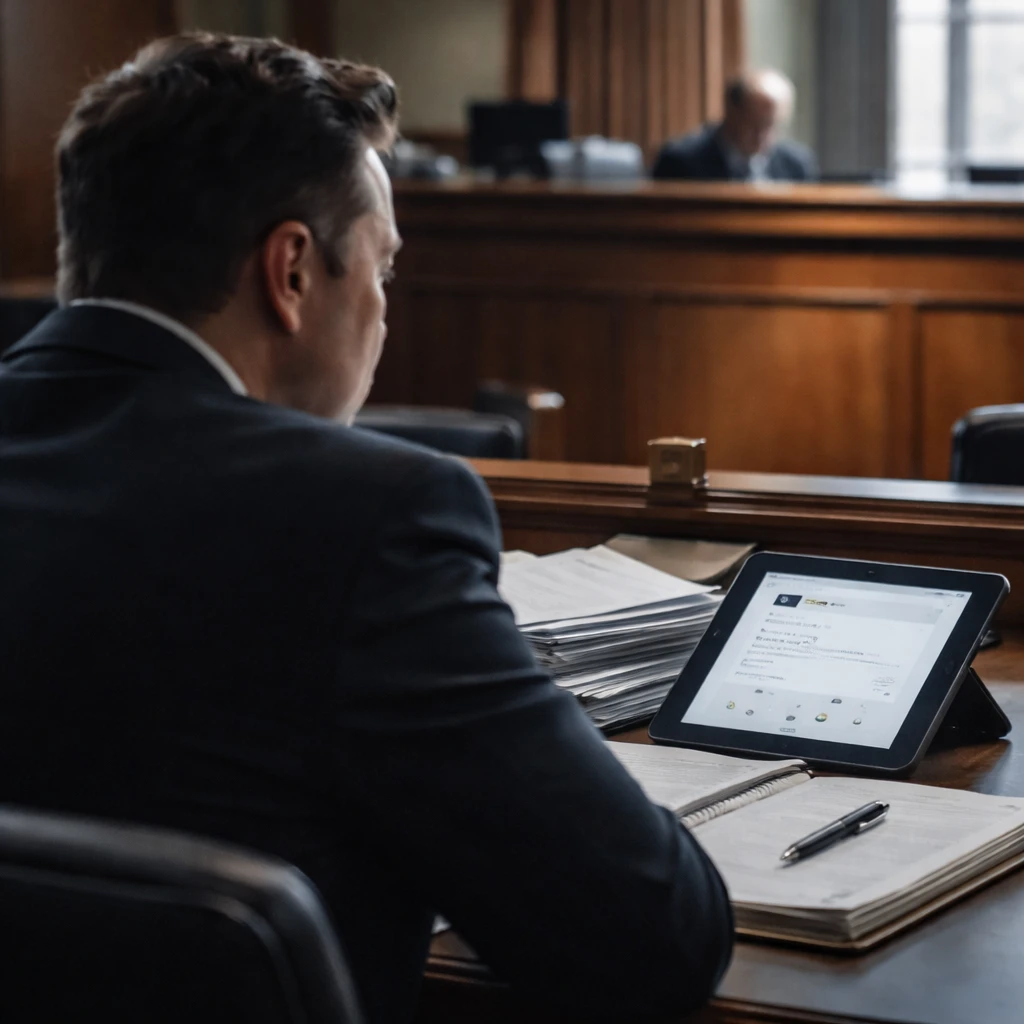
Elon Musk has urged an appellate court to set aside a jury ruling that found he misled Twitter shareholders as he weighed whether to complete his purchase of the social media company four years ago.
In a filing submitted Monday night to the San Francisco-based 9th U.S. Circuit Court of Appeals, Musk disputed the central premise of the securities-fraud verdict: that his May 13, 2022 post - stating the $44 billion takeover was "temporarily on hold" until Twitter demonstrated its platform was not overrun by fake and spam accounts - was a materially false statement that caused the company's share price to tumble.
What Musk told the appeals court
Musk argued that shareholders did not carry their burden of proving the May 13 post caused the 9.7% decline in Twitter's stock to $40.72. The filing states that nothing linked the price move to any "material falsity" in his message, and that shareholders were attempting to hold him liable for securities fraud simply because the share price fell.
Separately, Musk challenged the decision to certify the case as a class action. He told the appeals court the trial judge should not have allowed the suit to proceed as a group claim because many investors likely did not rely on his post when deciding to sell Twitter shares.
Responses and potential liabilities
Lawyers representing the shareholders did not immediately respond to requests for comment on Tuesday. One of the lawyers has said Musk might owe $2.6 billion plus interest if the verdict stands.
Class actions permit plaintiffs to sue collectively, which can increase potential damages while lowering the cost for individual plaintiffs compared with bringing separate suits. Shareholders alleged that Musk raised concerns about fake and spam accounts as a pretext to back out of the deal or to pressure Twitter into renegotiating a lower price.
They contend that Twitter's share price remained depressed until Musk agreed in October 2022 to go forward with his original $54.20 per share offer.
Judge's prior ruling and corporate changes
In July, U.S. District Judge Charles Breyer in San Francisco upheld the verdict, finding "substantial evidence of falsity" in Musk's May 13 tweet. Judge Breyer wrote that express concerns about completing a transaction "do not justify lying to the investing public."
Since the litigation began, Musk has changed Twitter's name to X and later folded it into his rocket and satellite company SpaceX, actions noted in the appellate filing and the record.
Context and next steps
The appeal asks the 9th U.S. Circuit to overturn the jury's findings and the district court's decisions on class certification. If the appeals court agrees with Musk on either point - that the tweet was not a materially false statement tied to the stock's drop, or that class certification was improper - the verdict could be reversed or remanded for further proceedings.
Beyond the legal arguments filed on Monday night, the filing reiterates Musk's contention that the causal link between his statement and the share-price decline was not proven at trial. The appellate court will now consider those arguments as the case proceeds through the federal appeals process.