
Mercedes-Benz's chief executive signaled on Tuesday that the automaker will take whatever measures are needed to preserve its U.S. presence as lawmakers in Washington consider legislation that could restrict sales by companies with major Chinese investors.
The comments came as the company released its second-quarter results and underlined rising regulatory scrutiny that threatens access to one of Mercedes' remaining high-growth markets. The U.S. Senate Commerce Committee last week approved legislation intended to strengthen a ban on Chinese automakers entering the United States - a move that could theoretically affect Mercedes because its two largest shareholders are Chinese.
"If we need to make adjustments to comply with anything, we will make sure that we protect our presence and our business in the U.S.," CEO Ola Kaellenius said. He added: "We are not naive about the geopolitical environment and the competition between the United States and China."
Kaellenius also said the company was tracking developments in Washington and was "deeply involved" in discussions with the relevant parties. He framed those discussions as part of a broader effort to respond to potential new rules without abandoning the U.S. market.
Two Chinese investors - BAIC Group and Geely founder Li Shufu - together hold nearly 20% of Mercedes' listed shares. That ownership profile is central to the concern in Washington that prompted the recent committee action.
Facing a sharp downturn in China, where Mercedes and other German brands have struggled to keep pace with a rapid transition toward electric vehicles, the company has been expanding its U.S. manufacturing footprint. Demand for the combustion-engine models that remain popular in the United States has been stronger, and those vehicles typically carry higher margins than electric models that are more costly to build.
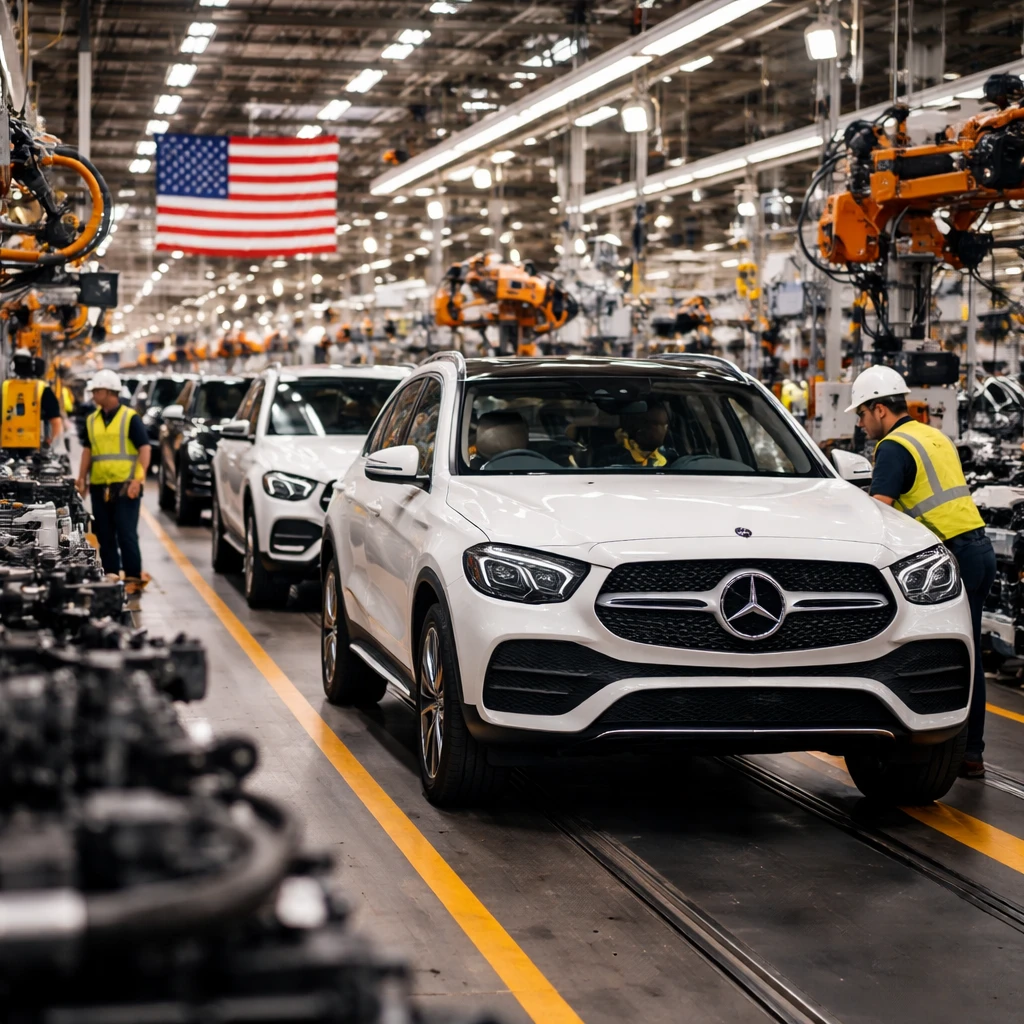
Mercedes has committed more than $7 billion to its U.S. operations, including a pledge of $4 billion through 2030 aimed at increasing SUV production at its Alabama plant. Kaellenius said the company could also locate engine production in the United States depending on the outcome of a renegotiation of a North American trade pact that is under discussion - a pact that might introduce U.S.-specific content requirements for vehicles sold in the region.
Sales in the United States increased by 15% in the first half of the year, providing a partial offset to weakness in China. Independent automotive analyst Matthias Schmidt commented on the benefits of local production, saying: "If you are manufacturing locally in the U.S., it is a licence to print money."
The CEO's pledge to adapt if necessary and the company's substantial U.S. investments highlight Mercedes' strategy to protect and potentially expand its U.S. business while monitoring regulatory and geopolitical shifts that could shape market access and production decisions.