
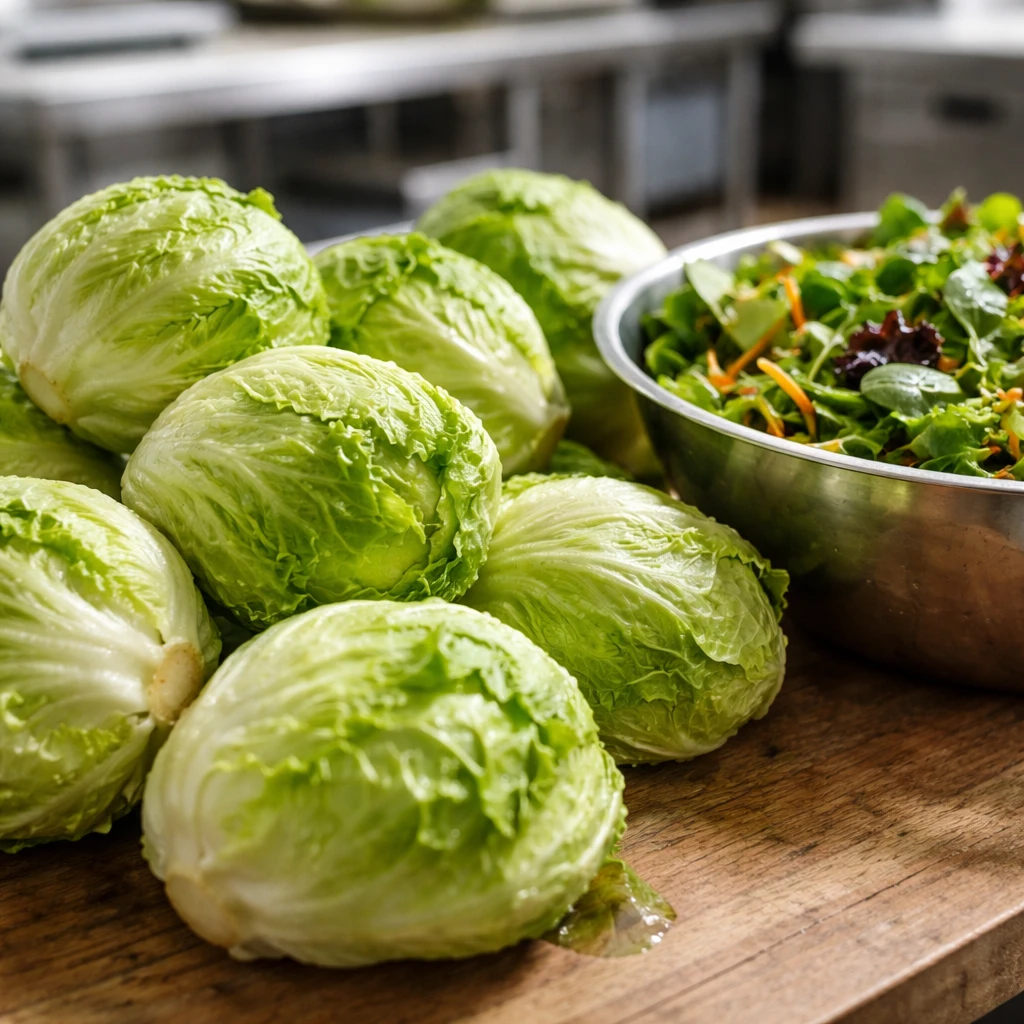
Equity markets reacted sharply to public health findings tying a recent cyclosporiasis outbreak to shredded iceberg lettuce supplied to Taco Bell, producing a split outcome among restaurant and fresh-food stocks.
The immediate market moves
- Yum! Brands fell -2.22% to $149.88 on the day, reflecting investor concern after Taco Bell was identified in a supplier traceback.
- Sweetgreen dropped -6.82% to $6.01, the largest decline among affected names, despite having no direct supplier or operational link to the recalled lettuce.
- Chipotle was essentially flat, down -0.11% to $37.18, and has recently raised its full-year comparable sales guidance to low single-digit growth.
- McDonald’s moved down -0.83%, reflecting broader sector sensitivity.
The outbreak: what has been established
- The Centers for Disease Control and Prevention (CDC) has confirmed 6,707 laboratory-confirmed cases across 45 states and reported 423 hospitalizations as of today.
- Michigan has reported more than 11,000 cases and two deaths linked to the outbreak.
- The U.S. Food and Drug Administration’s traceback connects thousands of cases specifically to shredded iceberg lettuce served at Taco Bell locations across nine states, including Michigan, Ohio, Indiana, Illinois, and Kentucky.
- Taylor Farms, the supplier implicated in the traceback, recalled the lettuce and closed its central Mexico processing plant. The supplier has reportedly voiced complaints to the White House regarding the FDA’s inspection process.
- Former CDC officials estimate the true number of infections could be 10 to 20 times the laboratory-confirmed case count.
How these facts translated into share-price moves
The trading patterns reflect a mixture of direct exposure, brand identity risk, and investor psychology. Sweetgreen’s share price decline is the most striking example of perception-driven selling: the company is focused on fresh leafy greens and, as a result, is seen by some investors as particularly exposed when lettuce is implicated in a foodborne illness outbreak. That dynamic appears to have driven an outsized reaction even though the company has no direct link to the recalled product.
Sweetgreen entered the outbreak with limited downside cushion: the stock was already down -49.54% over the past year and -31.36% in the month leading up to this event, increasing its vulnerability to abrupt downside moves.
By contrast, Yum! Brands - the corporate parent of Taco Bell - fell by a smaller amount. Three factors explain the relatively muted response:
- Revenue diversification: Taco Bell represents one of several major brands within Yum!, which also includes KFC, Pizza Hut, and The Habit Burger. That wider portfolio dilutes the revenue impact concentrated at any single brand.
- Supplier responsibility: The traceback and recall point to Taylor Farms as the source of the contaminated lettuce, shifting initial legal and operational burden toward the supplier rather than the franchisor.
- Prior weakness: Yum! had already lost -9.01% over the past month, suggesting some downside risk related to the evolving situation was already reflected in the share price.
Chipotle and the flight-to-safety effect
Chipotle’s shares were largely unmoved on the day, despite the sector-wide headlines. The company had recently increased its full-year comparable sales guidance to call for low single-digit growth, a sign that its near-term demand outlook remains intact. When a direct competitor or supplier is implicated in a food-safety event, investors sometimes reallocate toward brands perceived as having lower sourcing risk, a dynamic that can leave differently positioned fast-casual operators relatively unscathed or even relatively stronger by comparison.
Broader considerations and open uncertainties
Former officials cited reductions across federal health agencies as a complicating factor in outbreak response. The spread of confirmed cases across 45 states and reports of more than 11,500 suspected cases awaiting confirmation imply that the outbreak’s ultimate scope could be substantially larger than the confirmed case count, which in turn leaves open the potential for further market and legal repercussions that may not yet be fully priced into public equities.
Another important structural factor is that Taylor Farms is privately held. That status prevents direct market pressure on the supplier via public equity channels, meaning public investors may redirect scrutiny and selling pressure to listed companies whose business profiles make them easy proxies for exposure to the incident. This explains why companies without direct ties, such as Sweetgreen, can suffer heavy valuations declines in the immediate aftermath.
Bottom line
The immediate market response to the cyclosporiasis outbreak has been uneven, guided as much by brand identity and investor perception as by direct supplier relationships. With confirmed cases and hospitalizations established and the supplier recall underway, key uncertainties remain about the full magnitude of infections and the downstream legal or regulatory consequences. Public investors will likely continue to reprice exposure in near-term trading as more clarity becomes available.