
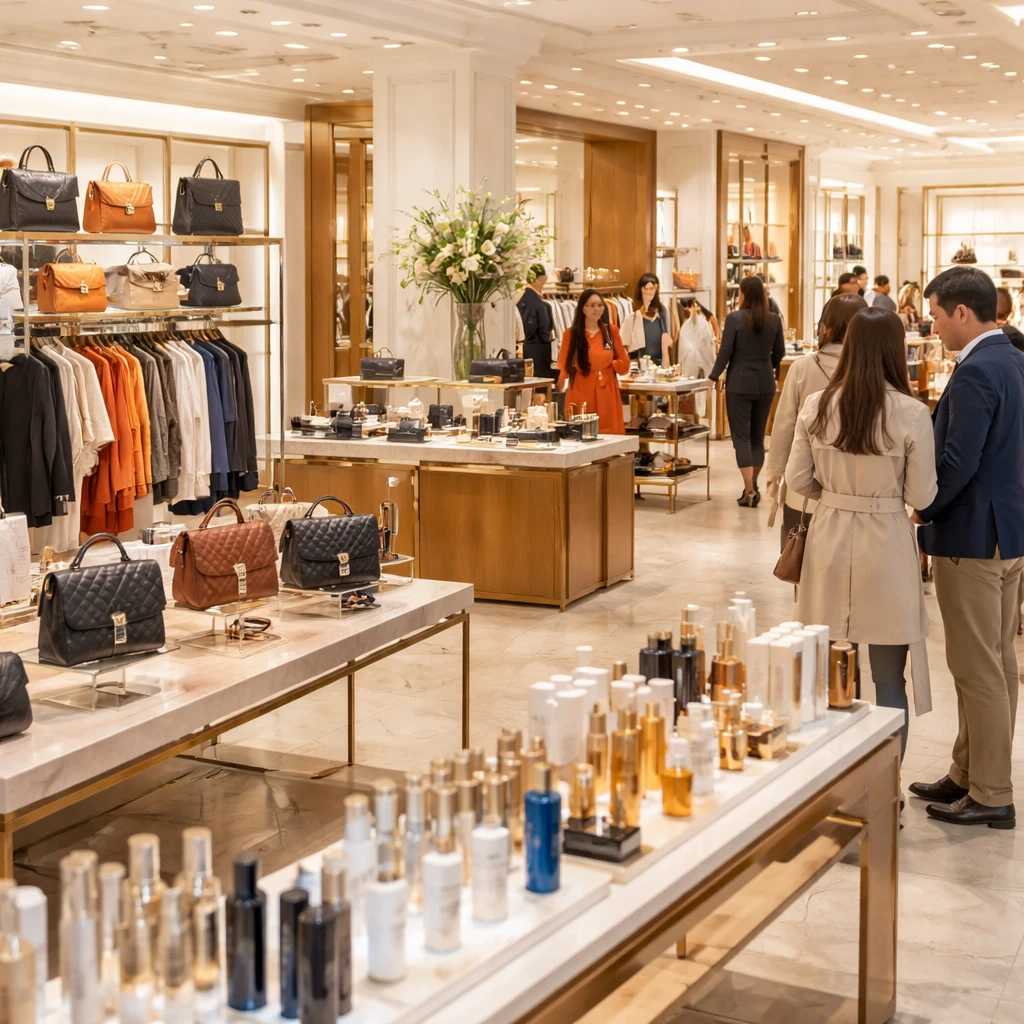
Macy’s on Thursday raised its full-year sales and earnings guidance after reporting a quarterly results beat powered by outperformance at its upscale Bloomingdale’s and Bluemercury businesses. Shares of the department-store operator were trading roughly 5% higher in premarket activity.
Under Chief Executive Officer Tony Spring, Macy’s has concentrated on reshaping its business around higher-end offerings. That effort - launched as the "Bold New Chapter" strategy in 2024 - emphasizes higher-margin items and full-price selling, while trimming underperforming locations and reallocating resources to stronger markets to lift profitability. The company said those investments are producing measurable gains.
"The investments we’re making are driving results across our portfolio," Spring said in a statement.
Macy’s updated its fiscal 2026 outlook, now expecting net sales in the range of $21.68 billion to $21.83 billion, compared with its earlier forecast of $21.50 billion to $21.75 billion. It also increased its annual adjusted earnings-per-share target to $2.15 to $2.35, up from a prior range of $2.00 to $2.20 per share. Macy’s said its outlook incorporates macroeconomic and geopolitical uncertainties that could influence consumer spending, as well as the impact of tariff refunds.
For the second quarter, Macy’s reported sales of $4.87 billion, a 1.1% rise that exceeded analysts’ estimate of $4.83 billion, according to data compiled by LSEG.
Comparable sales performance varied across banners. Bloomingdale’s, which focuses on luxury apparel, footwear and accessories, delivered an 11.3% increase in comparable sales. Bluemercury, the company’s beauty and skincare chain, posted a 6.2% rise. By contrast, Macy’s namesake stores, which are more reliant on middle-income, value-focused customers, recorded a 1.1% increase in comparable sales.
Adjusted quarterly profit climbed 80% to $0.63 per share. Macy’s said tariff refunds contributed $0.23 per share to earnings and that it has received $116 million in such refunds to date.
Analysis of the results highlights the growing split within Macy’s portfolio between its upscale banners, which are benefiting from continued consumer demand for luxury apparel, handbags, fragrances, cosmetics and skincare, and its core Macy’s stores, where growth is more modest and tied to value-conscious shoppers.
The company reiterated that its financial projections remain subject to external risks and uncertainties that could affect consumer behavior. It also flagged the tangible benefit to the quarter from tariff refunds already received.