
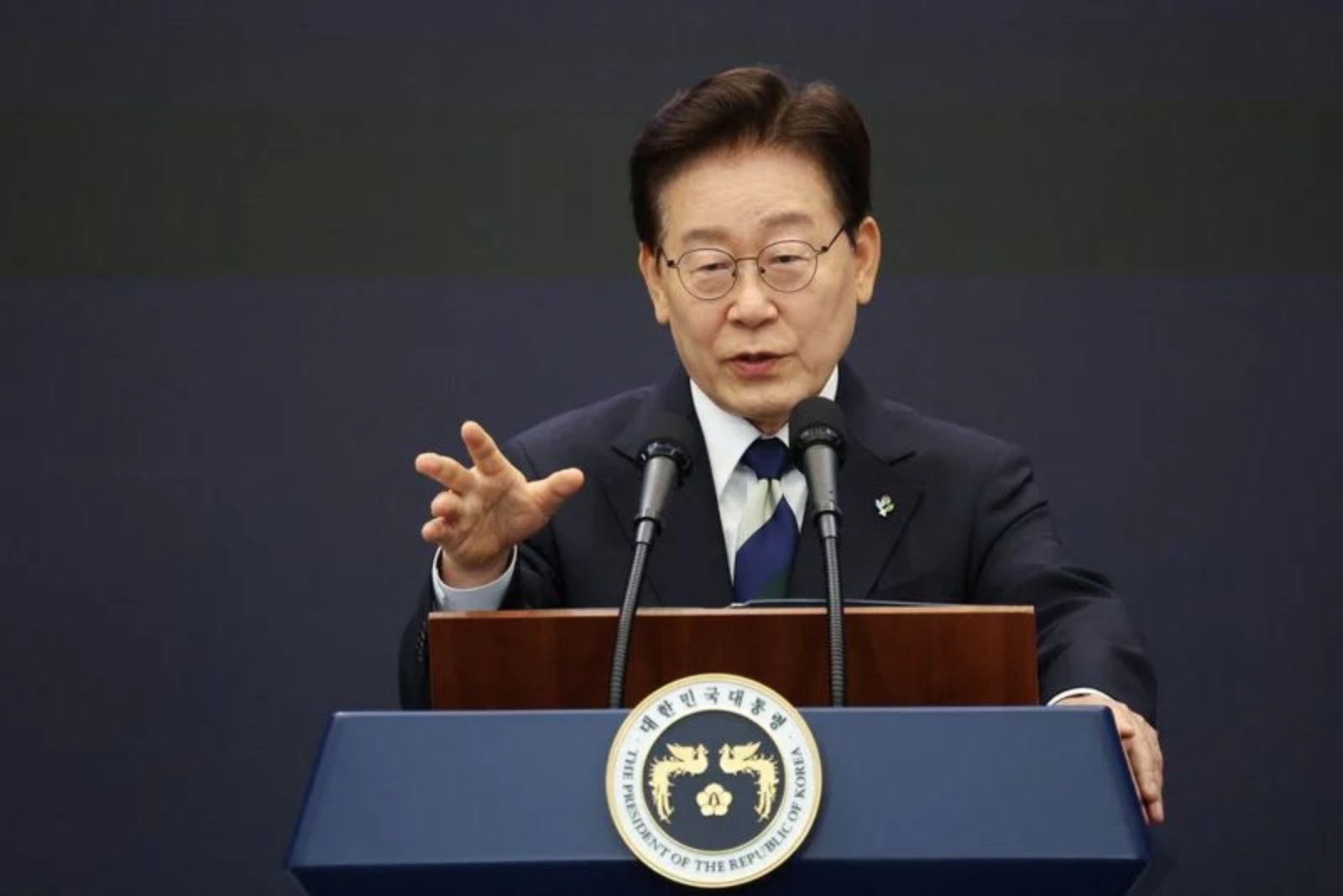
South Korea’s president, Lee Jae Myung, on Monday ordered officials to move rapidly on the large chip and artificial intelligence projects unveiled last week, stressing that speed will determine which countries capture leadership in advanced industries.
Lee told a government meeting that the country cannot afford delays in permits, land acquisition and the provision of power and water, warning these hold-ups could undermine national ambitions. "In this situation, it appears the outcome will be decided by who moves faster and who secures the lead first," Lee said, adding, "Only speed matters."
Lee pointed to the Yongin industrial complex as an example, noting it took six years from site confirmation to breaking ground and that interval had been considered relatively fast. He urged officials to seek ways to shorten environmental reviews and other approval procedures where possible.
Emphasizing process changes, Lee directed that procedures typically handled sequentially should be pursued concurrently to shave time from project schedules. He also highlighted critical infrastructure needs, calling for preemptive steps to secure electricity and water for the planned facilities, and said power would be particularly important for chip projects.
Companies have reportedly expressed concern about baseload power supply despite increases in renewable energy deployment, Lee said, and he ordered officials to address those concerns ahead of project construction.
Last week the government announced a package of investments exceeding $576 billion focused on chips and AI, intended both to secure global competitiveness and to encourage economic activity beyond the Seoul metropolitan area. As part of those commitments, Samsung Electronics and SK Hynix will each invest 400 trillion won to build new chip manufacturing sites in the southwest, while 81 trillion won is allocated for a chip-packaging cluster in the Chungcheong region. The conversion rate in the announcement was $1 = 1,530.9000 won.
Lee also said government officials and corporate executives should begin discussions on specific sites for the projects, signaling an immediate push toward implementation.
Context and next steps
Lee’s instructions focus on accelerating administrative timelines and establishing the necessary utility backbone in advance of construction. The emphasis on simultaneous processing of approvals and preemptive infrastructure provisioning is intended to reduce lead times for factory build-outs and associated industrial clusters.