
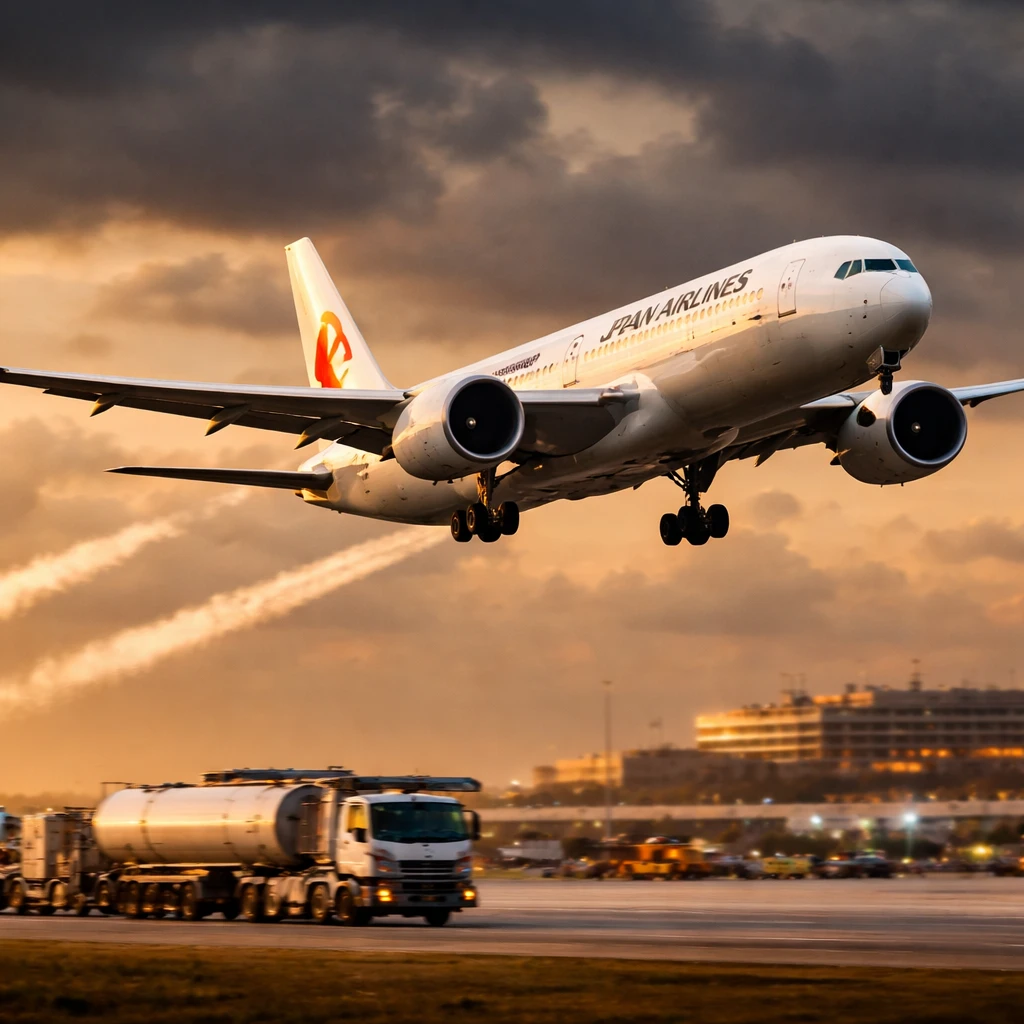
Japan Airlines stock retreated 1.4% to ¥2,939 on Tuesday following a steep deterioration in first-quarter profitability, according to the company's latest results.
For the April–June 2026 period, JAL reported operating profit of ¥12.7 billion, a 72% decline from the same quarter a year earlier. That result missed the company's internal guidance by ¥12.0 billion. Management attributed the shortfall primarily to a pronounced rise in operating costs.
Fuel expenses in particular weighed on the carrier. The company said higher jet fuel costs - which it linked to heightened geopolitical tensions in the Middle East - materially eroded margins. Those cost pressures outpaced the revenue gains from stronger international passenger demand, cargo operations and the low-cost carrier segment, all of which contributed more than expected to top-line performance.
Industry context reinforced that the problem was not unique to JAL. Rival ANA Holdings also disclosed a sharply lower operating profit for the same quarter, signaling that the surge in fuel costs is acting as a sector-wide headwind rather than an issue confined to a single airline.
Despite the downgrade in profitability, both carriers avoided outright operating losses that had been projected earlier in the reporting cycle. That avoidance of red ink helped temper investor reaction and limited the scope of selling pressure in JAL shares. The stock did not fall to its session low of ¥2,914.5, instead closing at ¥2,939.
The quarter's results highlight how commodity-driven cost swings - particularly jet fuel - can quickly offset positive revenue trends across international services, cargo and budget airline operations even when demand is solid. For investors and market participants, the update underscores the sensitivity of airline margins to external geopolitical developments that influence energy prices.
Key points
- JAL's operating profit plunged 72% year-on-year to ¥12.7 billion in April–June 2026 and missed guidance by ¥12.0 billion.
- Higher jet fuel costs, tied to heightened Middle East geopolitical tensions, were the main driver of the profit shortfall despite stronger revenue from international passengers, cargo, and the low-cost carrier segment.
- ANA Holdings reported a similar decline in operating profit for the quarter, indicating the issue is industry-wide; both carriers avoided projected operating losses.
Risks and uncertainties
- Continued volatility in jet fuel prices could further erode airline margins - a risk that affects carriers, cargo operators and travel-dependent sectors.
- Ongoing geopolitical tensions in the Middle East may sustain elevated fuel costs, creating persistent cost pressure for the airline industry.
- If operating expenses continue to rise faster than revenue gains, carriers could face renewed downside to profitability and investor sentiment.