
American households showed a slight improvement in sentiment in June after a steep retreat in gasoline prices, yet the gain was small enough that one Conference Board economist summed it up bluntly: "It’s not that things are getting better. Things are getting less bad." The Conference Board Consumer Confidence Index rose to 91.2 in June from a downwardly revised 90.6 in May, missing the economists' consensus forecast of 94.2 and marking the weakest June reading in over a decade.
The June increase only partially erases the steep drop recorded in the spring. The index hit a trough of roughly 85.7 in April - its weakest level since the early pandemic - when Brent crude pushed toward $126 a barrel and retail gasoline prices spiked. The rebound in June is real but limited, and it correlates closely with movement at the pump.
According to AAA, the national average gasoline price was about $3.83 per gallon in early July, down from $4.29 a month earlier. That decline followed a retreat in Brent crude from a near-$126-per-barrel peak in April to roughly $70-72 a barrel after a ceasefire framework was agreed with Iran in June. The energy-price swings trace back to the U.S.-Israel military conflict with Iran that began at the end of February 2026, which led to a temporary closure of the Strait of Hormuz and pushed crude to multi-year highs.
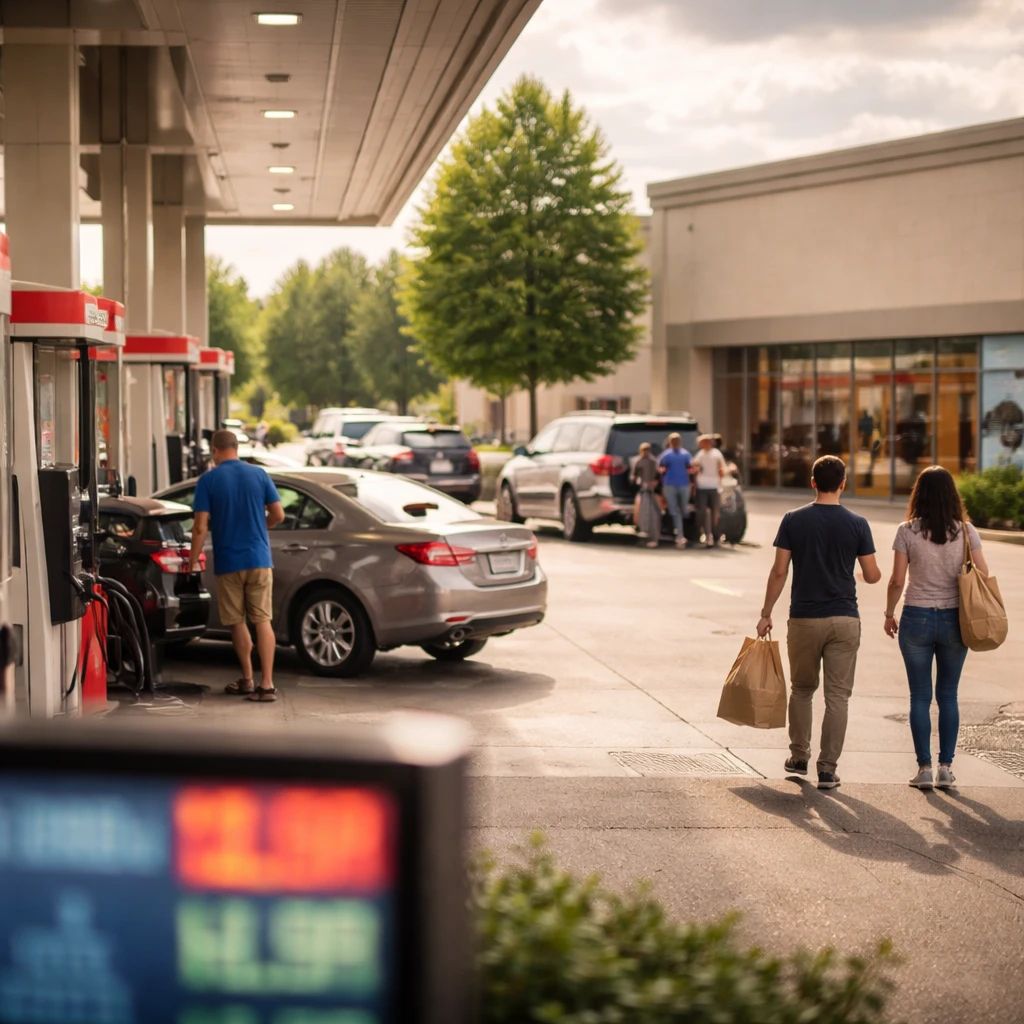
As a result of the easing in crude, gasoline prices dipped below $4 a gallon in mid-June for the first time since the conflict began, delivering the most tangible household relief in months. Even so, AAA data shows the current average remains the second-highest Independence Day pump price on record and is still approximately 63 cents higher than a year earlier. Patrick De Haan, head of petroleum analysis at GasBuddy, warned that "Americans are going to pay billions more to get where they’re going this summer, and even after the Strait reopens, it could take a year or more for prices to fully recover."
Despite the sour sentiment readings, consumers have not stayed home. AAA projected a record 72.2 million Americans would travel at least 50 miles over the July 4 holiday weekend, surpassing last year’s record of 71.8 million, with 61.4 million expected to travel by car. That disconnect - where stated sentiment is weak but activity remains resilient - suggests household spending behavior may be outpacing mood.
That spending resilience is coming at a cost. The PCE price index rose 4.1% in May from a year earlier, the fastest annual pace since April 2023, while consumer credit card debt climbed to a record $1.3 trillion. Headline CPI stood at 4.2% in May, and other indicators point to strains beneath the surface.
Dana M. Peterson, Chief Economist at The Conference Board, highlighted a notable deterioration in labor-market perceptions: "the percentage of consumers saying jobs were 'hard to get' rose to 22.5%, the highest level since January 2021." This detail reinforces that June’s confidence uptick was largely a single-factor phenomenon tied to cheaper gasoline rather than a broad-based improvement across the economy.
Labor-market data added to that caution. Nonfarm payrolls for June increased by just 57,000 jobs, well below the 114,000 consensus forecast and down from a downwardly revised 129,000 in May, according to Reuters. The soft payrolls print underscores how much the job market is cooling even as headline employment measures remain positive.
Retailers are already adjusting to the environment. Walmart (NYSE: WMT) announced cuts to prices on summer barbecue essentials such as meat, chips and soda, reinforcing a narrative where lower gasoline prices and budget-conscious consumers shape retail strategies. For a retailer whose clientele skews toward value-conscious households, a landscape of gas-price sensitivity and rising credit-card balances is the kind of backdrop that tends to drive traffic into stores.
Several near-term releases will be crucial in determining whether June’s modest mood lift holds or fades. The NY Fed Survey of Consumer Expectations was scheduled for release on July 7 to provide an updated forward-looking read on household inflation expectations. The Federal Open Market Committee was set to publish minutes from its most recent meeting on July 8, which may indicate how much tolerance policymakers have for an energy-driven pullback in inflation and whether rate cuts are back on the table.
The most consequential data point will arrive on July 14, when the June CPI report is published. That print will be the first hard evidence of whether the drop in gasoline prices translated into a meaningful fall in the headline inflation rate from May’s 4.2%. If the June CPI shows a notable decline, it could alter the Federal Reserve's calculus on borrowing costs and have direct implications for the record level of consumer credit that has been underpinning household spending.
For now, the picture is one of fragile relief: gasoline price declines have provided a small lift to consumer sentiment, but elevated inflation measures, a historic level of credit-card debt and signs of a cooling labor market mean the improvement could be short-lived unless broader economic conditions strengthen.
Key points
- Conference Board Consumer Confidence rose to 91.2 in June from a revised 90.6 in May, below the 94.2 forecast and the weakest June reading in over a decade.
- Falling gasoline prices - AAA reported a national average of about $3.83 per gallon in early July, down from $4.29 a month earlier - appear to be the primary driver of the sentiment uptick.
- Spending remains resilient despite weak sentiment: a record 72.2 million Americans were projected to travel at least 50 miles over the July 4 weekend, with 61.4 million driving.
Risks and uncertainties
- Inflation risk - Headline CPI was running at 4.2% in May and the PCE price index rose 4.1% year-over-year in May, posing a risk that real incomes will remain pressured and undercut consumer spending. - Affects sectors: retail, consumer discretionary, financials.
- Debt vulnerability - Record consumer credit card debt of $1.3 trillion suggests households may be borrowing to sustain consumption, which could amplify downside risks if labor conditions weaken. - Affects sectors: financials, retail.
- Labor-market softness - Nonfarm payrolls added just 57,000 jobs in June, well below expectations, and the share of consumers saying jobs were "hard to get" rose to 22.5%, indicating potential stress in employment that could depress future spending. - Affects sectors: labor-sensitive services, housing, consumer discretionary.