
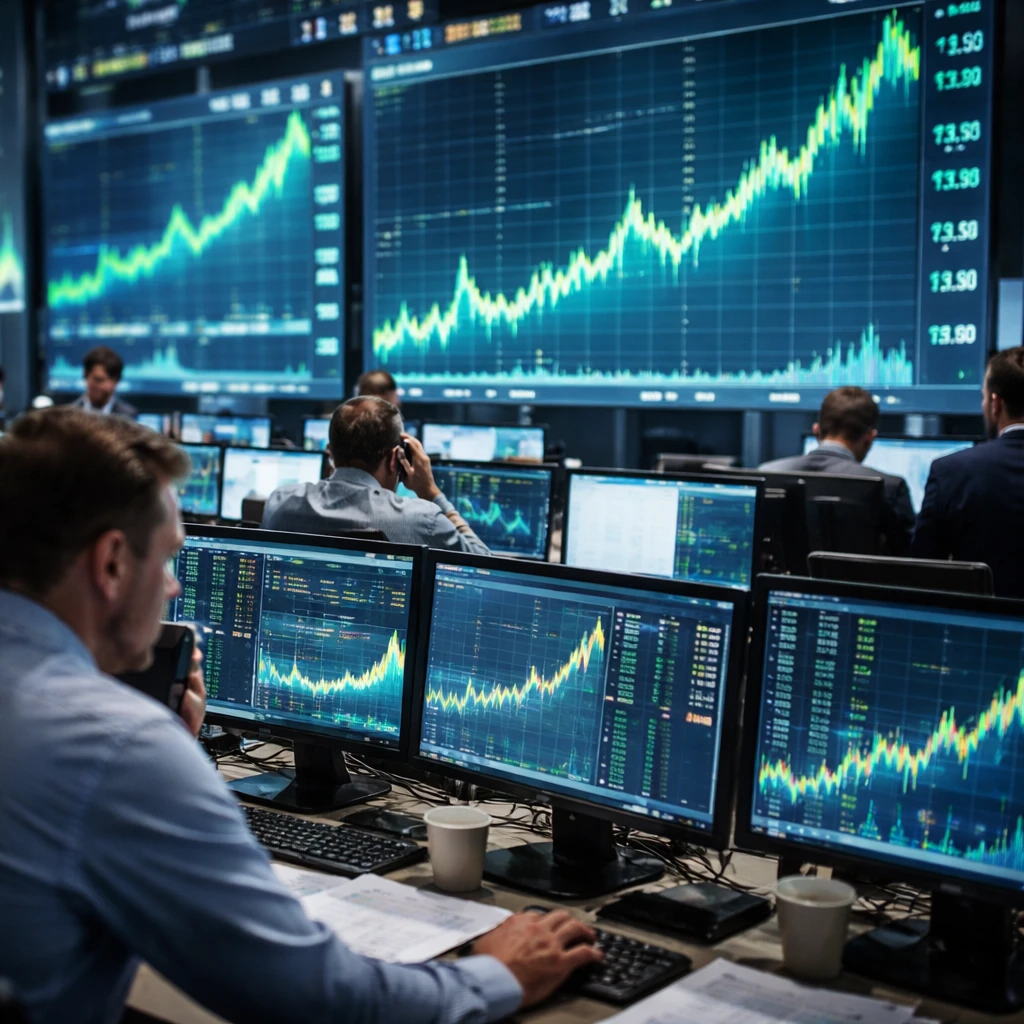
Markets saw pronounced, single-session gains across several AI infrastructure and chip names after what traders described as a forced liquidation of a highly concentrated hedge fund. The unwind, which cut the fund’s assets roughly in half in a matter of weeks, coincided with a flurry of buying from a prominent market player and produced sharp rebounds in previously pressured stocks.
Major intraday moves included Nebius NV (NBIS) jumping 26.3%, CoreWeave (CRWV) up 21.8%, Taiwan Semiconductor Manufacturing Company (TSM) climbing 7.8%, Arm (ARM) rising 7.3%, Eaton (ETN) advancing 7.1%, and GE Vernova (GEV) gaining 8.6%.
How the forced seller unfolded
This episode was not a routine drawdown. Leopold Aschenbrenner’s fund had delivered extraordinary performance through the end of June 2026, returning about 439% after fees, largely through concentrated bets in AI compute, power infrastructure, and Bitcoin miners. The situation changed markedly in July.
- Assets reportedly fell from approximately $20 billion to about $10 billion within weeks.
- The fund sought fresh capital from existing investors and lenders following the selloff.
- Citadel moved to acquire the bulk of the fund’s public-equity holdings.
The presence of a major distressed buyer taking large positions in the wake of forced selling helped support the rebound in several high-short, crowded names.
What today’s tape reveals
The immediate market reaction reads like a classic post-capitulation rebound. Names that were concentrated in the fund’s long book and had been under pressure experienced sharp snaps higher as forced sellers exited and opportunistic buyers stepped in.
| Name | Today | Context |
|---|---|---|
| Nebius NV (NBIS) | +26.3% | Was in the fund’s long book |
| CoreWeave (CRWV) | +21.8% | Core position for the fund |
| GE Vernova (GEV) | +8.6% | AI power play |
| ASML ADR (ASML) | +6.8% | Semiconductor equipment |
| Taiwan Semiconductor (TSM) | +7.8% | Foundry backbone |
| Arm (ARM) | +7.3% | Chip architecture |
| Eaton (ETN) | +7.1% | Data center power |
Trading screens showed rapid moves in the most-shorted and most-crowded names as selling pressure abated. The episode matches a familiar pattern: forced liquidation creates a temporary supply surge, and when that supply is absorbed by large buyers, prices can rebound sharply.
Bear-case factors that remain
A single-day recovery does not eliminate underlying uncertainties. Several risk points continue to temper enthusiasm for a sustained rally.
- Meta Platforms (META) declined 8.9% after JPMorgan trimmed its price target to $640, citing limited visibility on how AI spending will be monetized outside of advertising. This encapsulates the wider market question about return on AI capital expenditure.
- HSBC’s cluster model places the highest probability among five regimes on a scenario of "hyperscaler overspend" at 37%, and in a "positioning capitulation" outcome it models semiconductors losing 14.3% on an annualized basis.
- Goldman Sachs and JPMorgan were reported to still be issuing margin calls to concentrated AI funds, indicating that de-grossing in some strategies may be incomplete.
- Asia-focused hedge funds were on track for a record monthly loss of 18.6%, with five-day cumulative de-grossing noted as the largest on record.
The structural-floor argument
Despite the risk factors, demand-side indicators cited in market commentary suggest the drop in prices may not reflect a collapse in fundamental demand for AI infrastructure. A major public initiative in the EU comprising a multi-billion euro AI manufacturing program was mentioned as involving leading chipmakers. Separately, business equipment spending tied to AI was expected to post another quarter of double-digit growth in Q2 GDP, and UBS initiated coverage of SK Hynix ADR (SKHY) at Buy with a $204 target versus a roughly $127 price, projecting strong DRAM bit demand growth driven by agentic AI.
Reading the setup
The sequence of events aligns closely with the capitulation-bottom framework: extreme concentration and leverage, followed by margin calls and forced liquidation, then accumulation by large buyers, and a price reversal. The actions in Nebius NV and CoreWeave indicate that the specific overhang tied to that fund is being absorbed. However, the larger commercial question about whether hyperscalers can convert AI capital expenditure into sustained revenue remains multi-quarter in nature and will not be settled by short-term market moves. Put differently, the infrastructure layer - compute, power, and chips - shows signs of finding a base, while the application layer - software that will monetize AI - must still demonstrate repeatable economics.
Key points
- Forced liquidation of a concentrated fund trimmed assets from about $20 billion to $10 billion and produced a sharp rebound in AI infrastructure and chip stocks.
- Large-market buyers, notably Citadel, moved to acquire much of the public equities book, supporting a recovery in oversold names.
- Demand indicators cited by market participants suggest infrastructure demand remains intact, but monetization of AI at the application level is unresolved.
Risks and uncertainties
- Unclear ROI on AI capex - exemplified by the sharp drop in Meta following analyst downgrades - leaves the application and monetization case open and impacts internet and advertising sectors.
- Continued margin calls from major banks could force further de-grossing by concentrated funds, pressuring compute and chip-related stocks.
- Model scenarios that assign a high probability to hyperscaler overspend could lead to semiconductor downside if positioning capitulation occurs.
Conclusion
Today’s price action reflects what forced liquidation and subsequent strategic accumulation typically produce: a rapid relief rally in the infrastructure layer of the AI stack. The immediate overhang tied to the fund appears to be clearing, but broader questions around hyperscaler spending discipline and the ability to convert AI investment into revenue remain. Those questions will take multiple quarters to answer, even as compute, power, and chip names show renewed support.